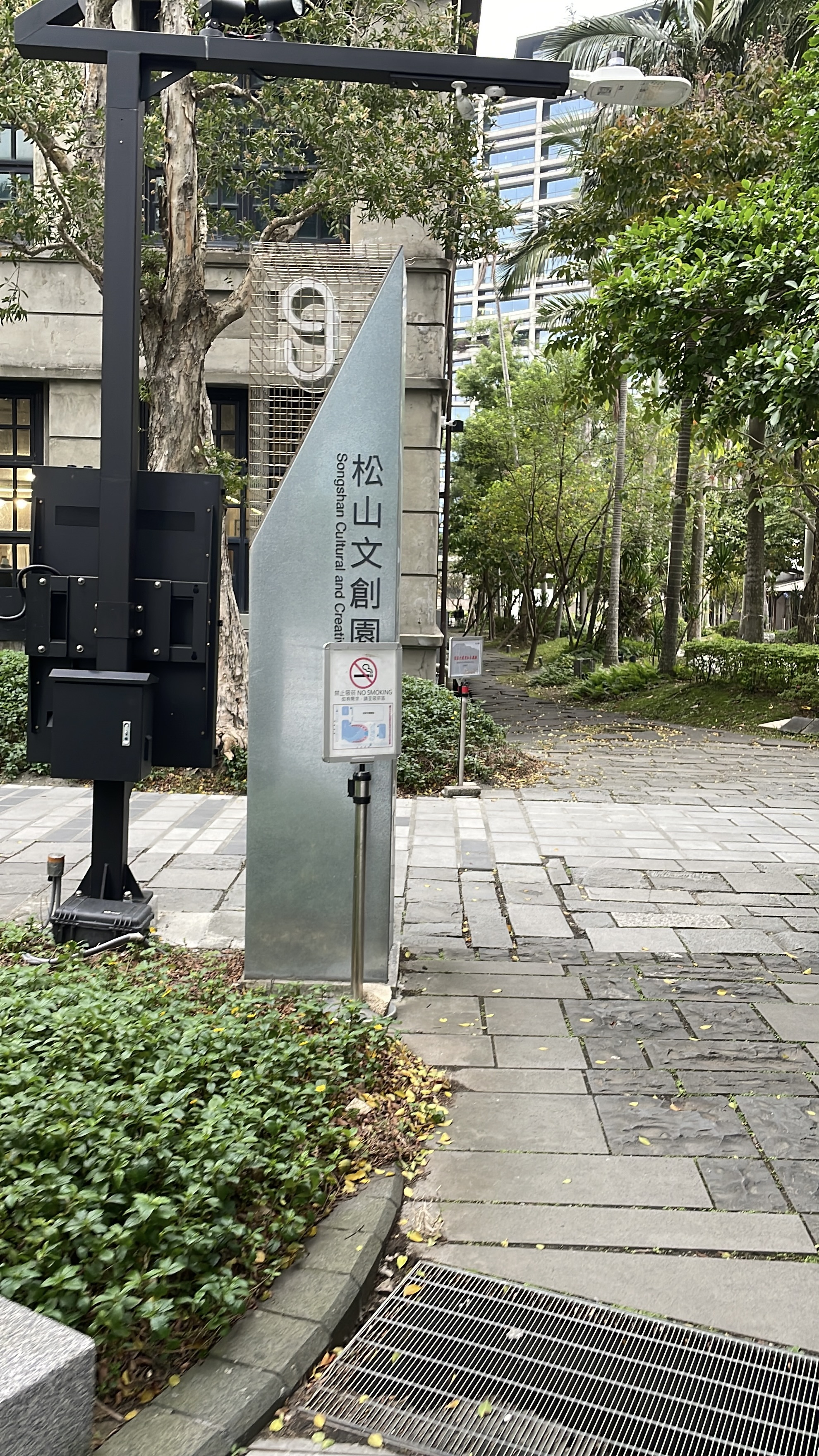
The Songshan Tobacco Factory was never designed to be just a production facility.
When the Japanese colonial government built it in 1937, the brief was larger than that.
Dormitories. A nursery. A clinic, a cafeteria, a bathhouse, a recreation hall.
Up to 1,200 workers occupied the site simultaneously,
and every aspect of their daily lives was meant to unfold within these 6.6 hectares.
It was a village before it was a factory.
Production stopped in 1998 — shifting demand, changing city plans.
In 2001, Taipei designated the complex Heritage Site No. 99.
Nothing was demolished. Nothing was cleared.
In 2011, it reopened — not as a factory, but as a creative park.
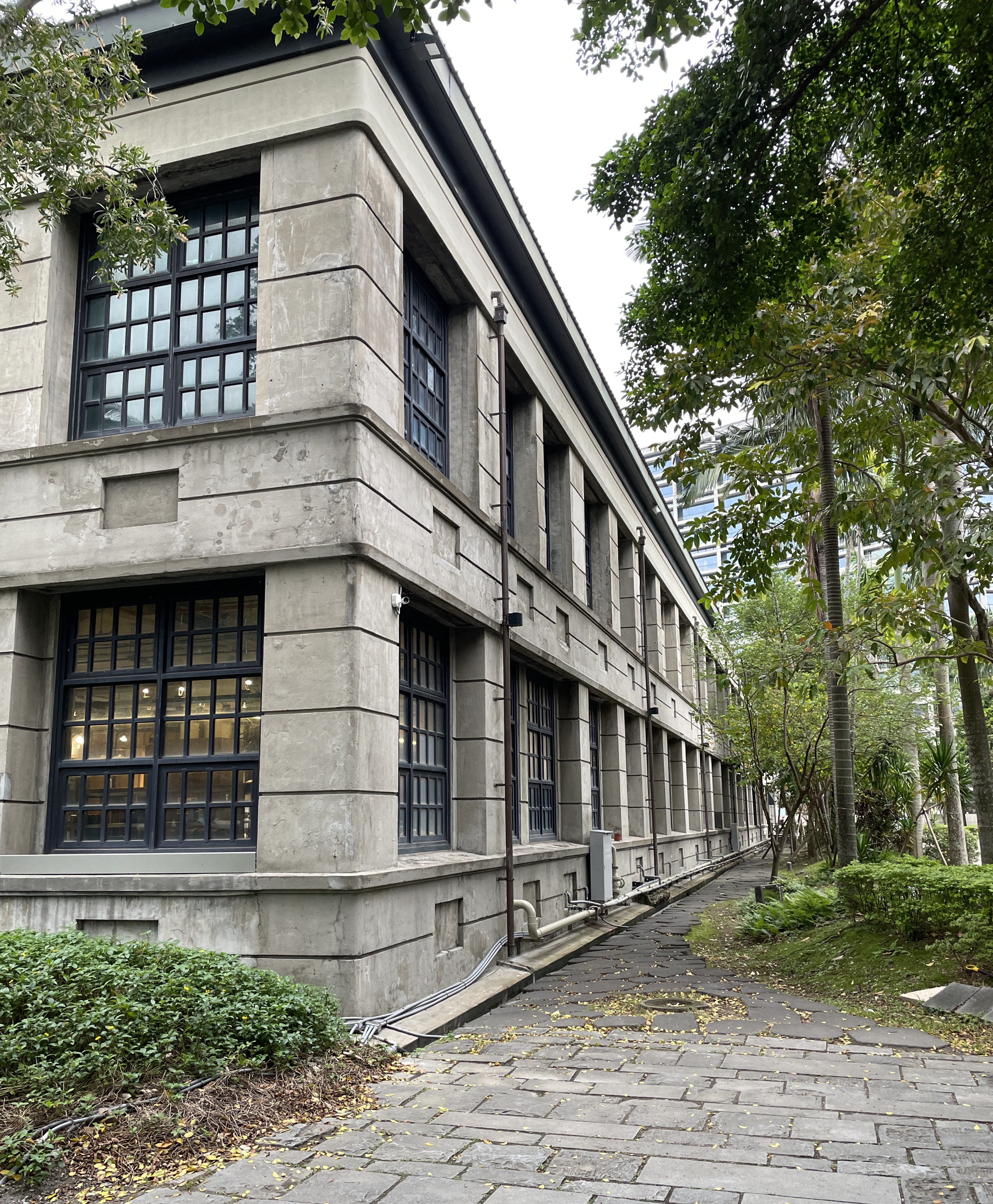
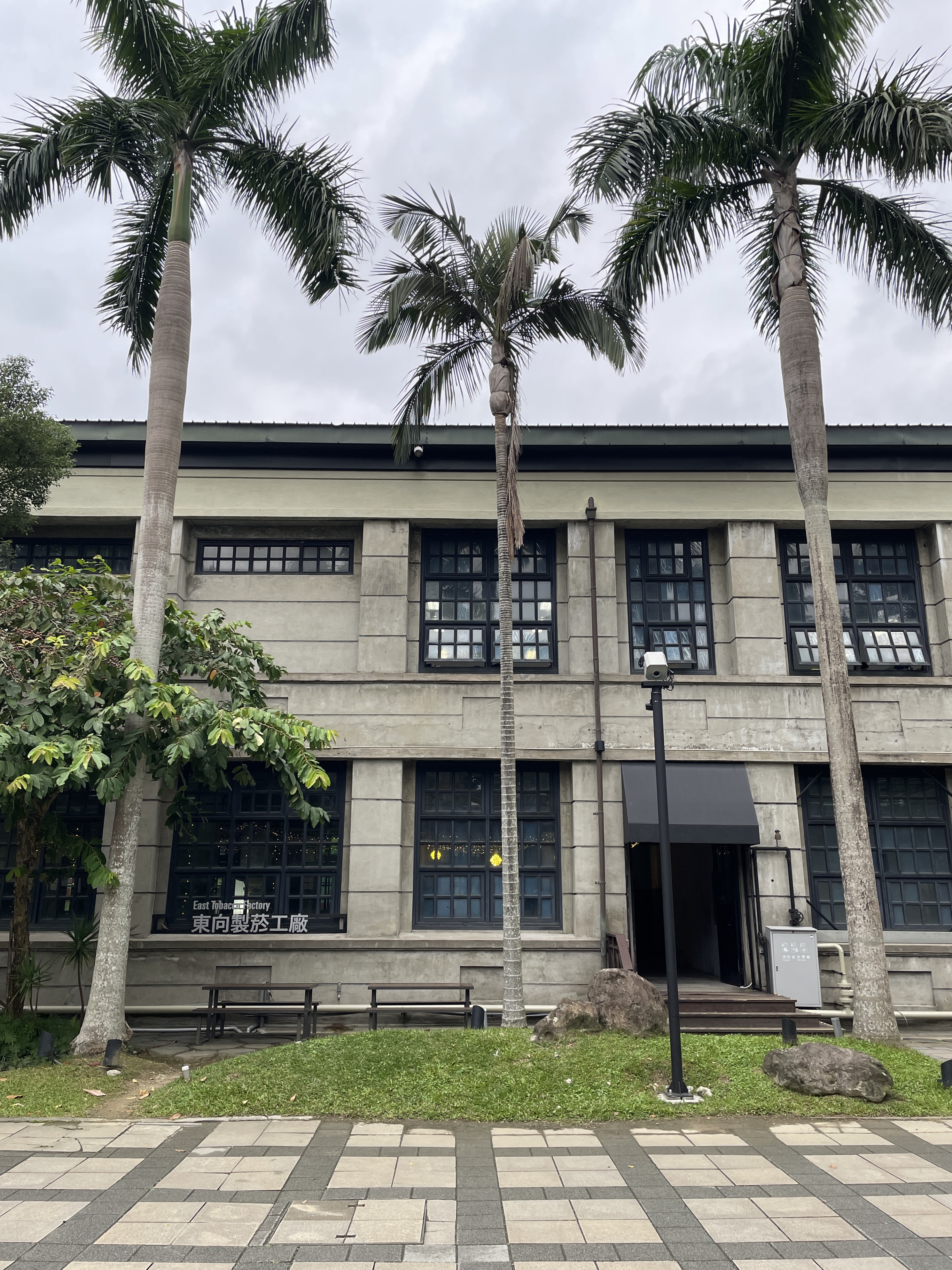
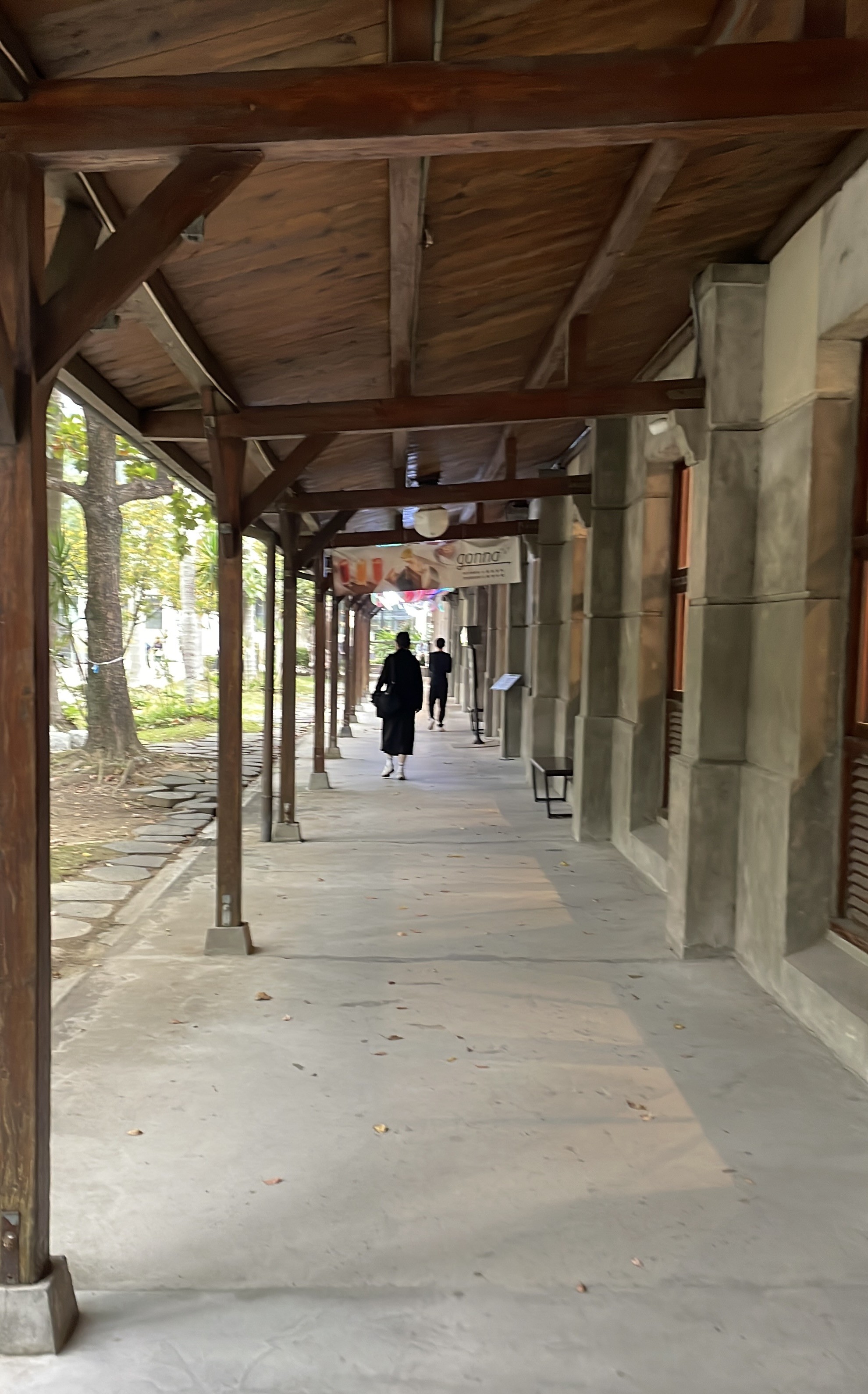
The building has a specific architectural identity: Japanese Early Modernism,
in the Secessionist tradition.
Horizontal lines. Restrained form. Structure over ornament.
It was built to a standard rare for industrial facilities of its era —
bronze nails, custom-made tiles, timber frames precision-cut.
The factory logic was that quality extended to everything,
including the building that housed it.
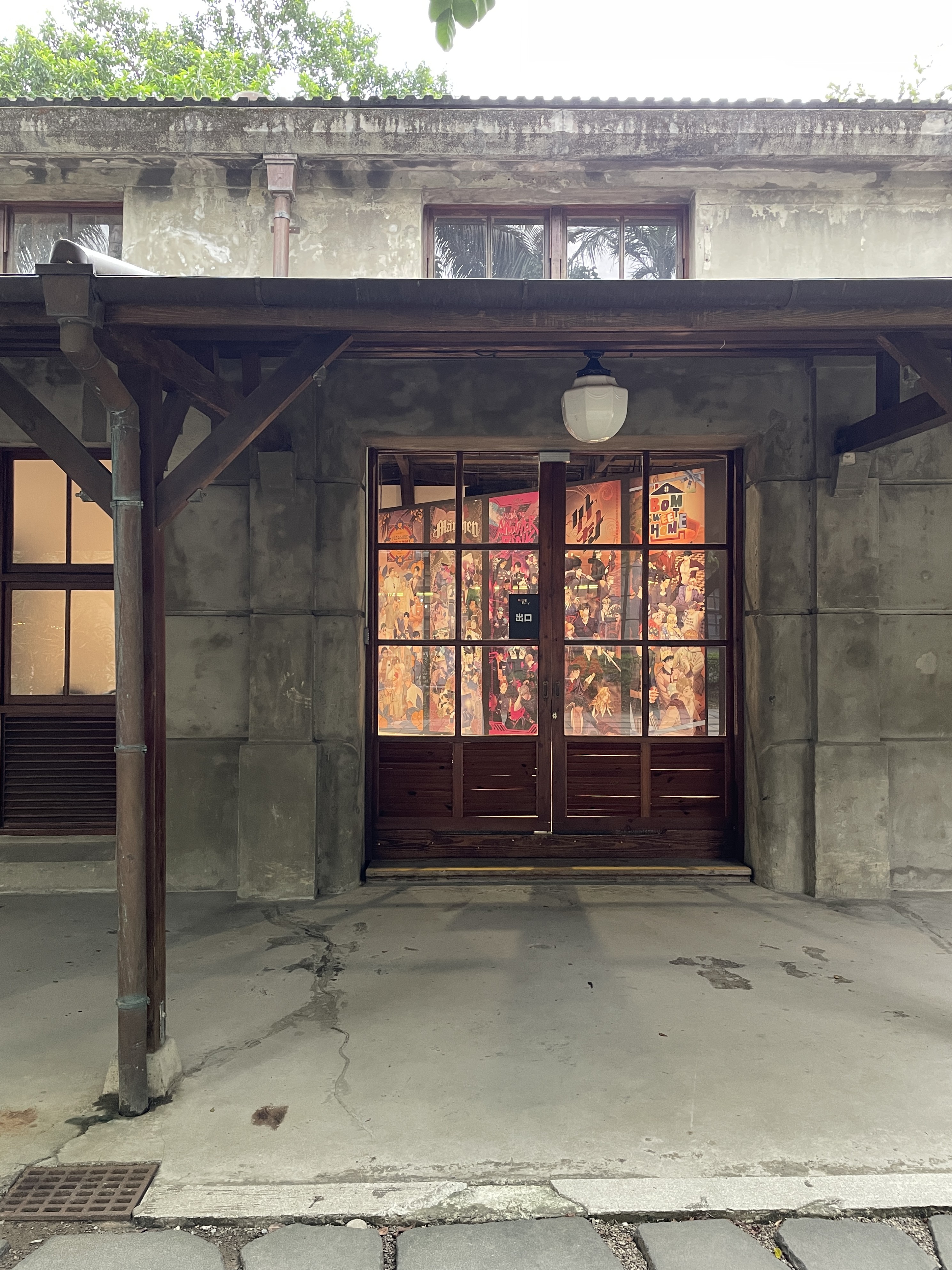
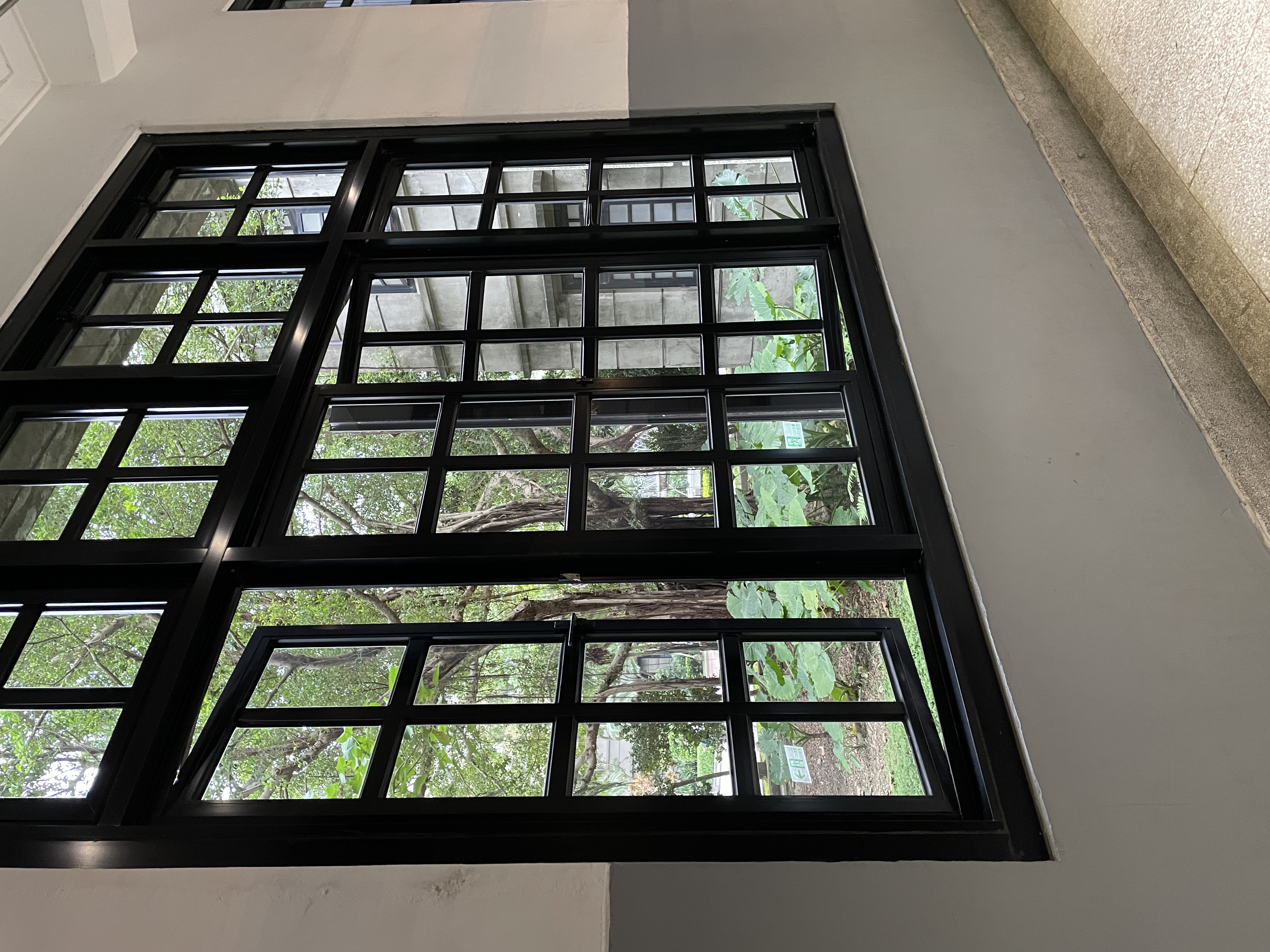
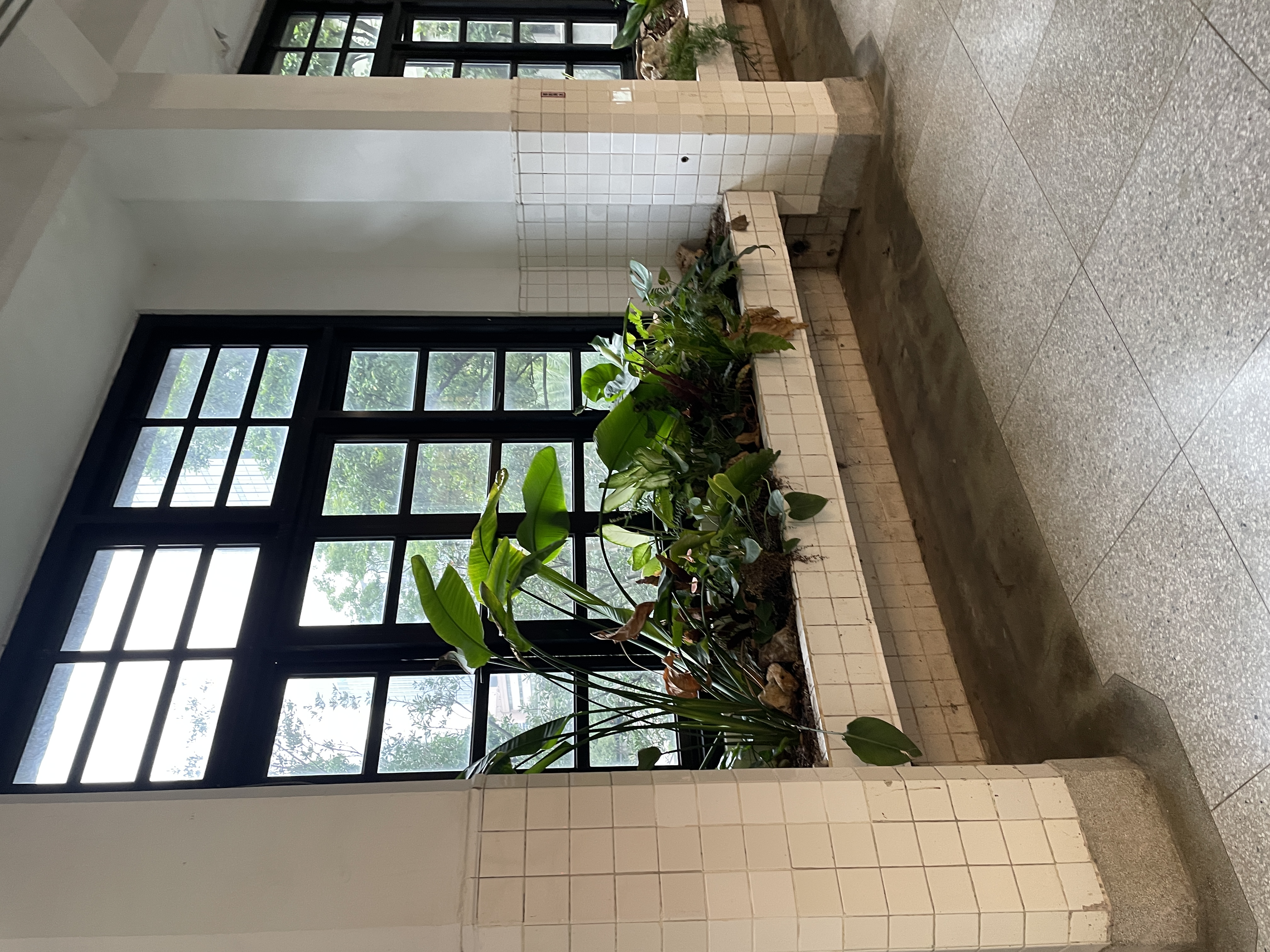
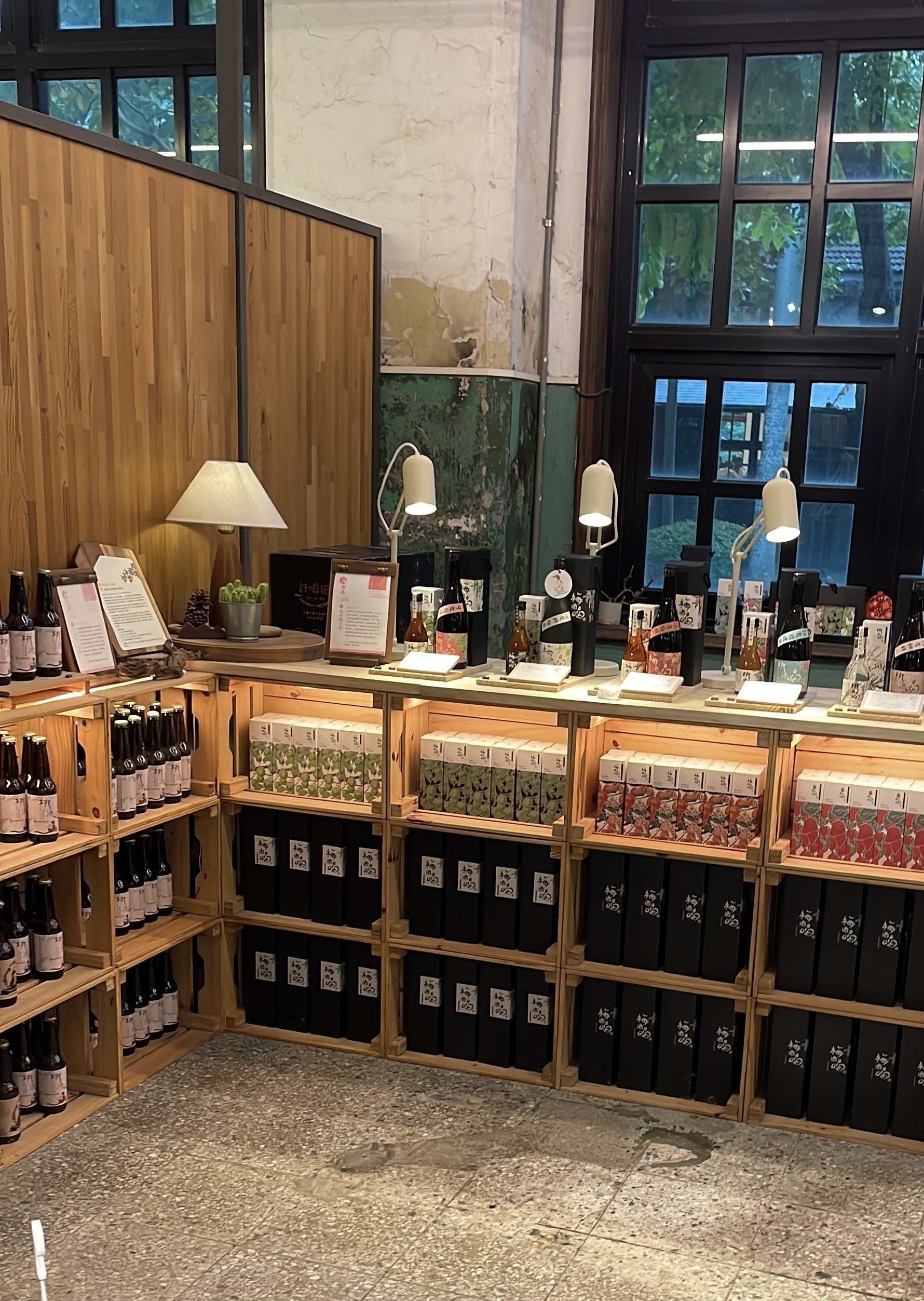
The grid windows run the full width of the facade in continuous repetition.
Each pane layers the exterior greenery over whatever is displayed inside.
Outside and inside are never fully separate.
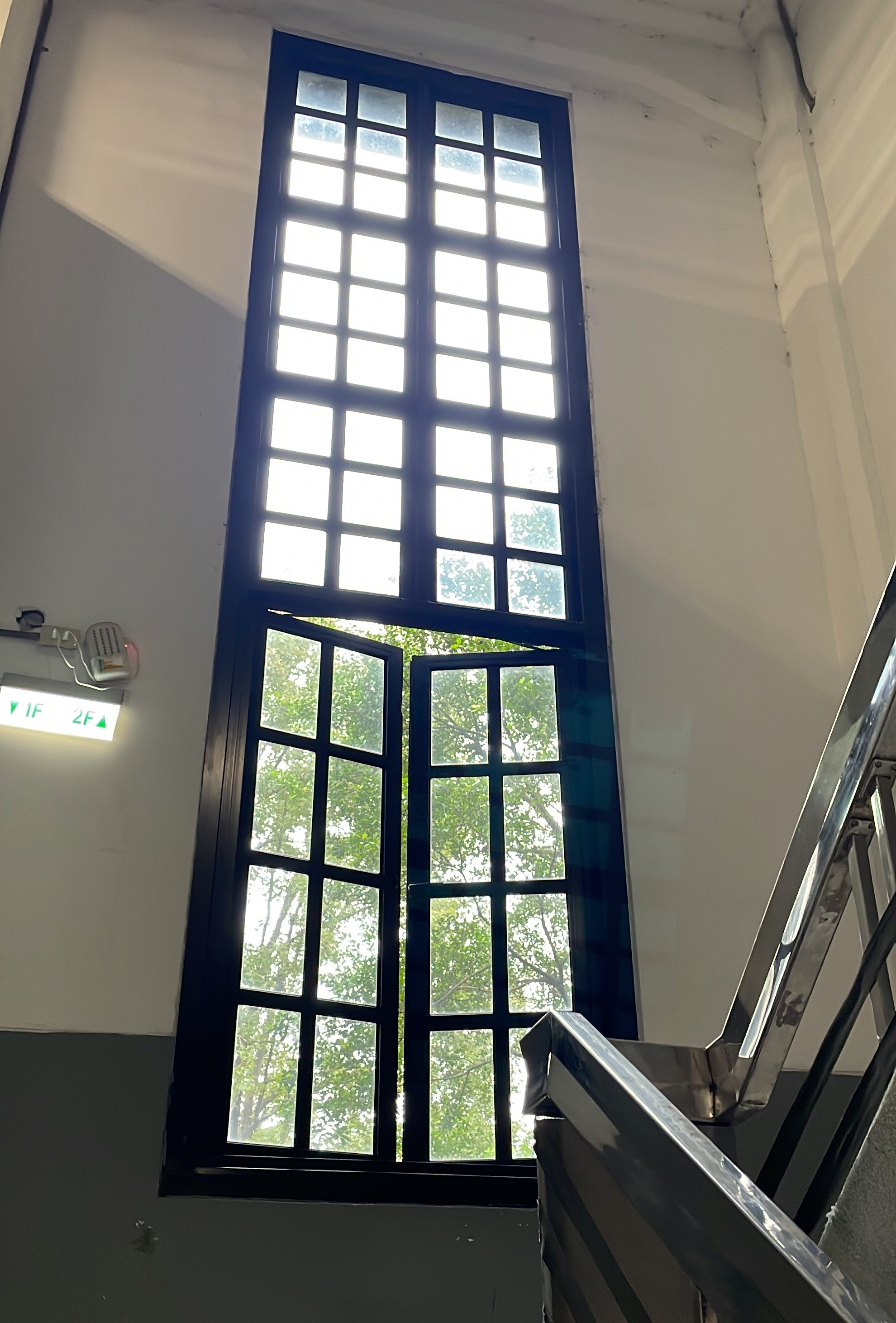
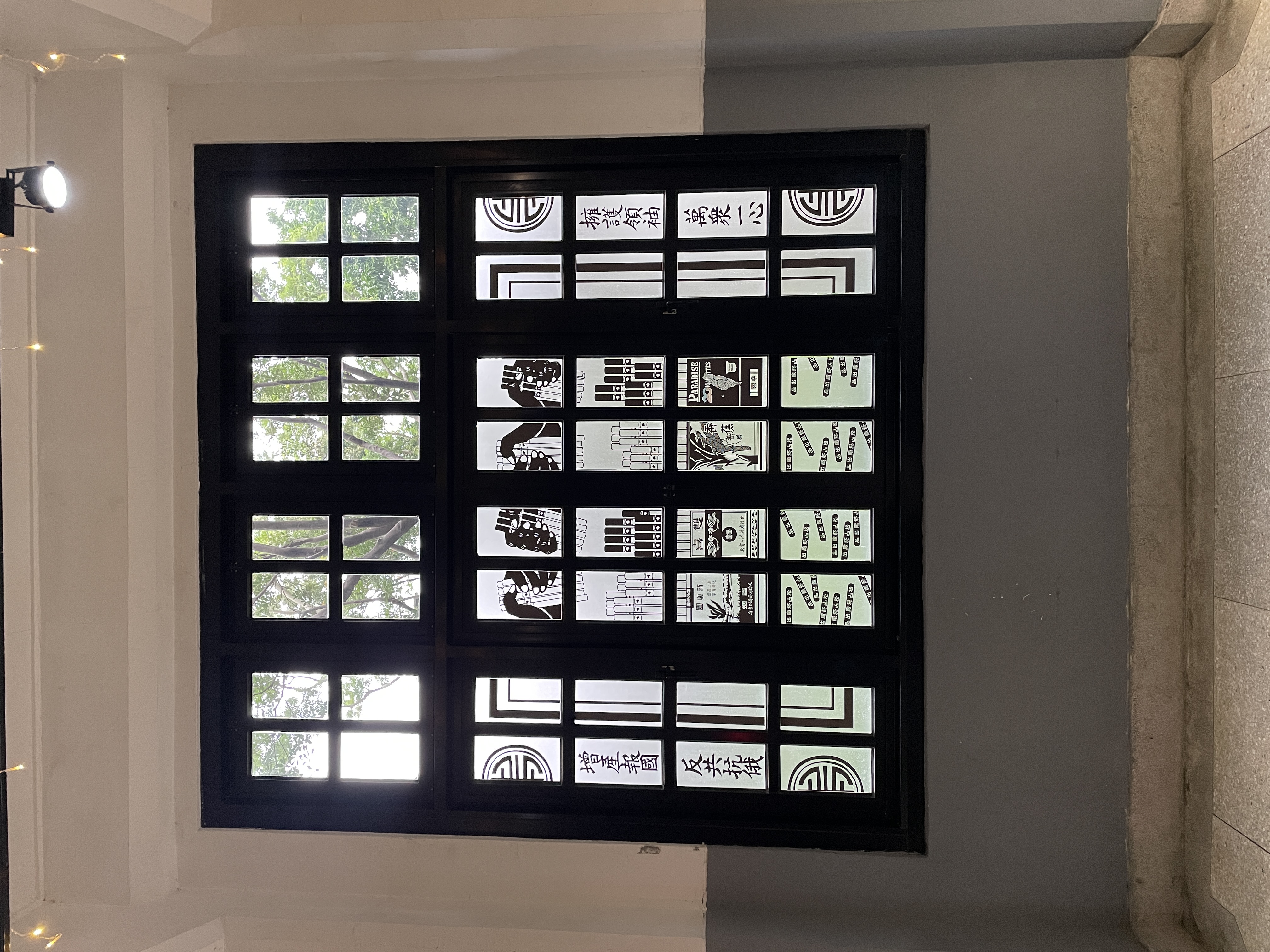
The timber window frames are thick in cross-section.
The brass handles carry the patina of decades of use.
The craftsmanship is still legible — not as nostalgia, but as fact.
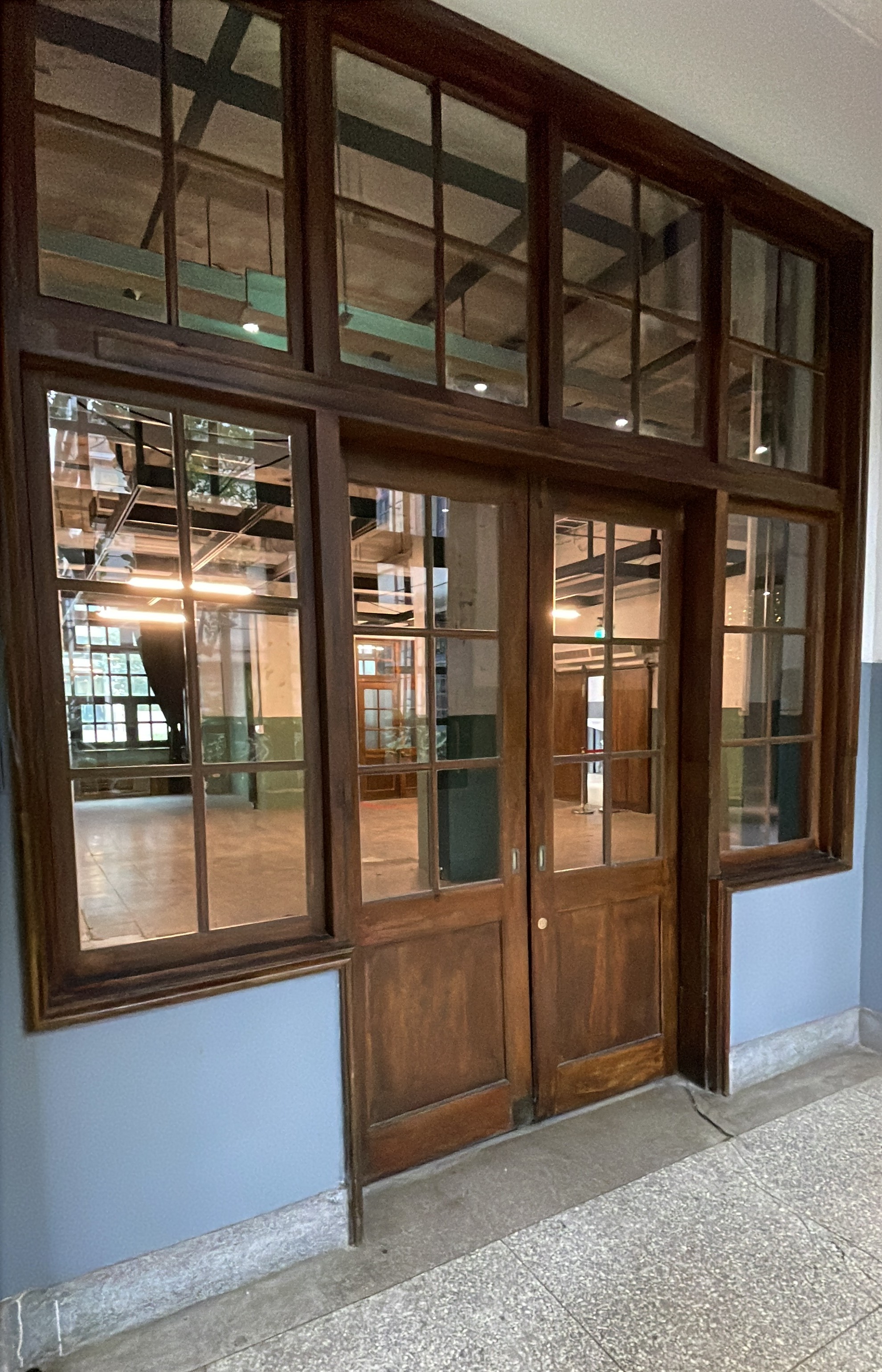
Craftsmanship still legible.
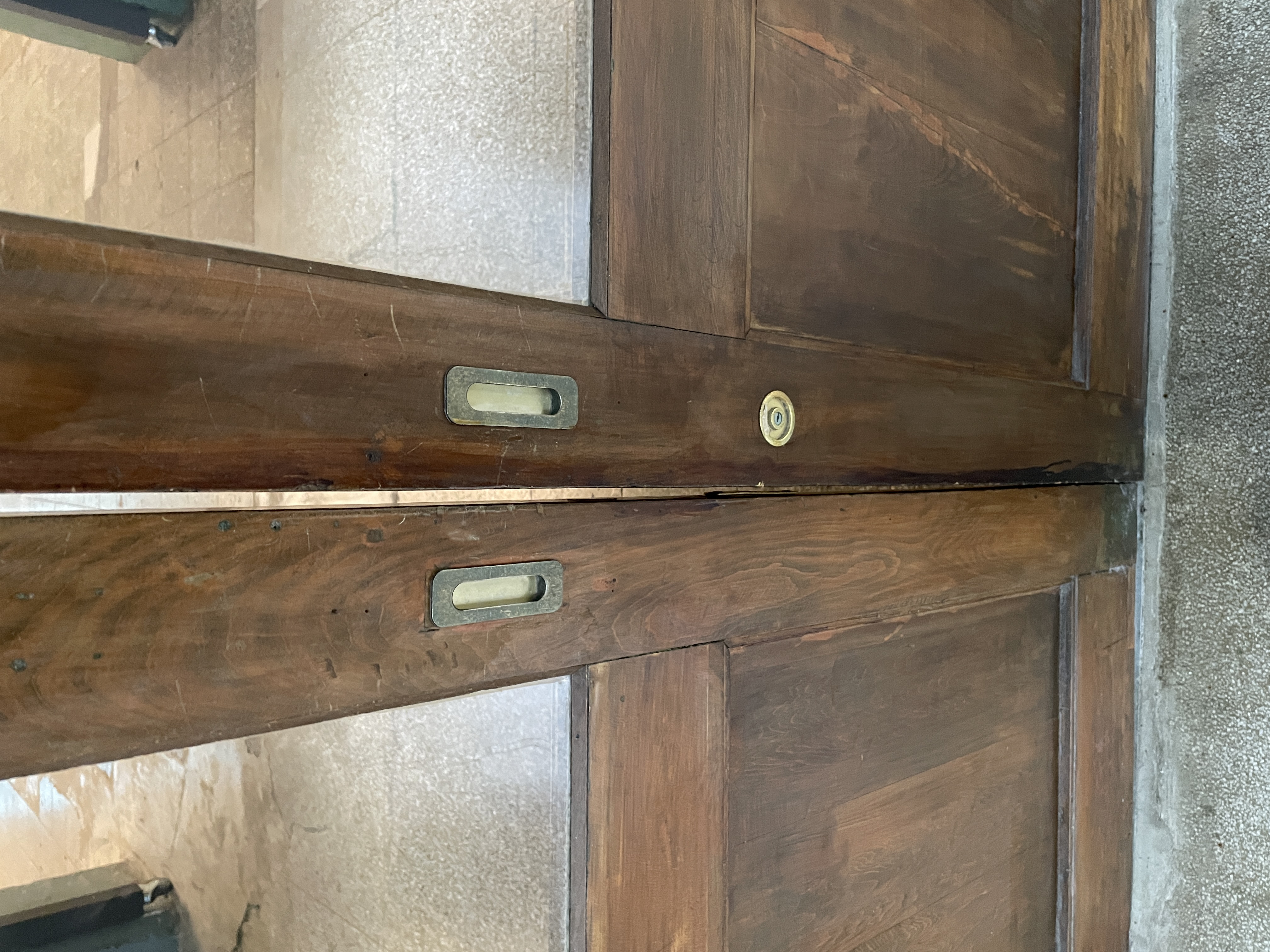
The building doesn't hide what it was.
That's why it doesn't feel uncomfortable.
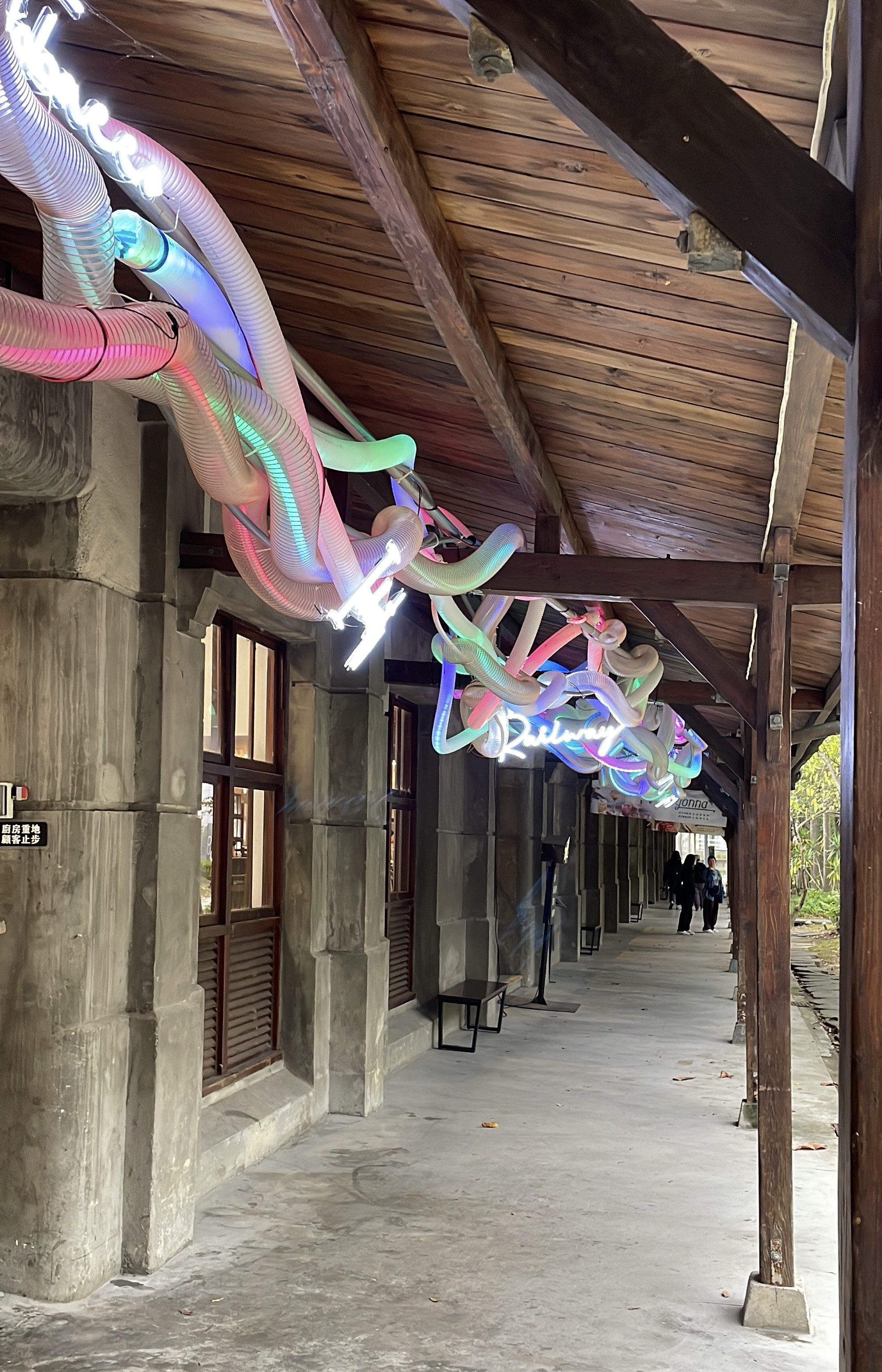
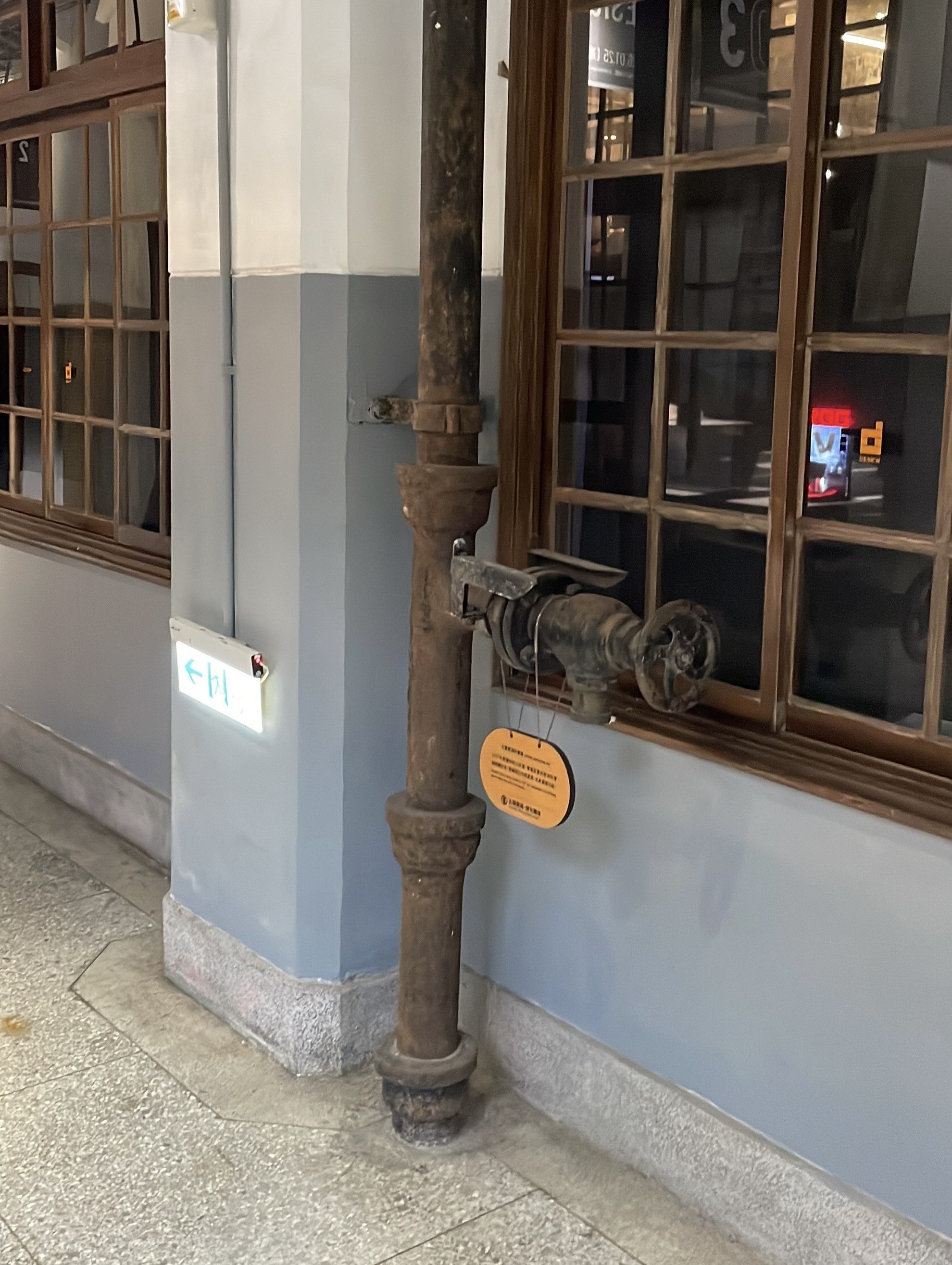
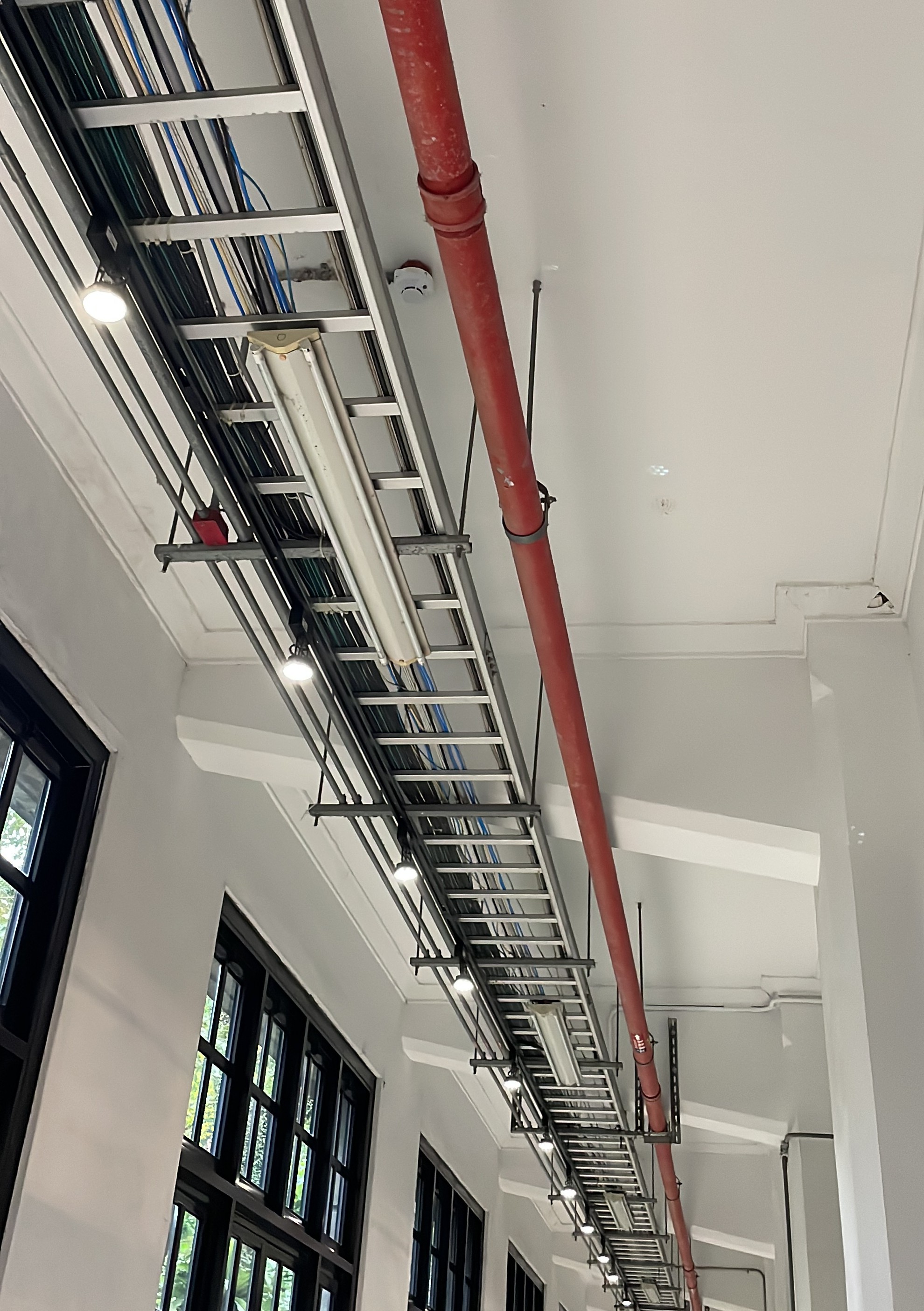
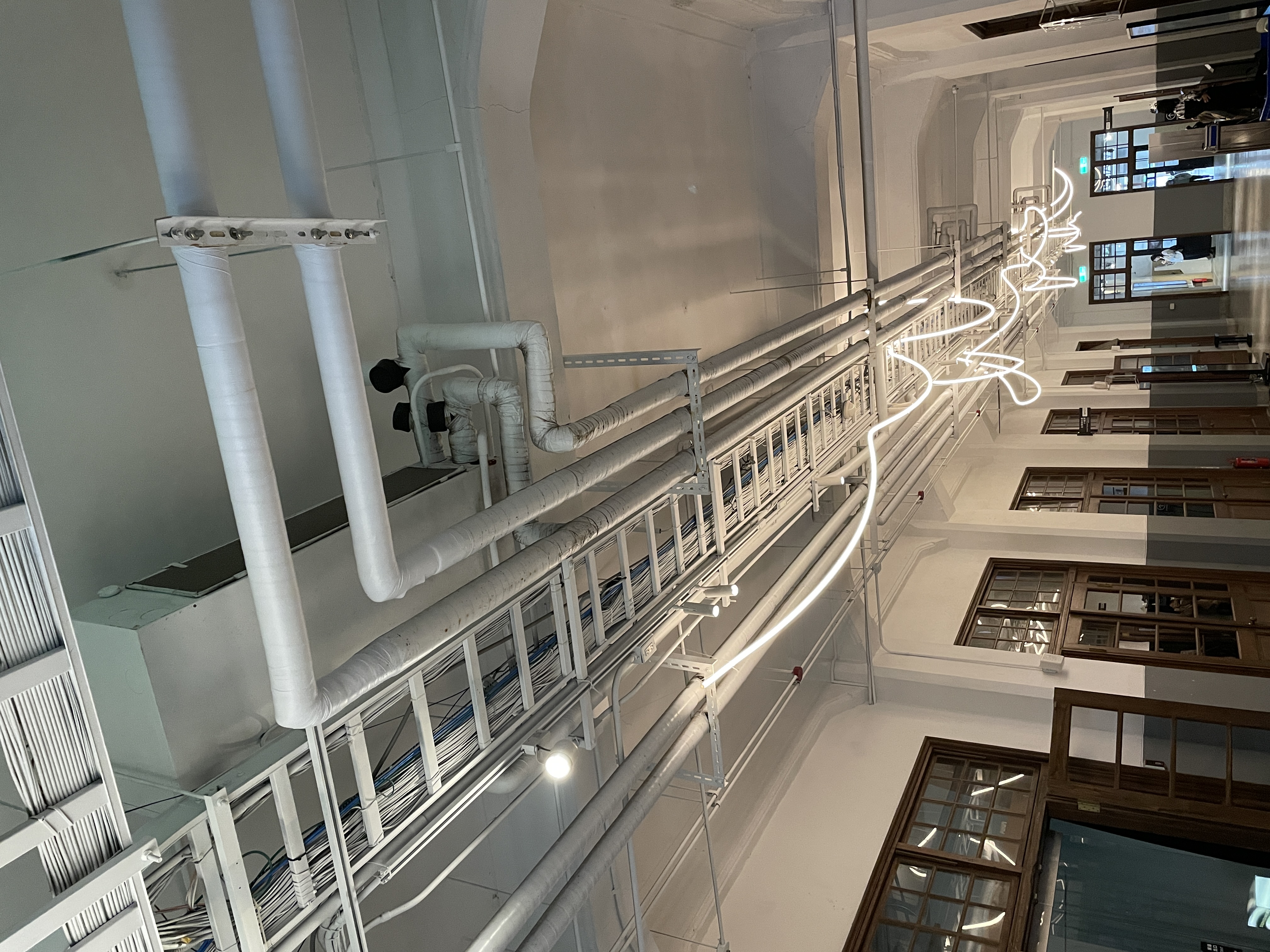
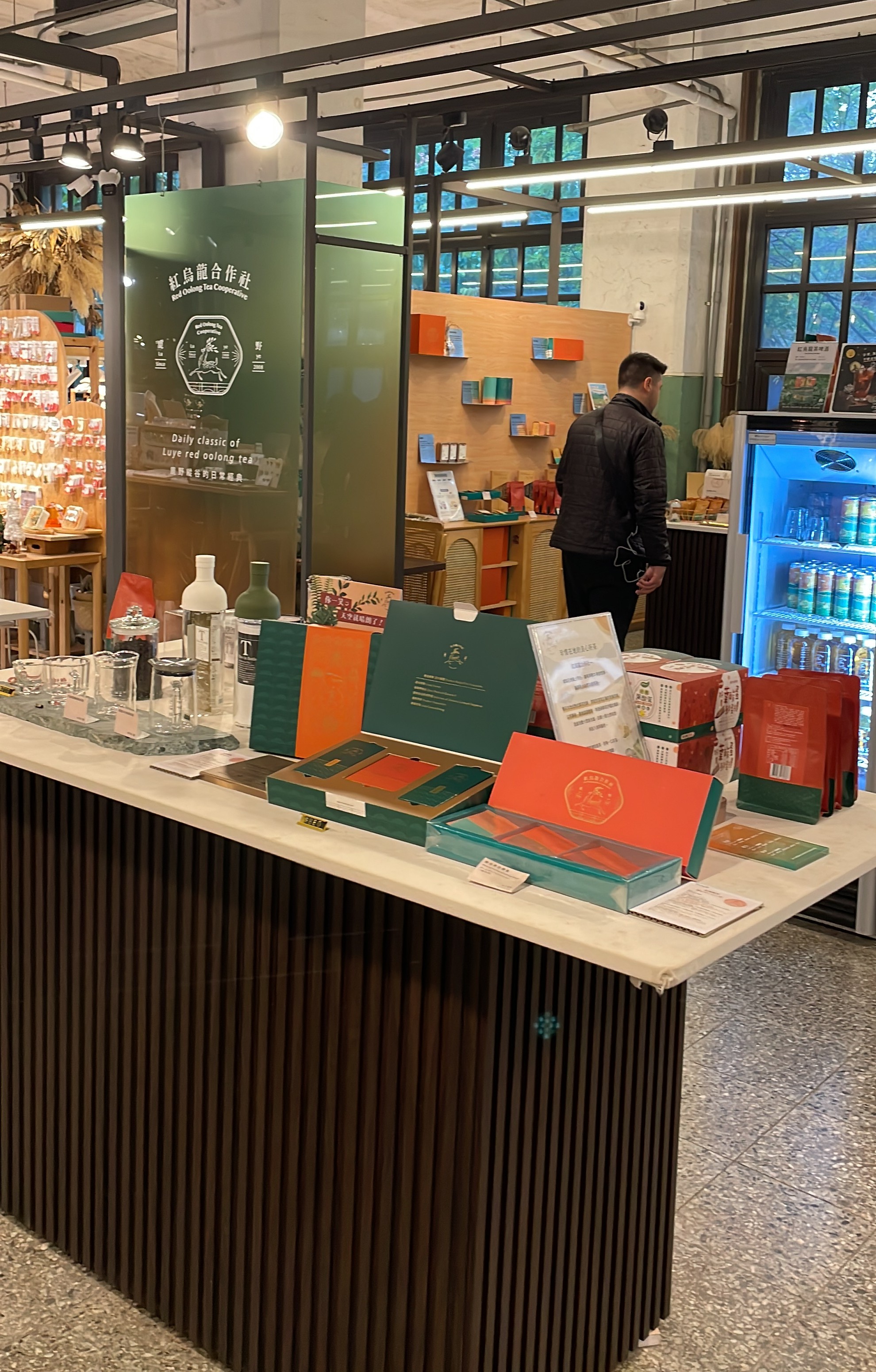
The original ceiling pipes run exposed across the length of the rooms.
Brown industrial pipe beside red pipe — two different eras, side by side.
Neon lighting has been installed beneath them.
The industrial becomes atmospheric without being disguised.
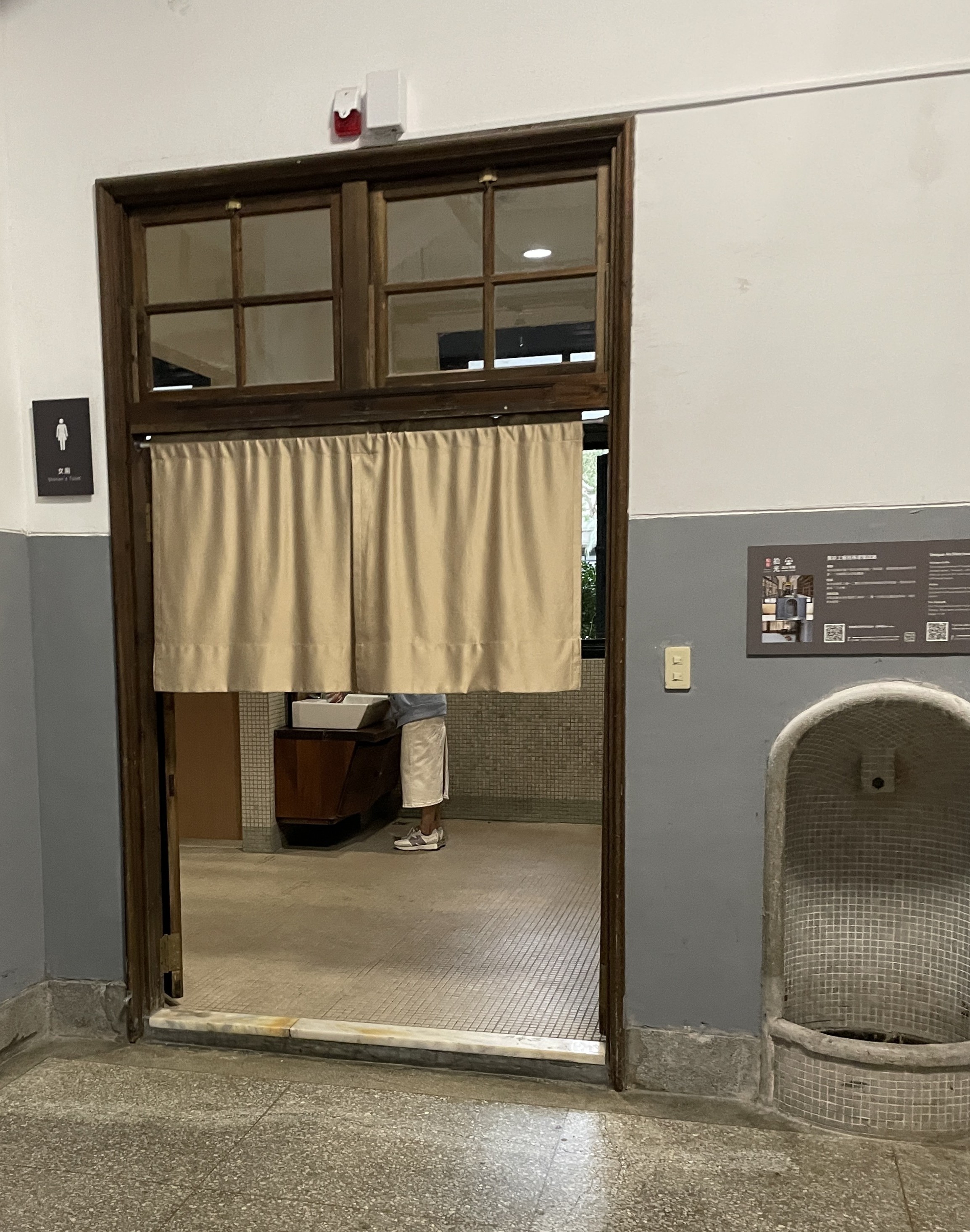
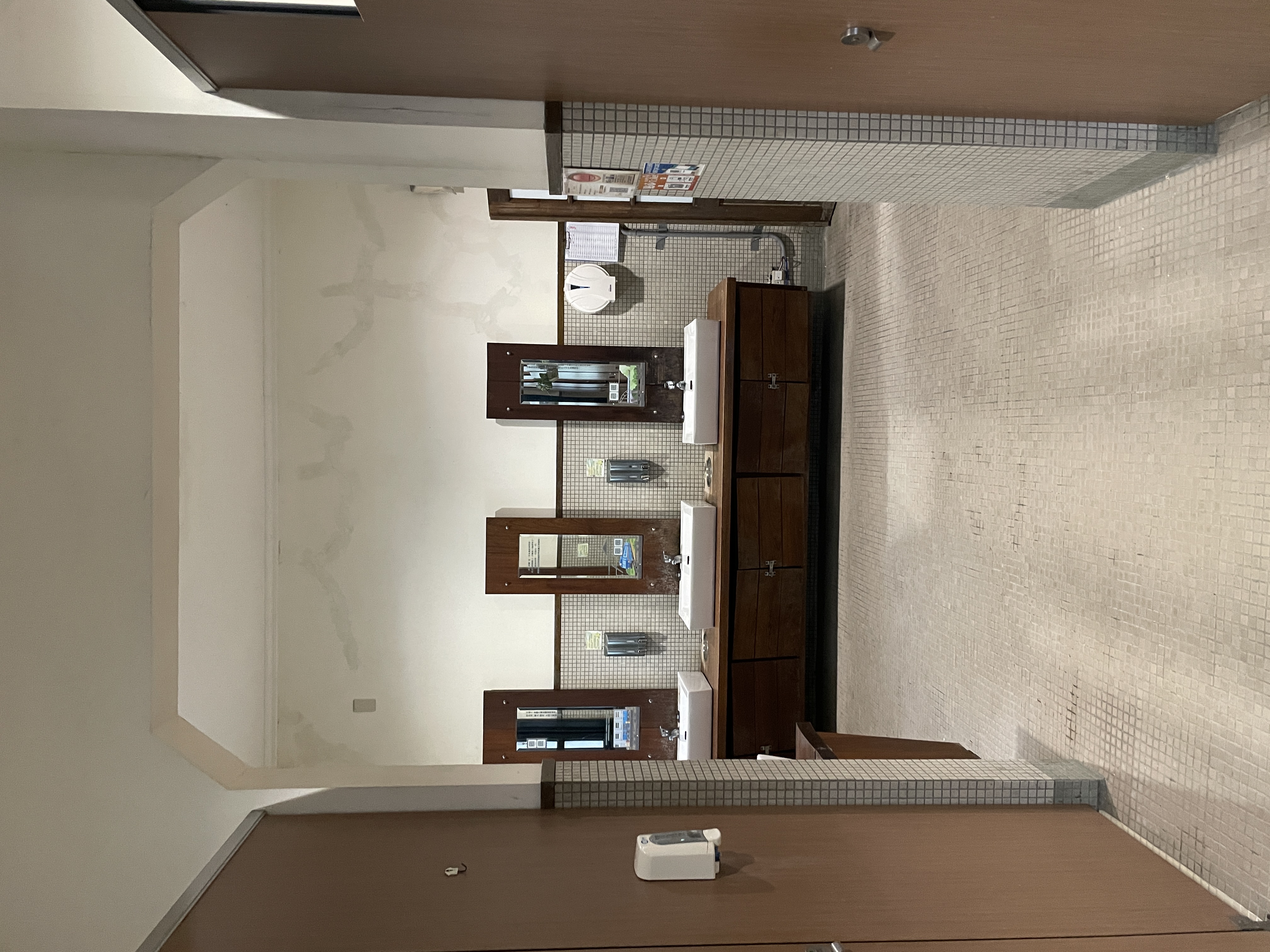
Even the restrooms are finished in timber.
Functional spaces, built with material selection.
A reminder that this was designed for people from the start —
not just optimized for production.
Not in tension. As if it was always this way.
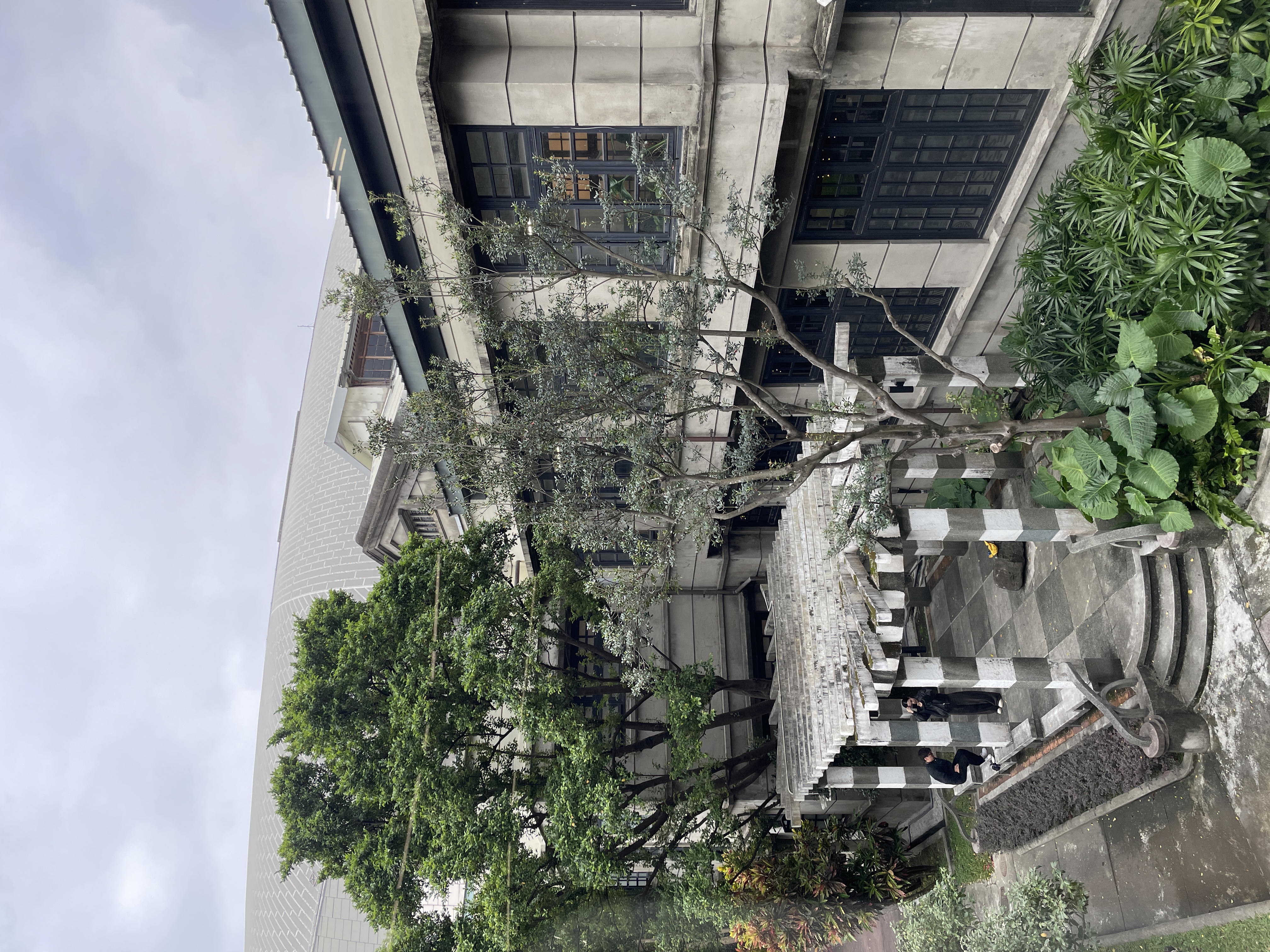
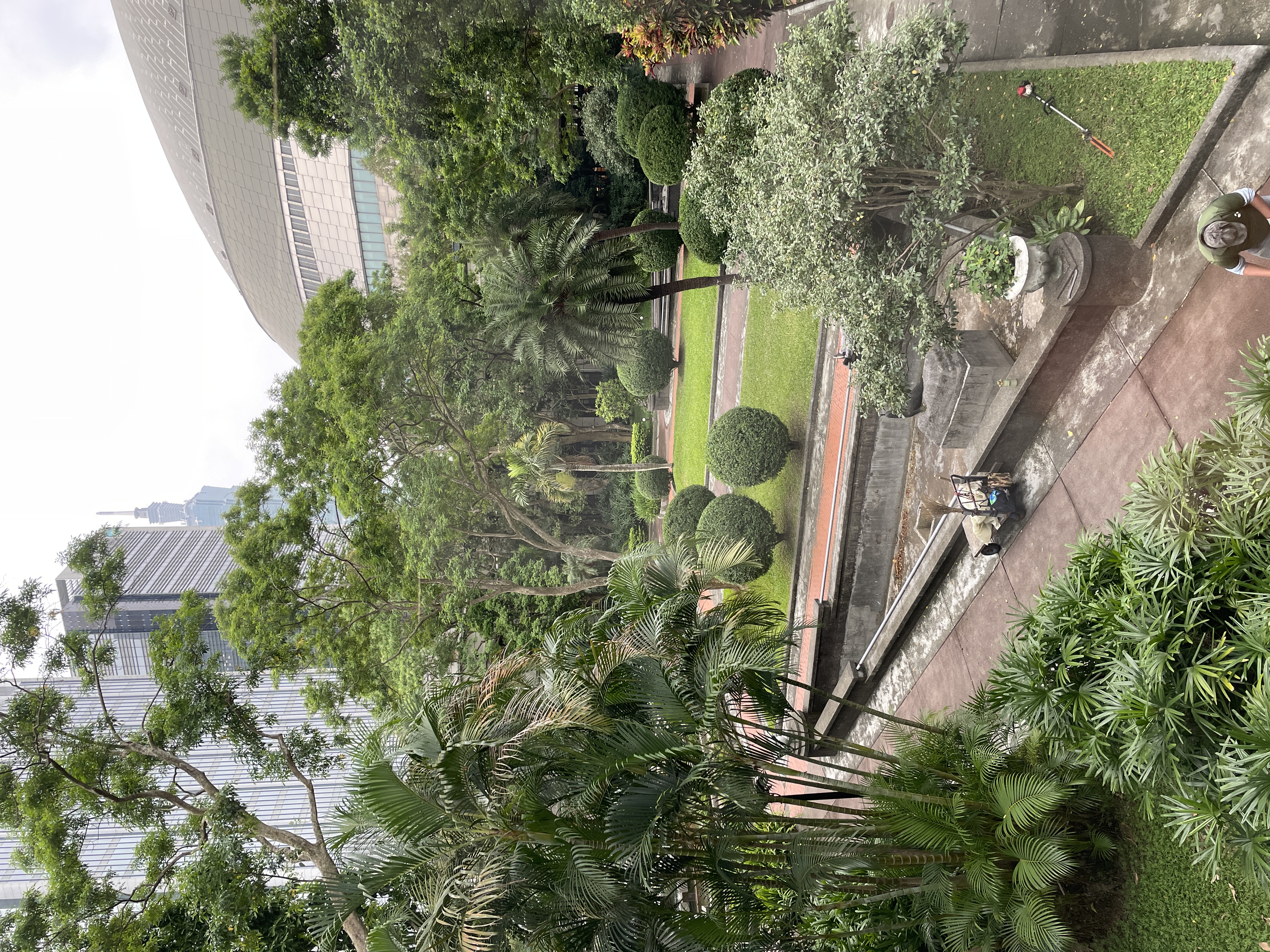
Three manufacturing wings — north, south, east — wrap around a central courtyard.
Trees. Landscaping. A Baroque-style garden.
An ecological pond where frogs can be heard.
When 1,200 workers occupied this site, this was where they rested.
The workers are gone. The courtyard remains.
The function — a place to pause — persists.
Over 100 creative institutions are currently based in the park:
iF Design, Taiwan Design Research Institute, and hundreds of independent brands.
Since 2011, over 10,000 brands have moved through this space.
The model is structured: weekend pop-up → subsidized gallery → independent store → major retail network → international market.
80% achieved commercial success.
The factory logic — produce, package, distribute — still operates.
It just applies to brands now, not cigarettes.
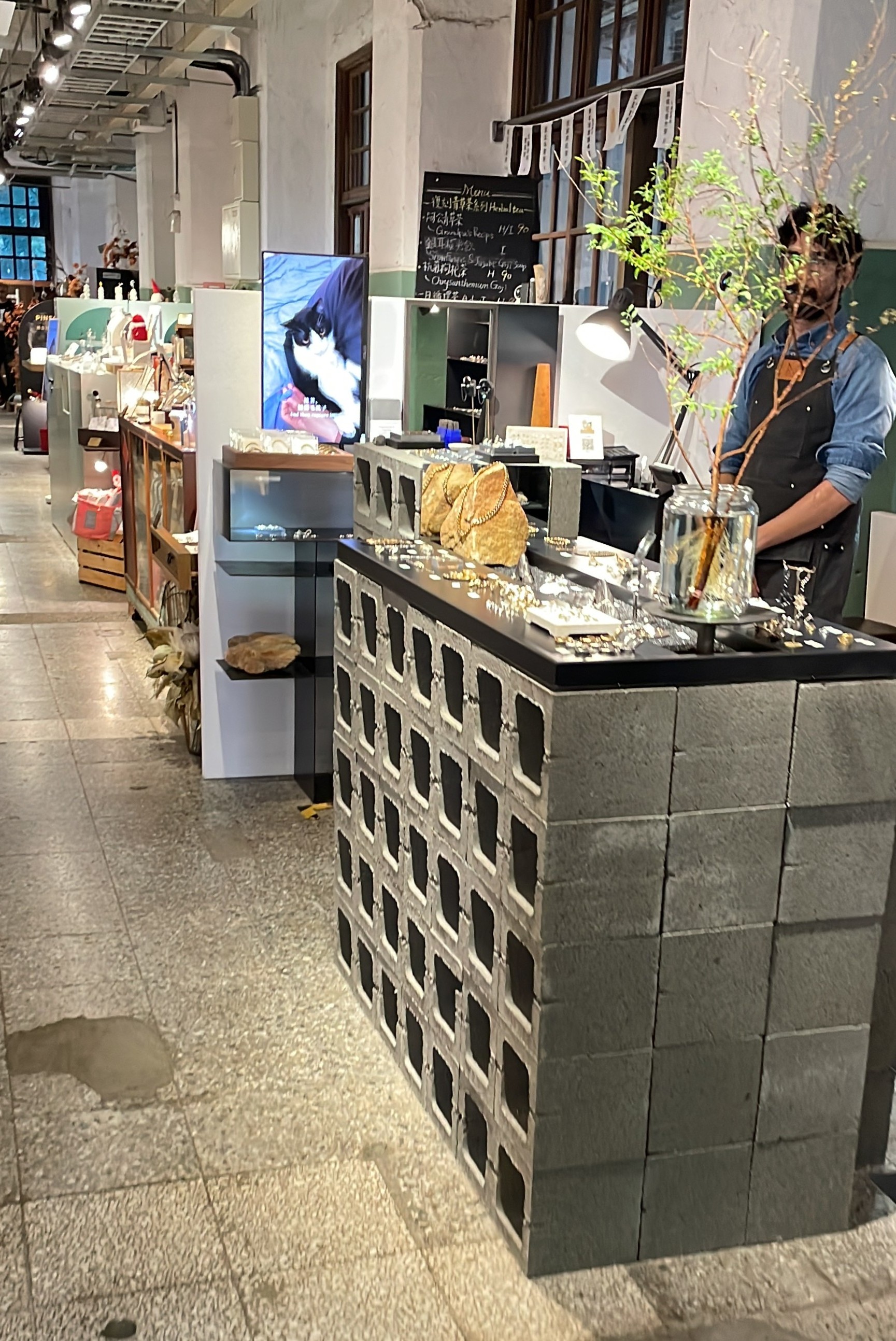
A weekend pop-up.
The factory changed. What it produces changed.
The structure didn't.
Same corridors. Same windows. Same pipes running across the ceiling.
What's different is what lives inside.
Same structure. Different output.