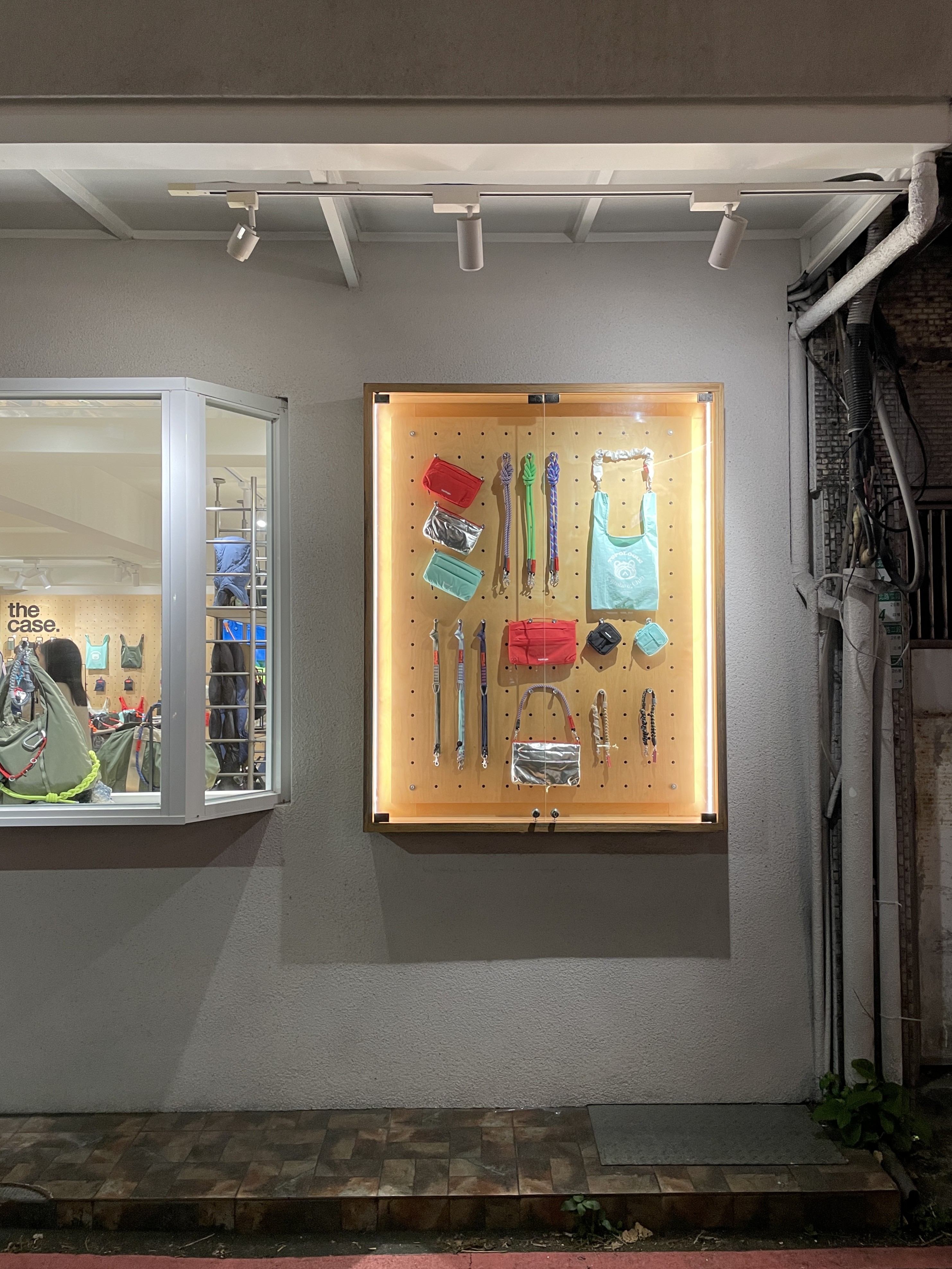
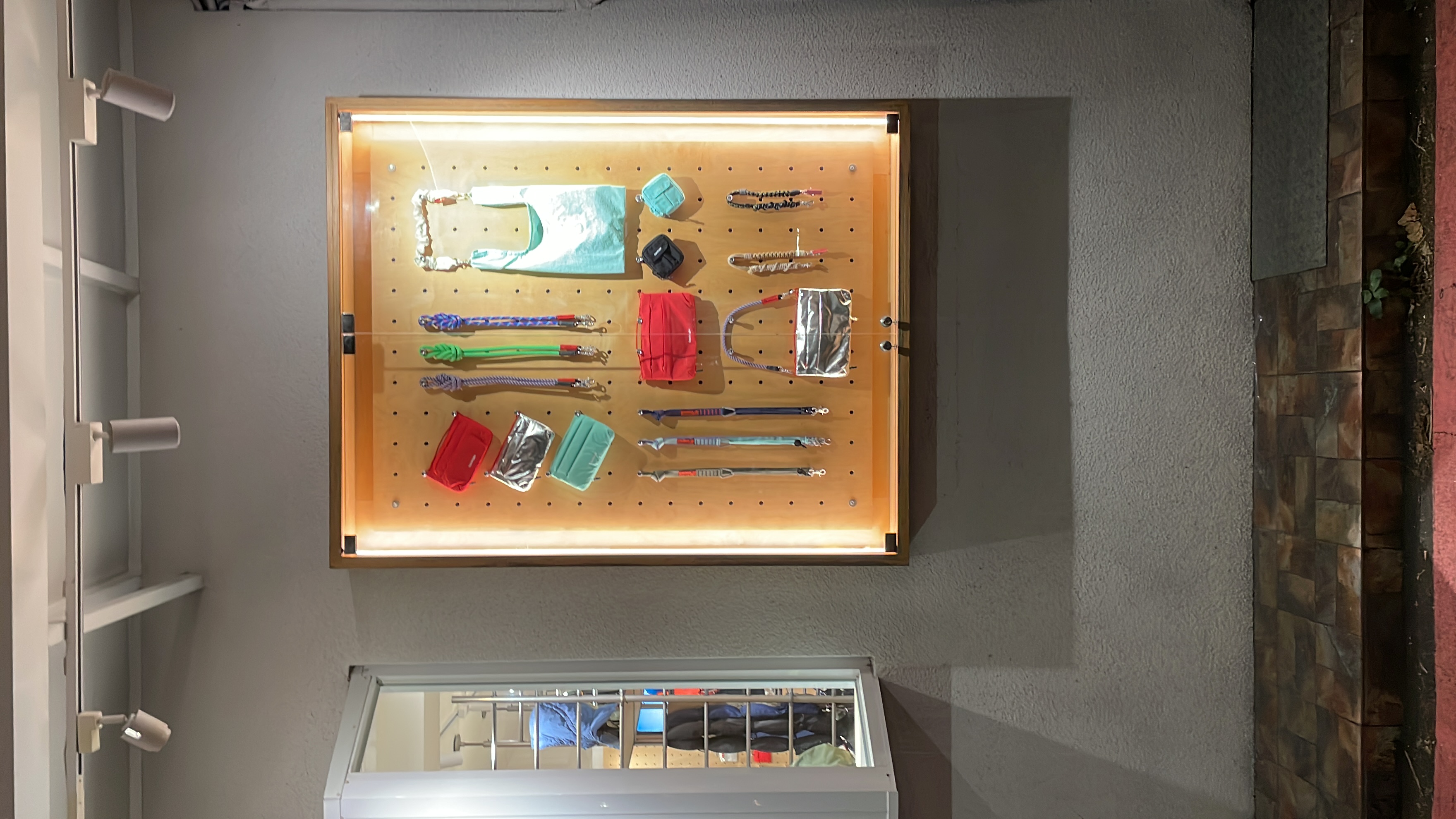
In a narrow alley in Zhongshan, Taipei, the pegboard wall is visible through full-height glass before you reach the door.
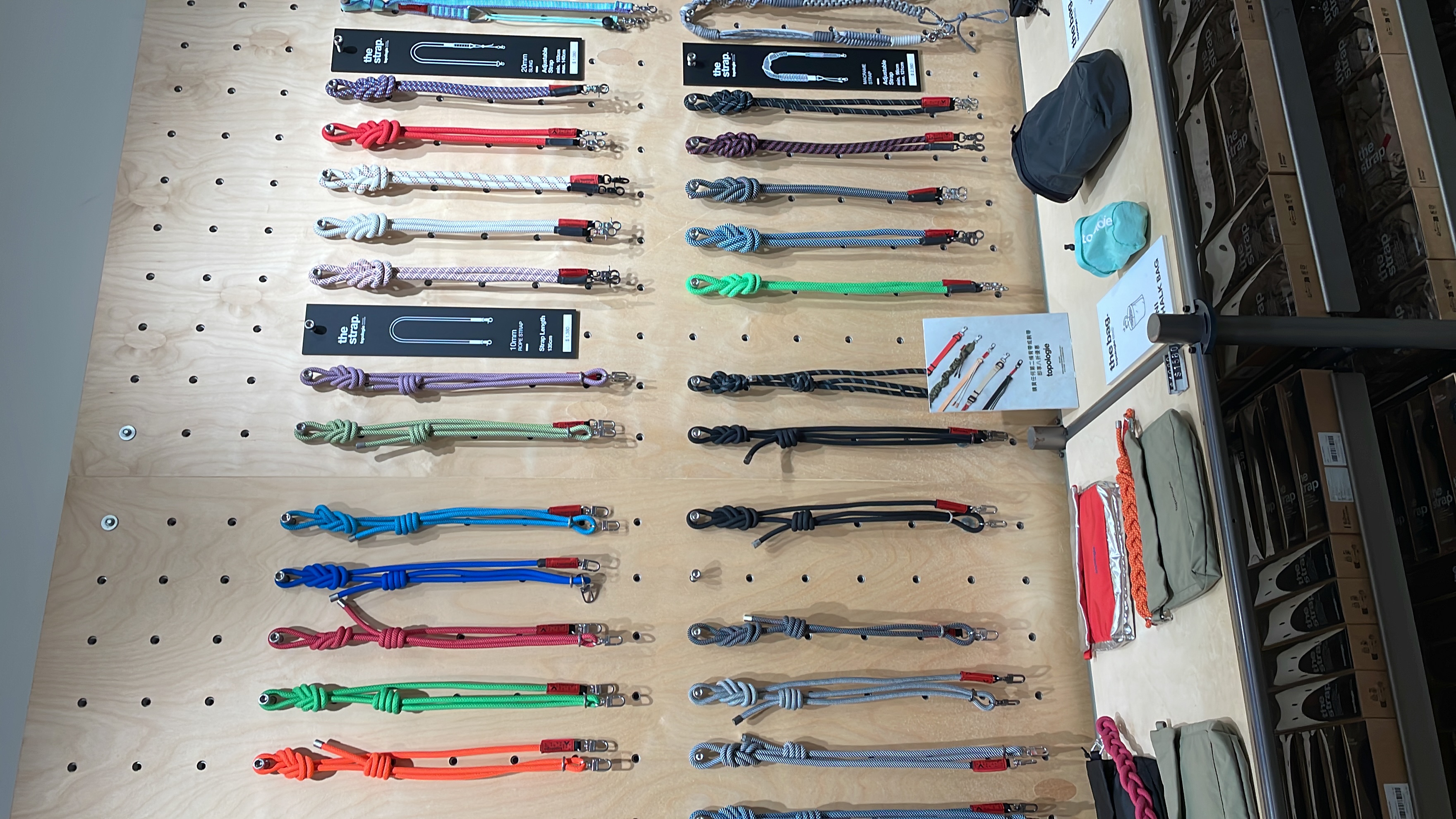
Dozens of straps in distinct colors — the scene cut like a frame, readable from the street.
No sign needed. No description required.
The visual alone signals that something is happening here.
The first impression is already the brand experience.
step in.
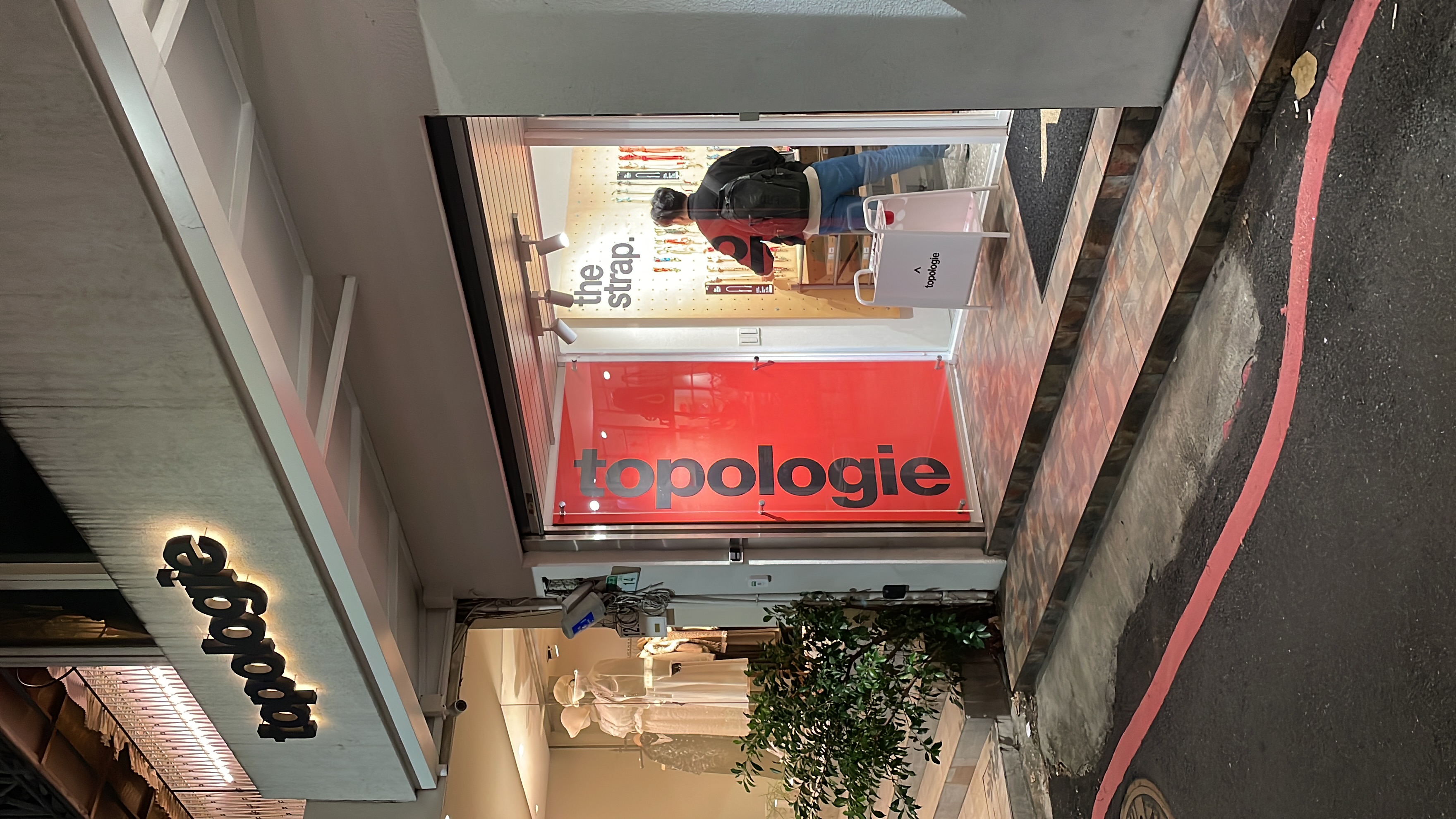
Topologie started in Hong Kong.
The founders took the core logic of climbing hardware — strong, lightweight, universally connectable — and built a product line around it.
The logic of a climbing rope: one strap should connect to any piece of gear.
That principle applies to every Topologie product.
The lineup is defined in three clear categories.
the strap. the bag. the case.
Each name ends with a period.
A sentence. A declaration.
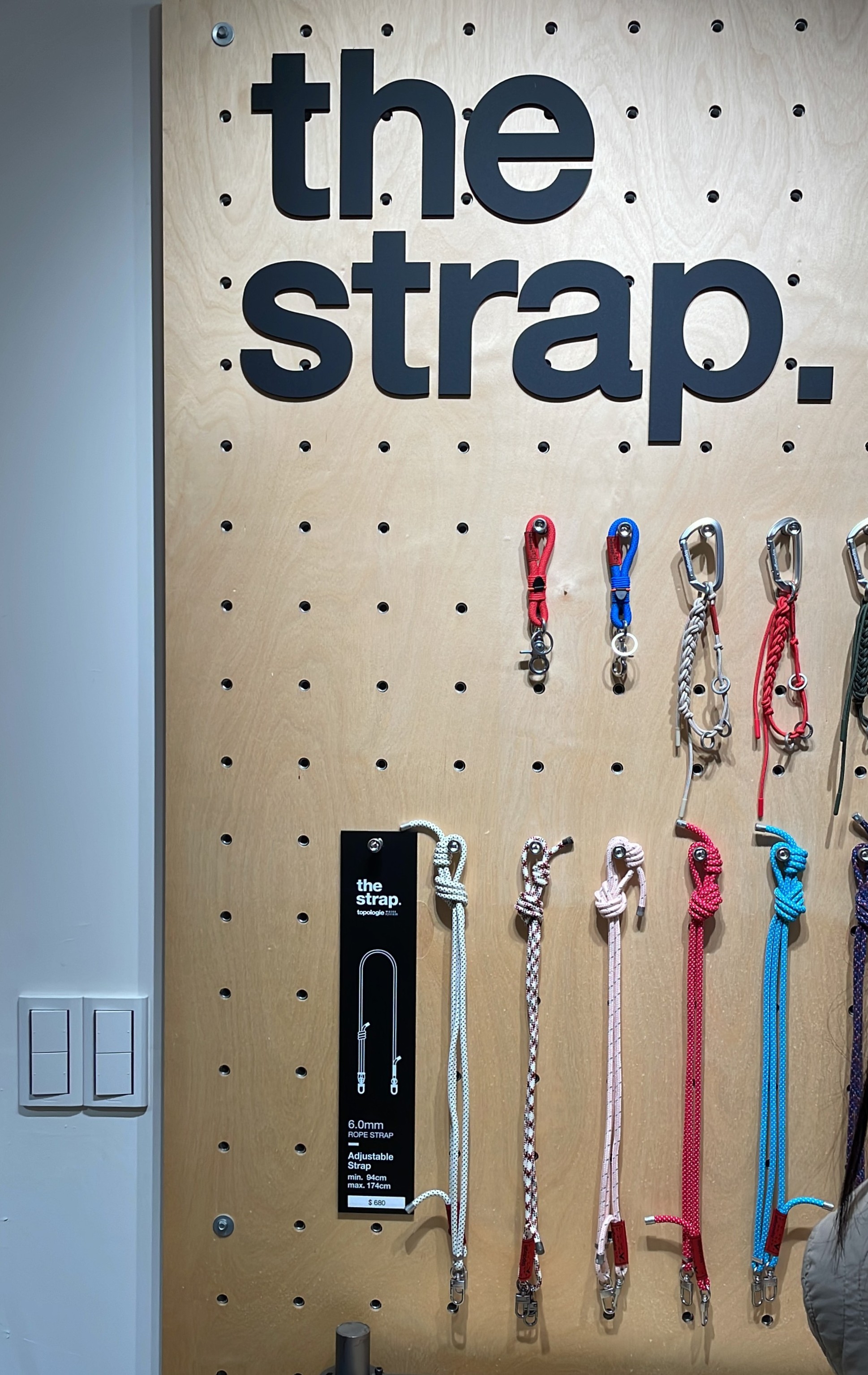
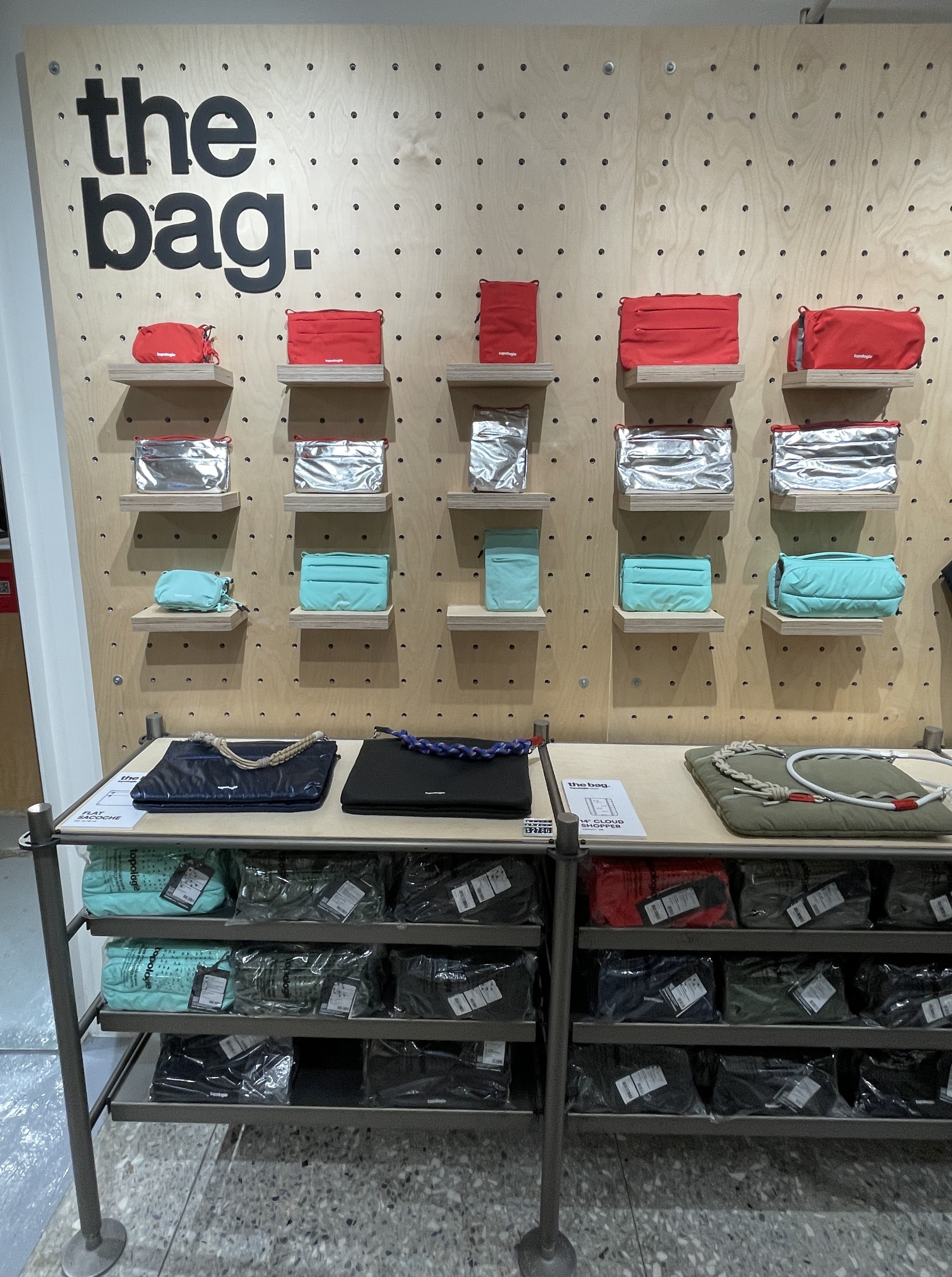
and color.
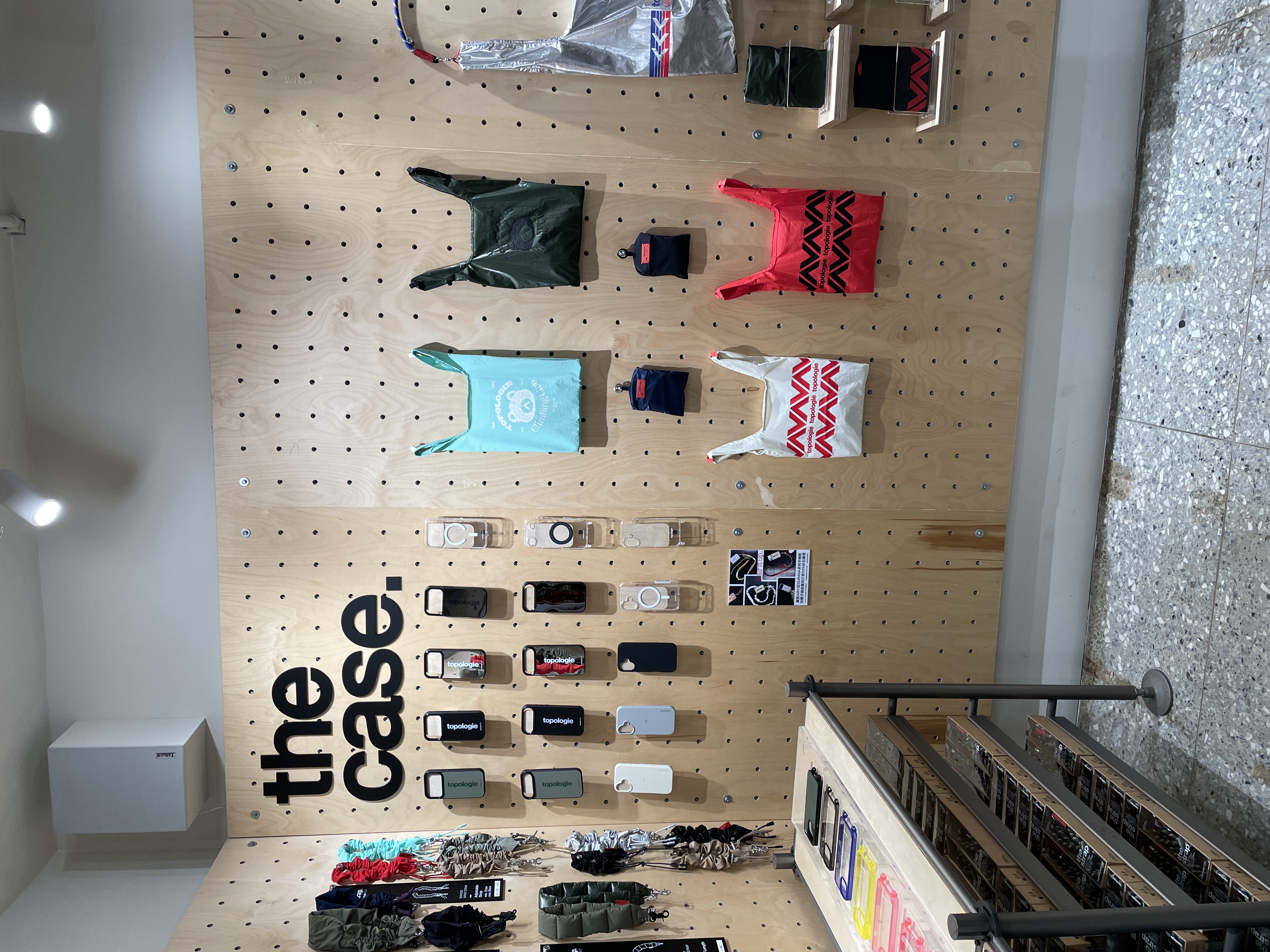
The engine of Topologie is the Wares System™.
Over 120 straps connect to every bag and case in the range.
The possible combinations exceed 1,000.
The connector hardware — carabiners, D-rings — is standardized across all products.
Any strap to any bag. Any bag to any case.
Products aren't finished objects. They're components.
The customer completes the object by combining.
That's the product system.
choice a combination.
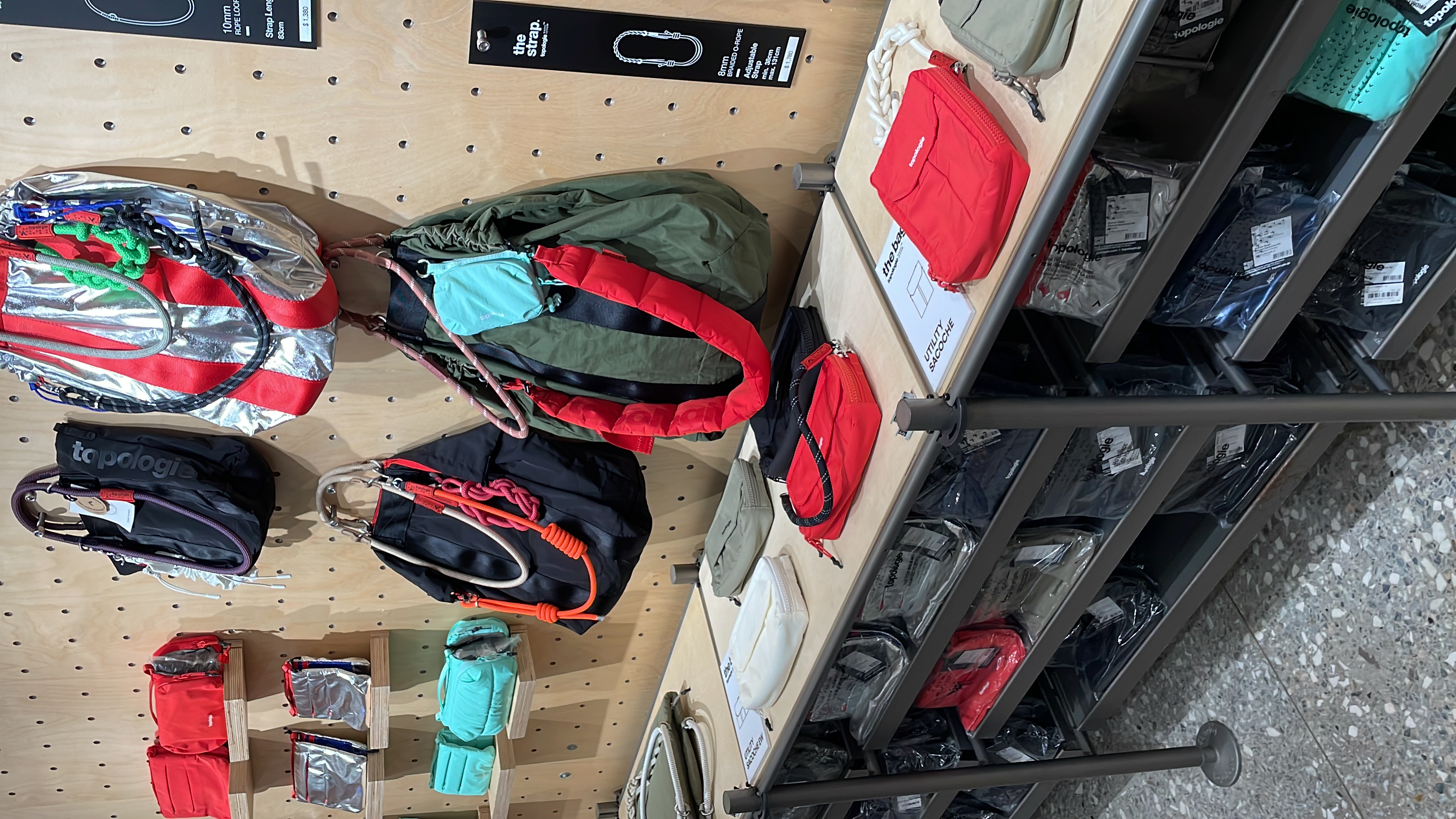
connected.
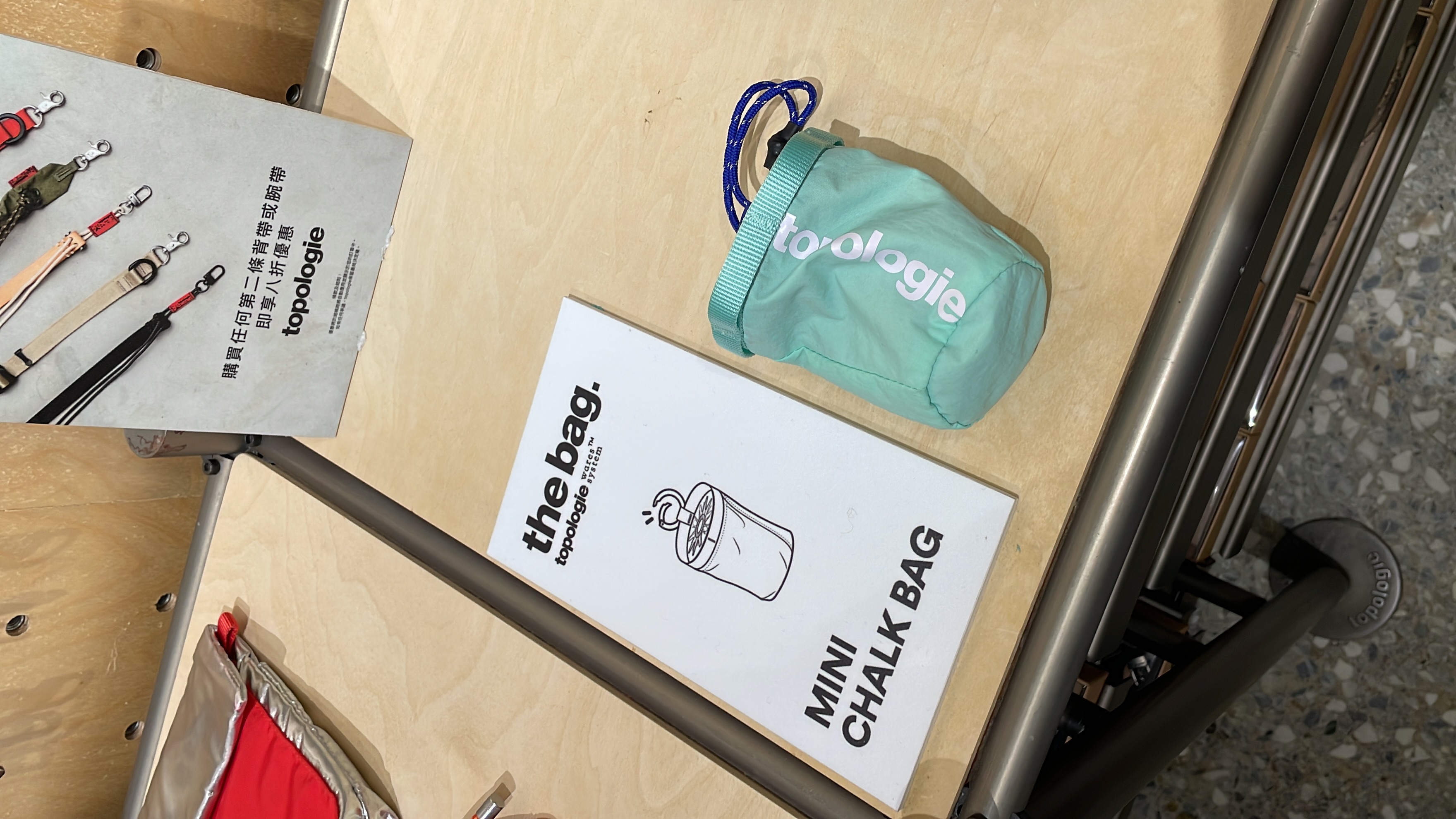
A full stop on each.
every element in the space connects and separates.
The product system and the spatial system operate on the same logic.
The store is a direct translation of the product system into spatial language.
Topologie collaborated with Keiji Takeuchi Design Office in Tokyo to develop the SIS (Store In Store) system.
Metal pipe frames take pegboard panels.
Shelves slot in at any position.
Change the product configuration, and the shelf configuration changes with it.
Every fixture is a module.
Nothing is fixed.
The system accommodates any combination.
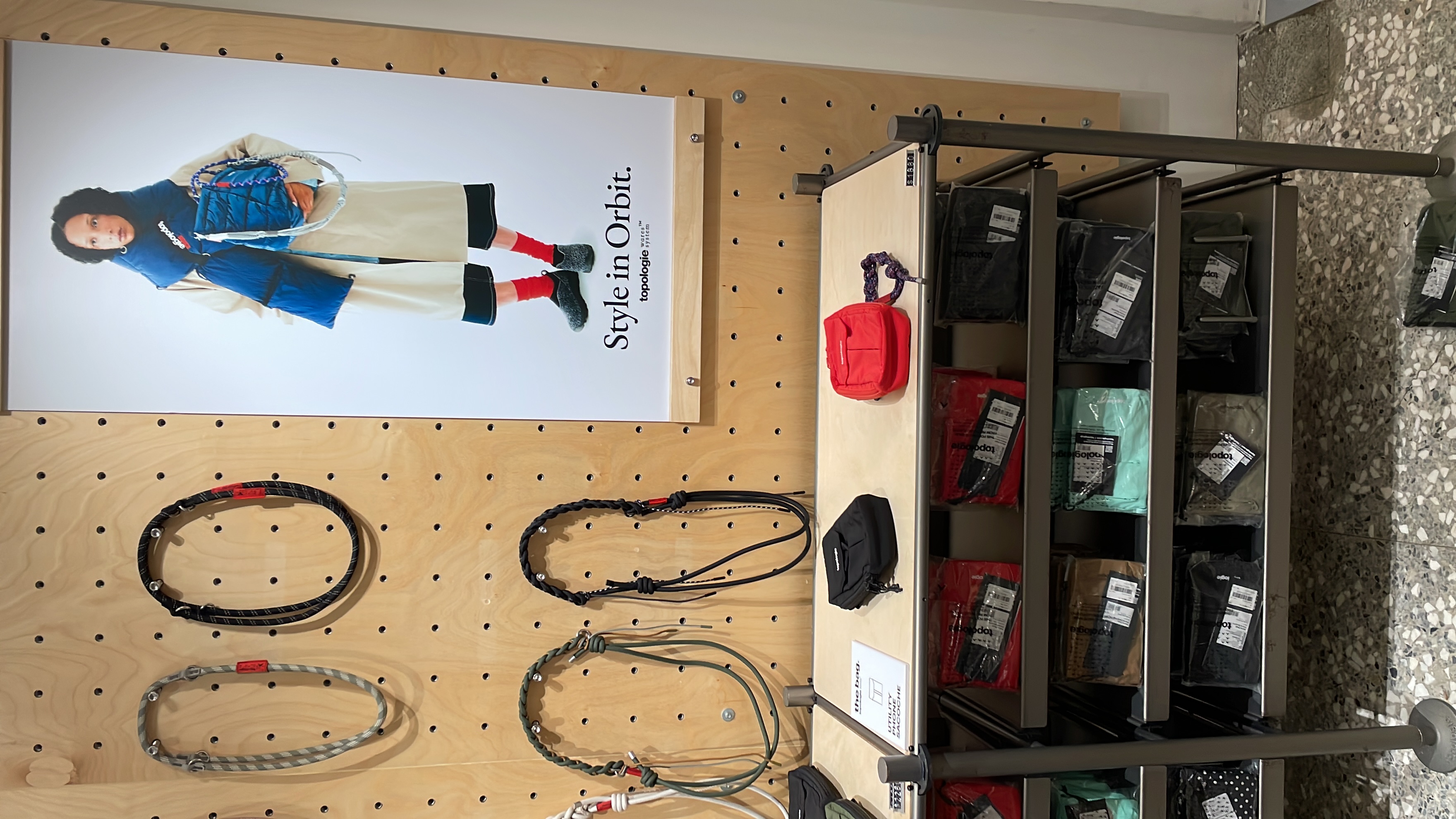
straps on pegboard. Nothing fixed.
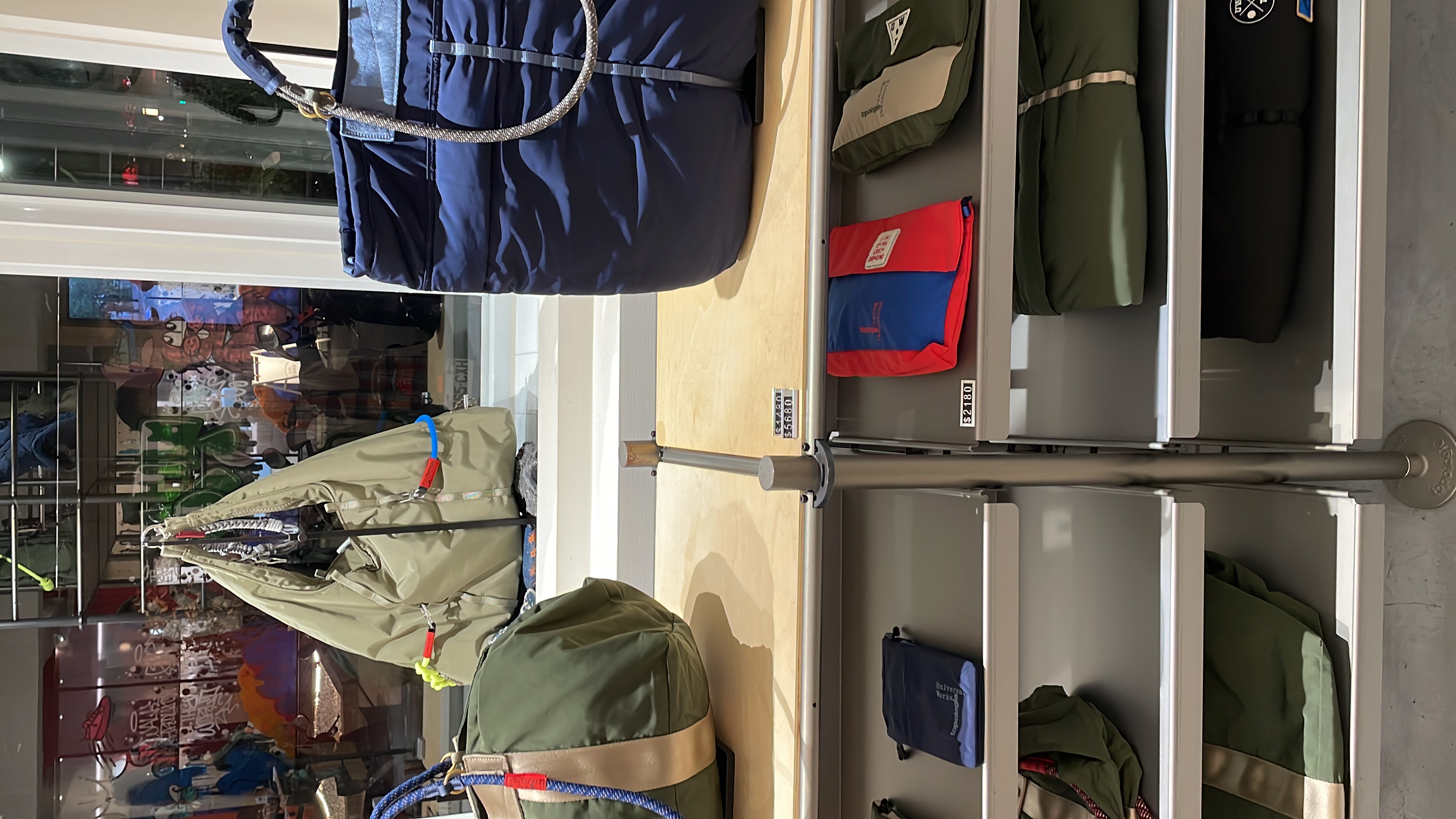
The packaging is where it gets interesting.
Box dimensions are designed to align with SIS shelf modules.
Products can be displayed in their boxes without visual disruption.
Packaging and display share the same dimensional logic.
This isn't a logistics decision.
It's a declaration: product, packaging, shelf, and space all speak the same system language.
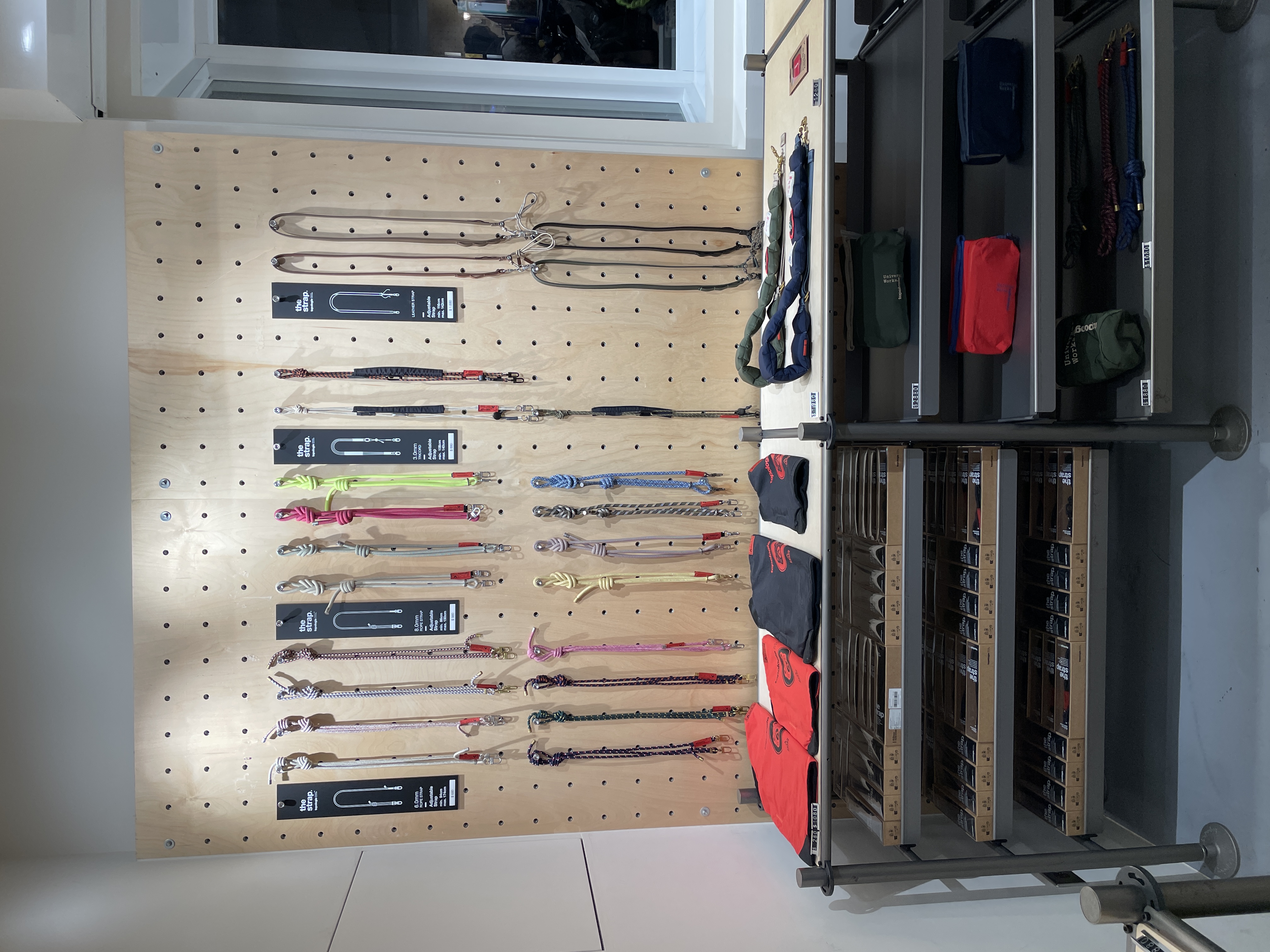
The store has no decorative elements.
Lighting is minimal. No graphics on the walls.
Yet the space doesn't feel empty.
The reason is the straps.
Over 120, sorted by color and material, hanging across the pegboard.
Fluorescent yellow, deep navy, terracotta, olive green —
these colors are the space's visual palette.
No separate interior design is needed.
How the products are arranged determines the atmosphere.
The inventory is the decor.
The display method is the interior design.
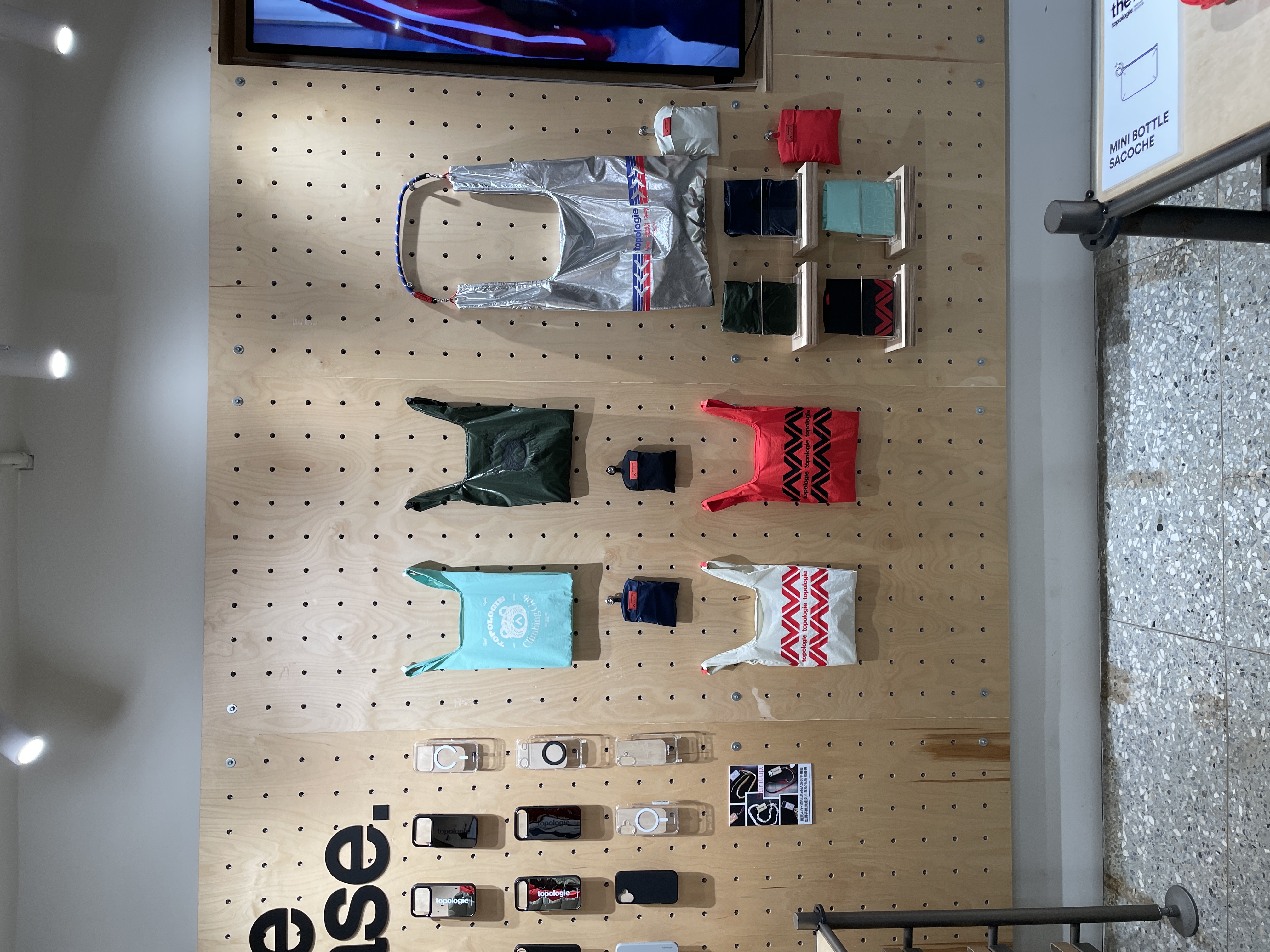
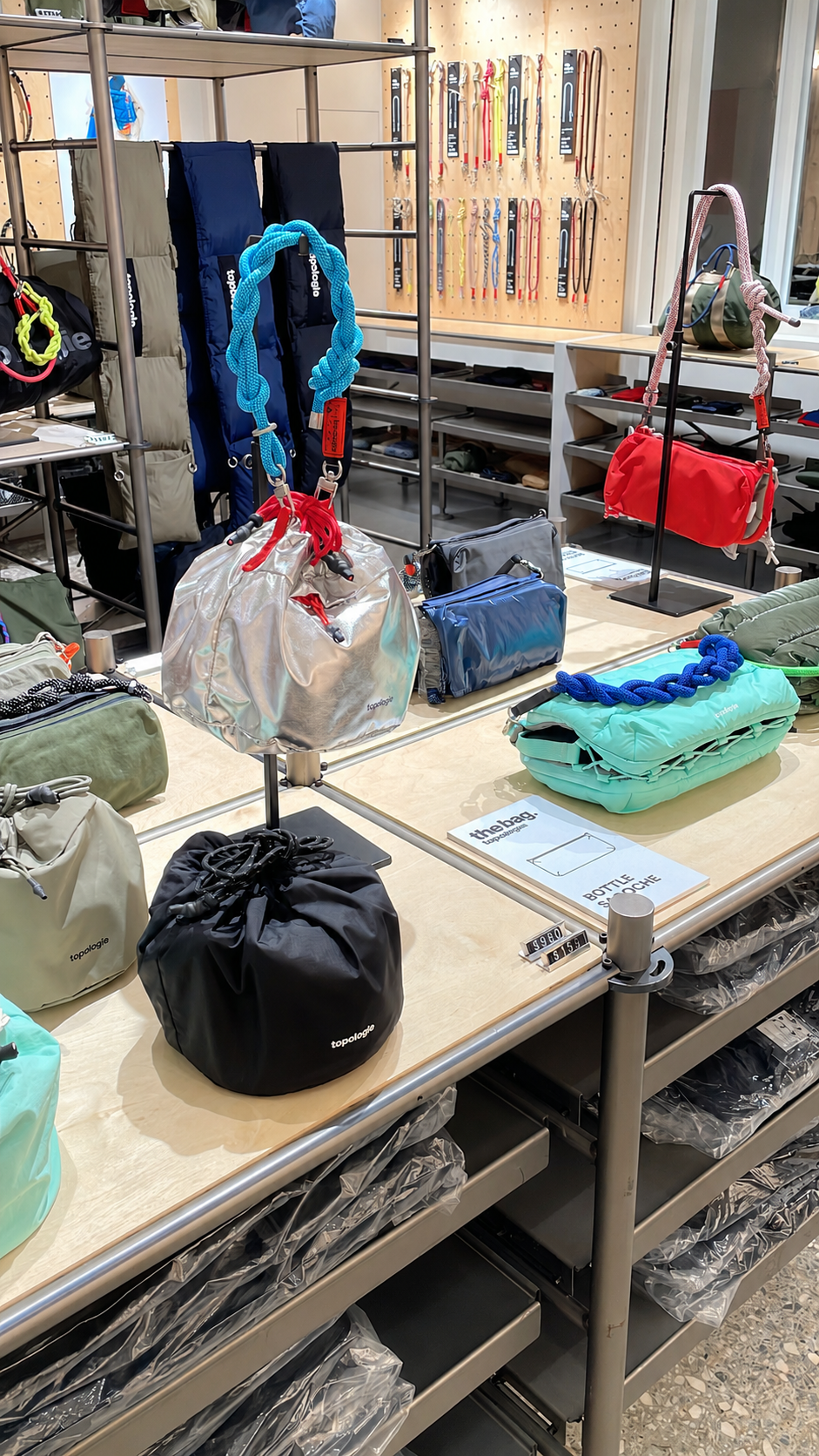
Topologie uses the same SIS system across all its stores globally.
Hong Kong, Tokyo, Paris, Taipei — the spatial framework is identical.
But each city brings local artists into the space.
In Hong Kong, a collaboration with graffiti artist MC Yan.
In Paris, local artwork layered onto the structure.
The structural system is unified globally.
The visual identity draws from the local context.
Same system worldwide. Different sensibility in each city.
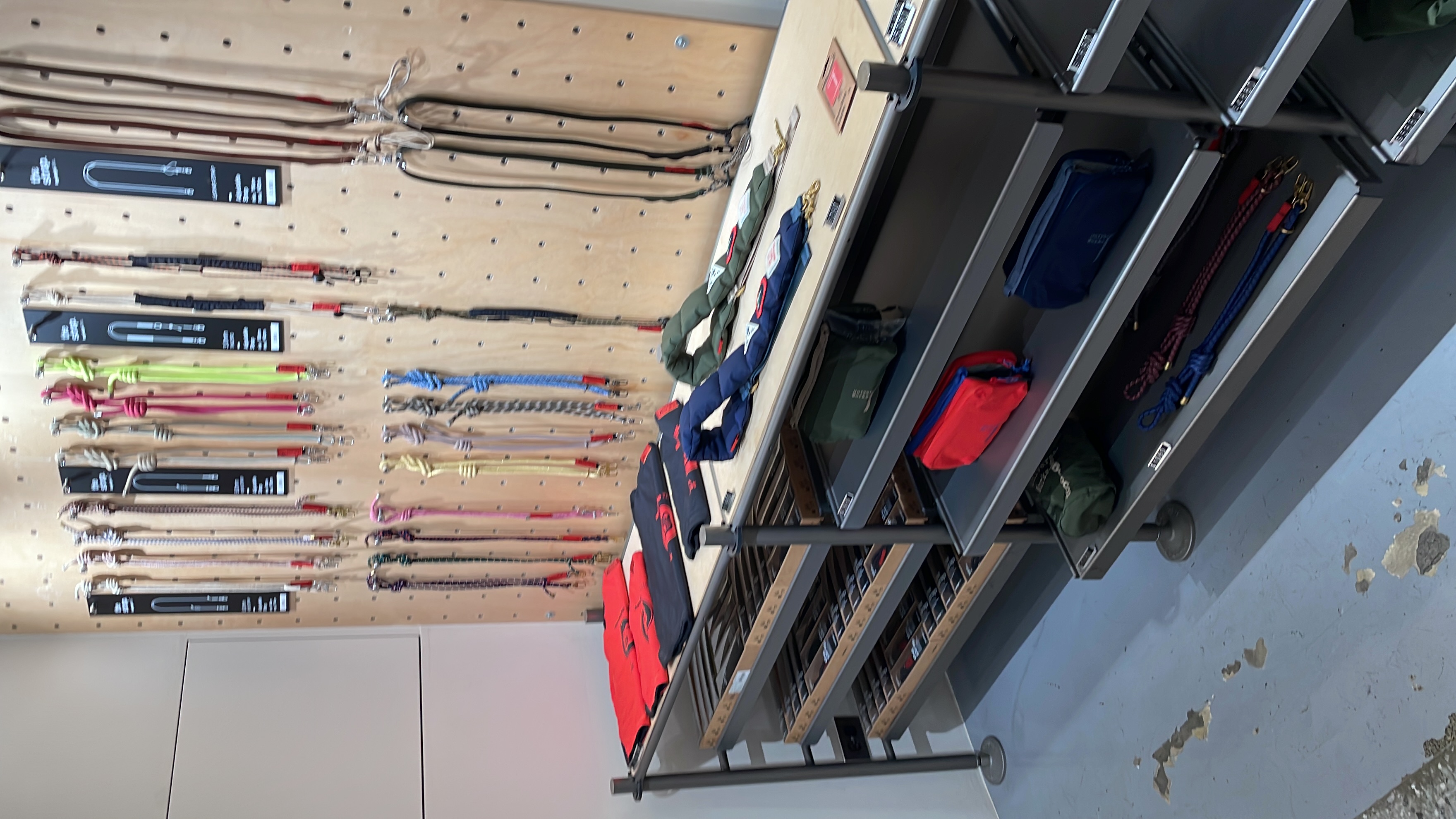
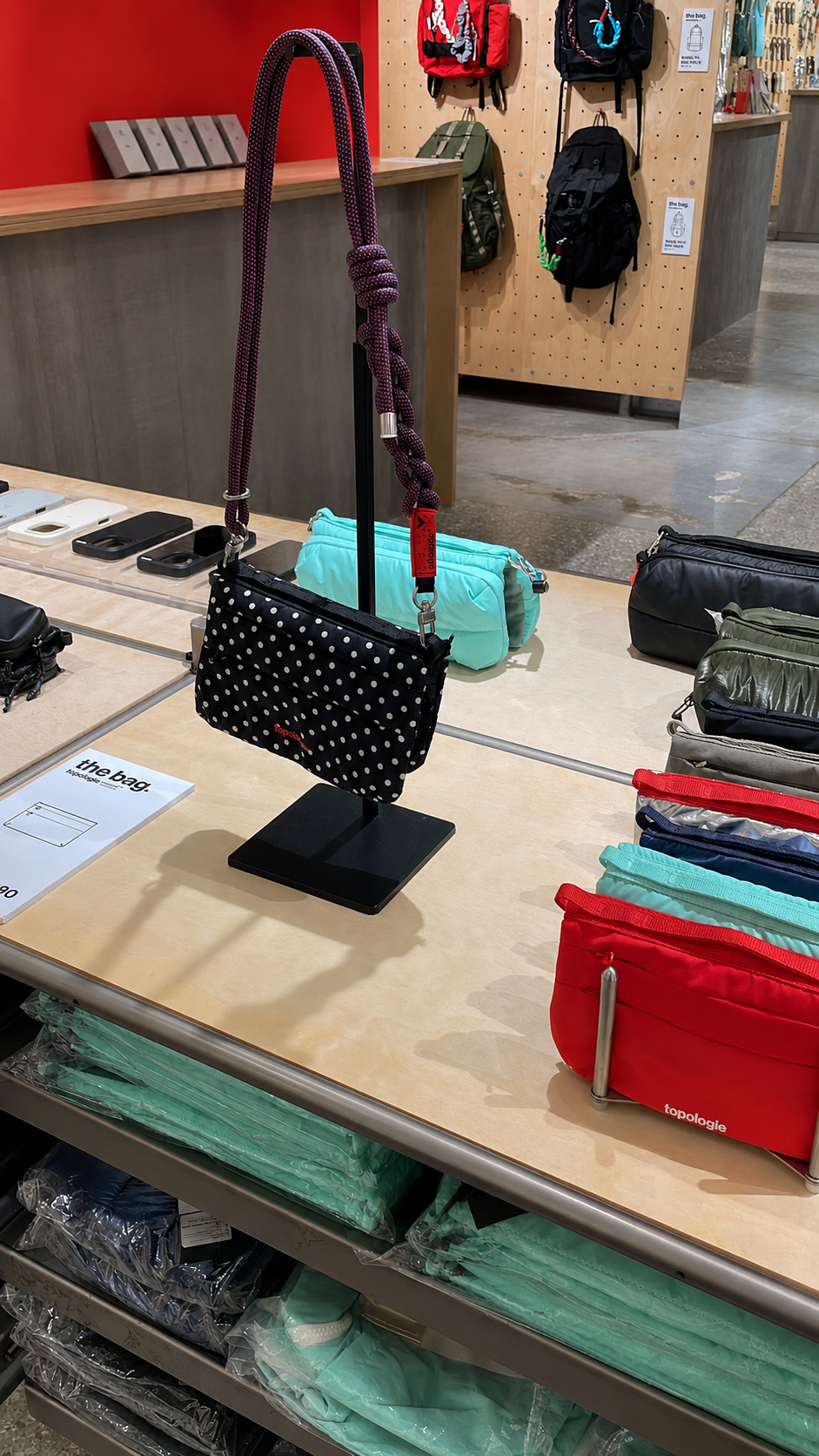
combination every city.
Topologie's store is less interior design, more system design.
The product combination system (Wares System™) and the spatial display system (SIS) operate from the same philosophy:
anything can connect,
anything can be reconfigured,
and the act of combining is itself the brand experience.
People pulling out straps, attaching them to bags, comparing colors, starting over.
Thirty minutes gone.
The store was the device that let you experience that with your body.
Thirty minutes wasn't wasted. It was the brand experience.