Wulai sits forty minutes from Taipei, up into the hills.
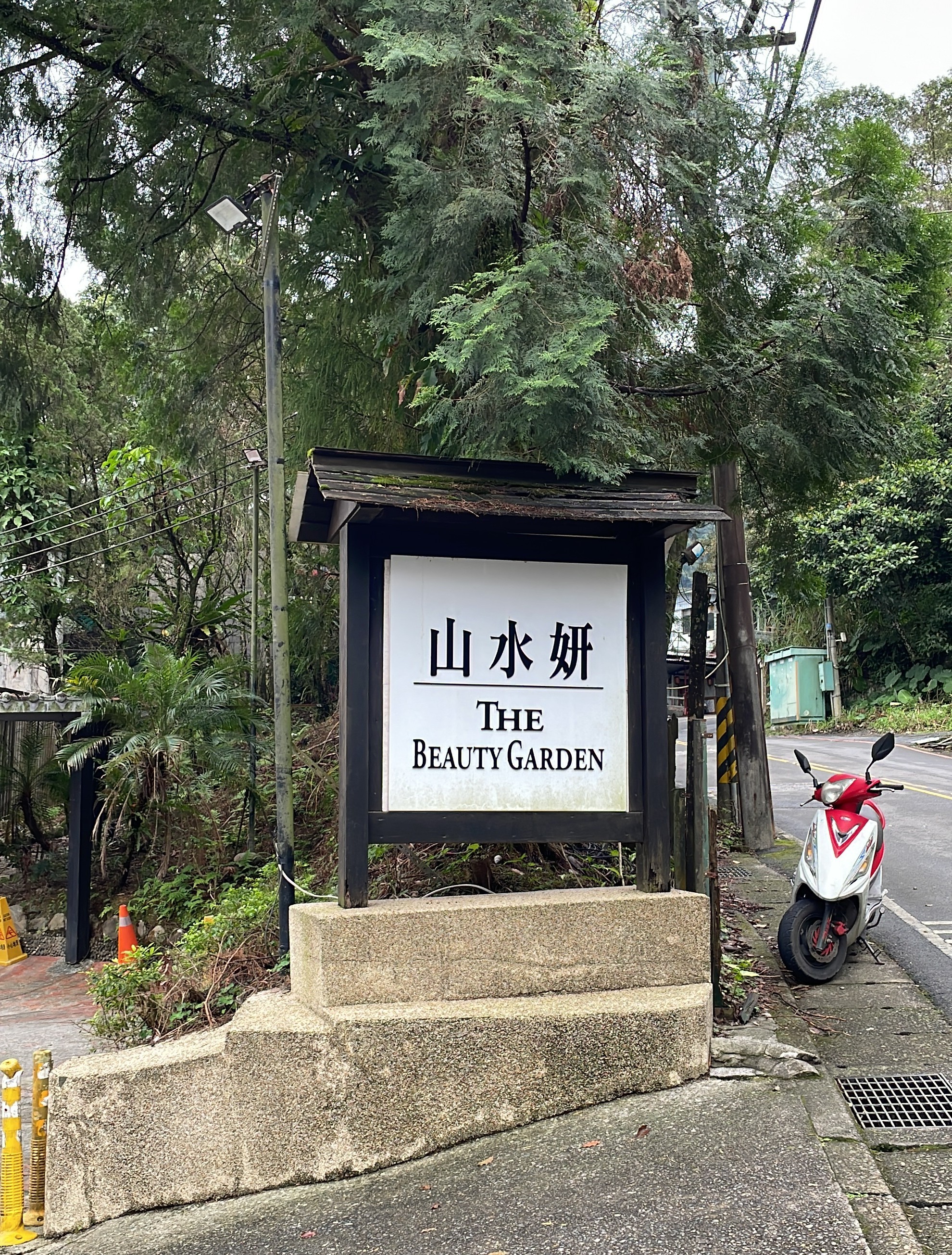
A small wooden sign frames the name between the trees.
山水妍.
The Beauty Garden.
No grand entrance. No marquee lighting.
Just a name, placed where the mountain places it.
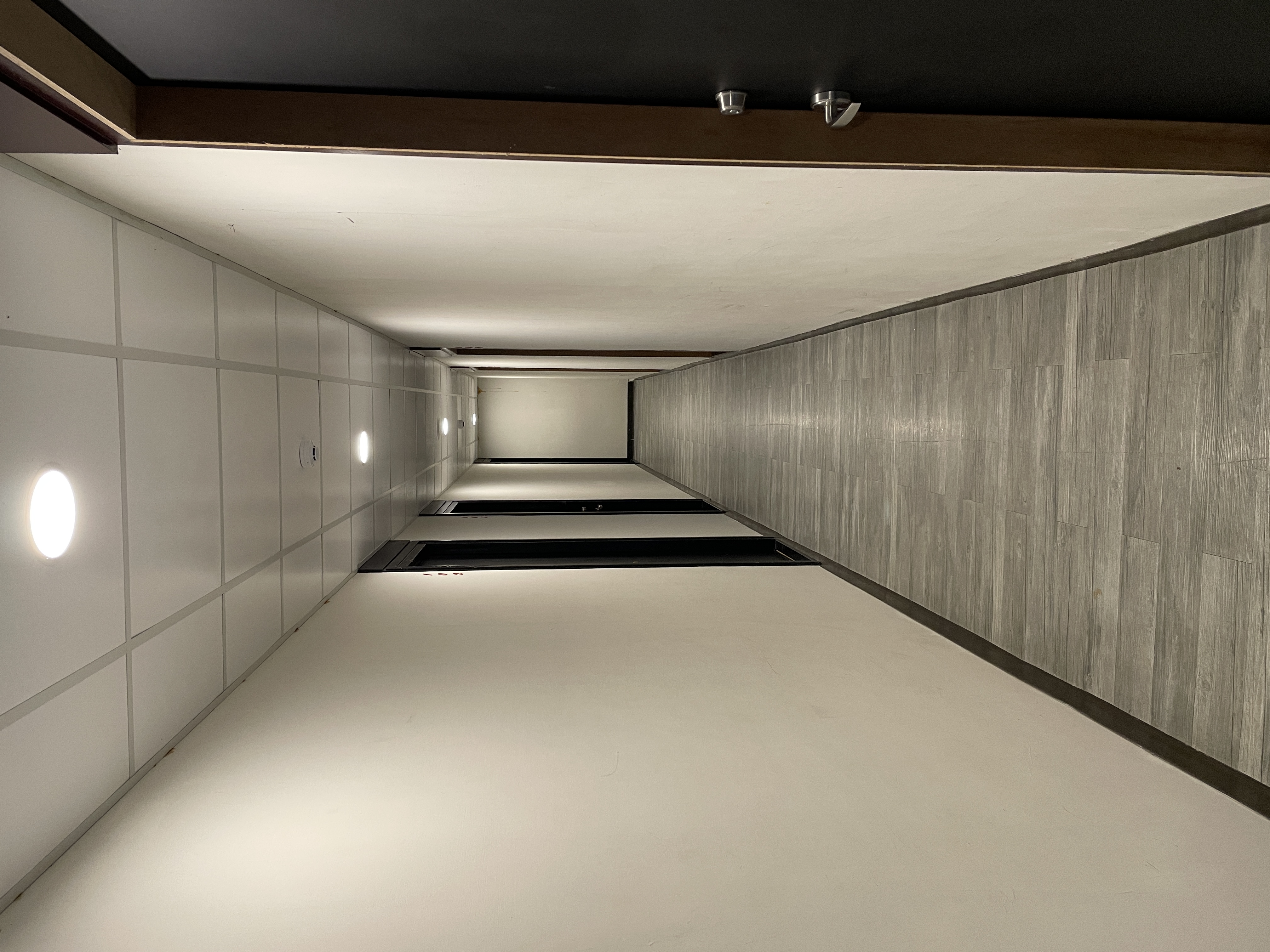
The corridor is white walls, timber trim, near-silence.
The hotel doesn't announce itself.
It holds its shape and waits.
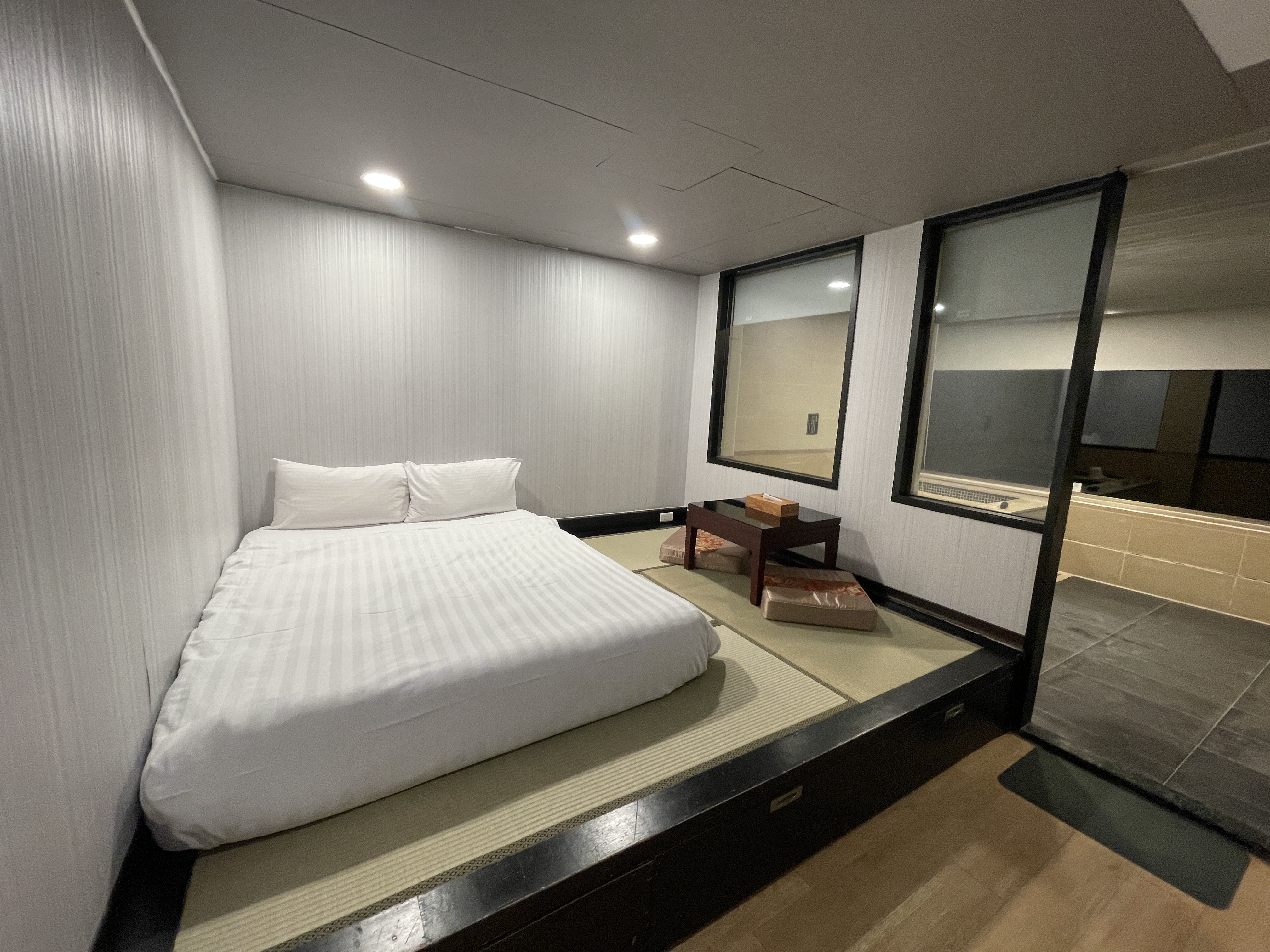
The door opens onto tatami.
A low bed sits on the platform, a small table beside it.
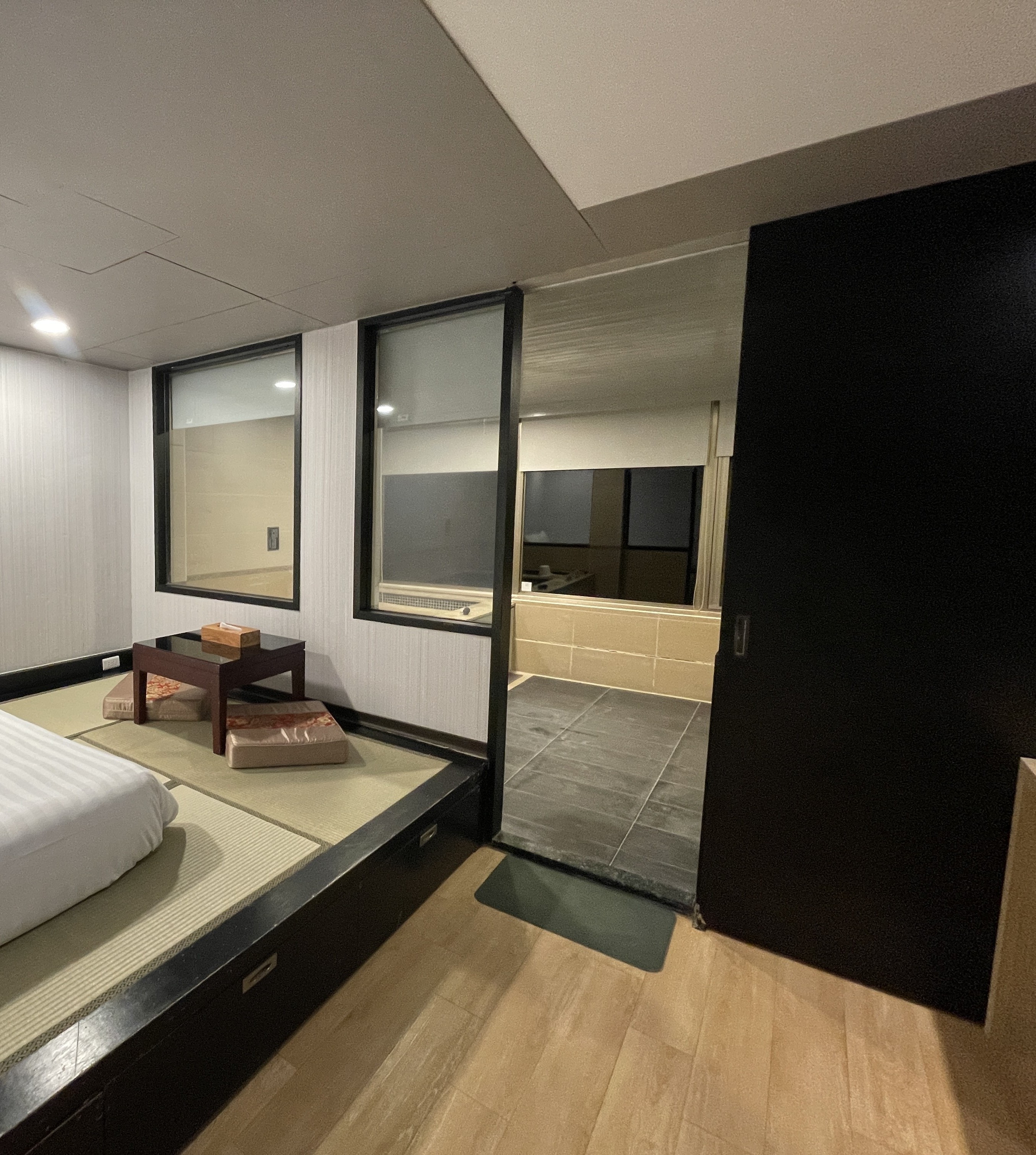
A door separates the tatami zone from the bathroom.
Lighting marks the threshold — two atmospheres held apart by a single frame.
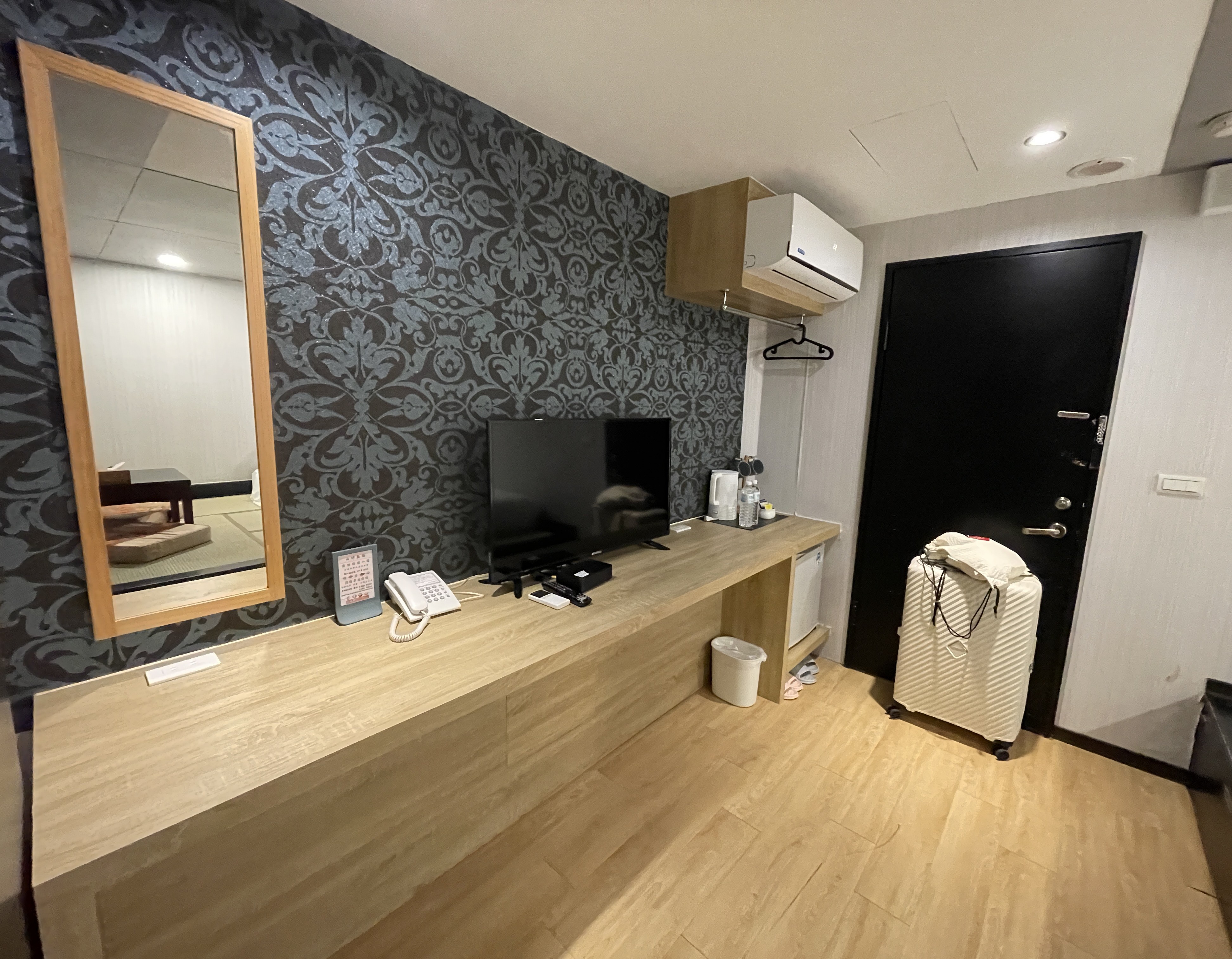
The sleeping side has a TV wall and a desk.
Dark patterned wallpaper grounds the space.
The room isn't large. Everything needed is there.
That ratio tells you what this room is for.
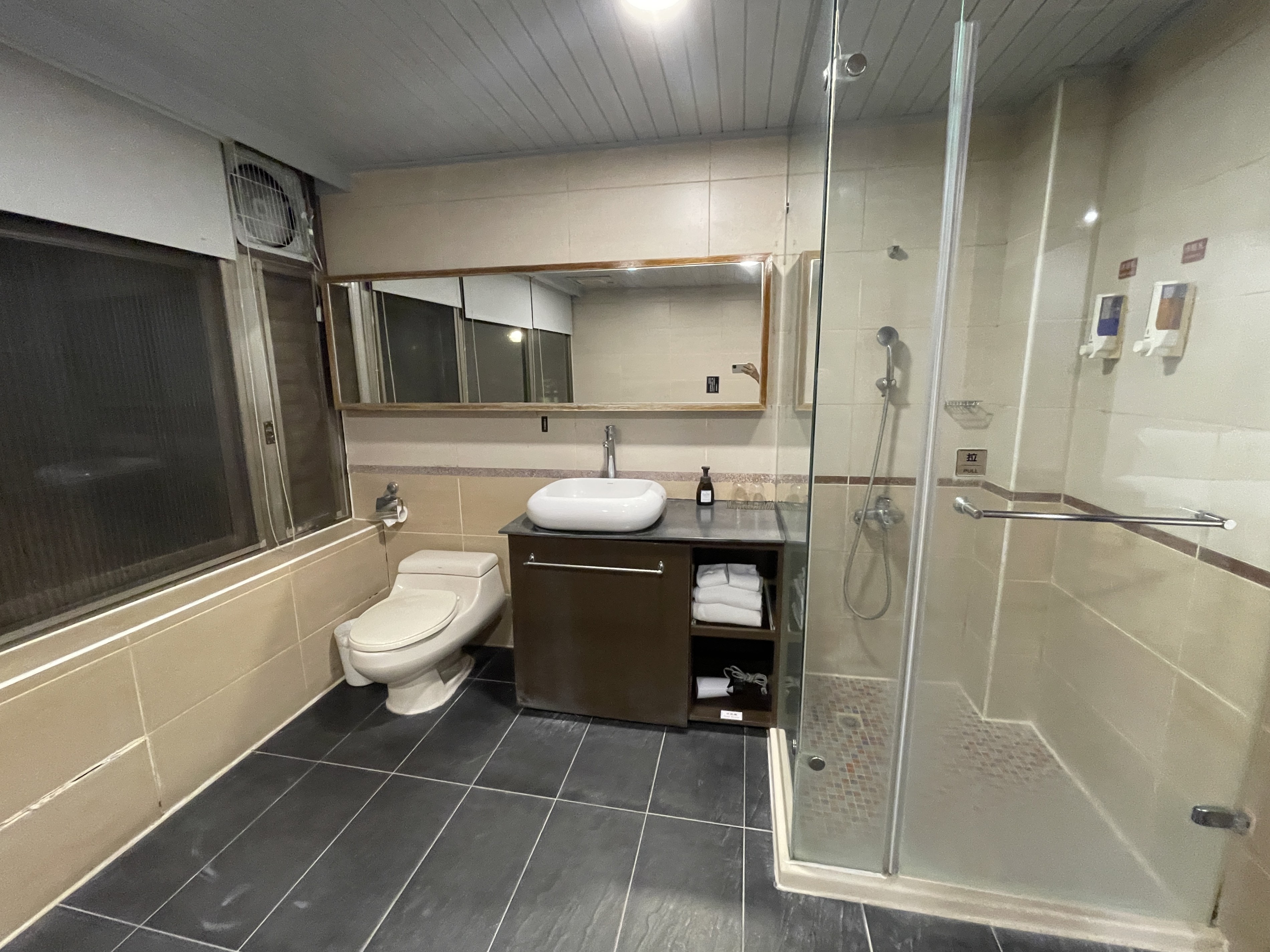
The bathroom layout makes its hierarchy clear:
shower and basin near the entrance,
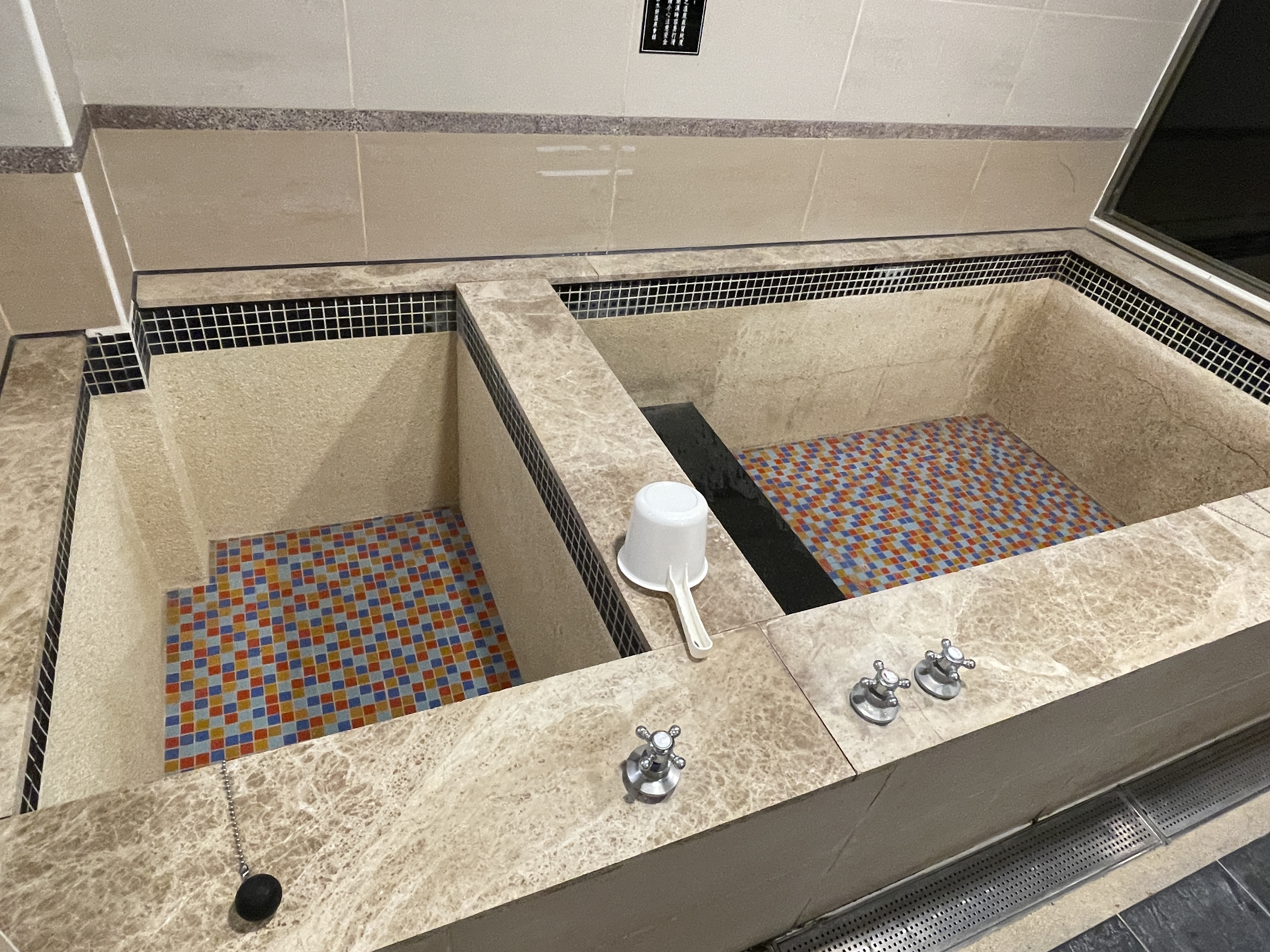
two tubs positioned deeper — and a window beyond them.
Hot onsen on one side. Cold onsen on the other.
The mountain straight ahead.
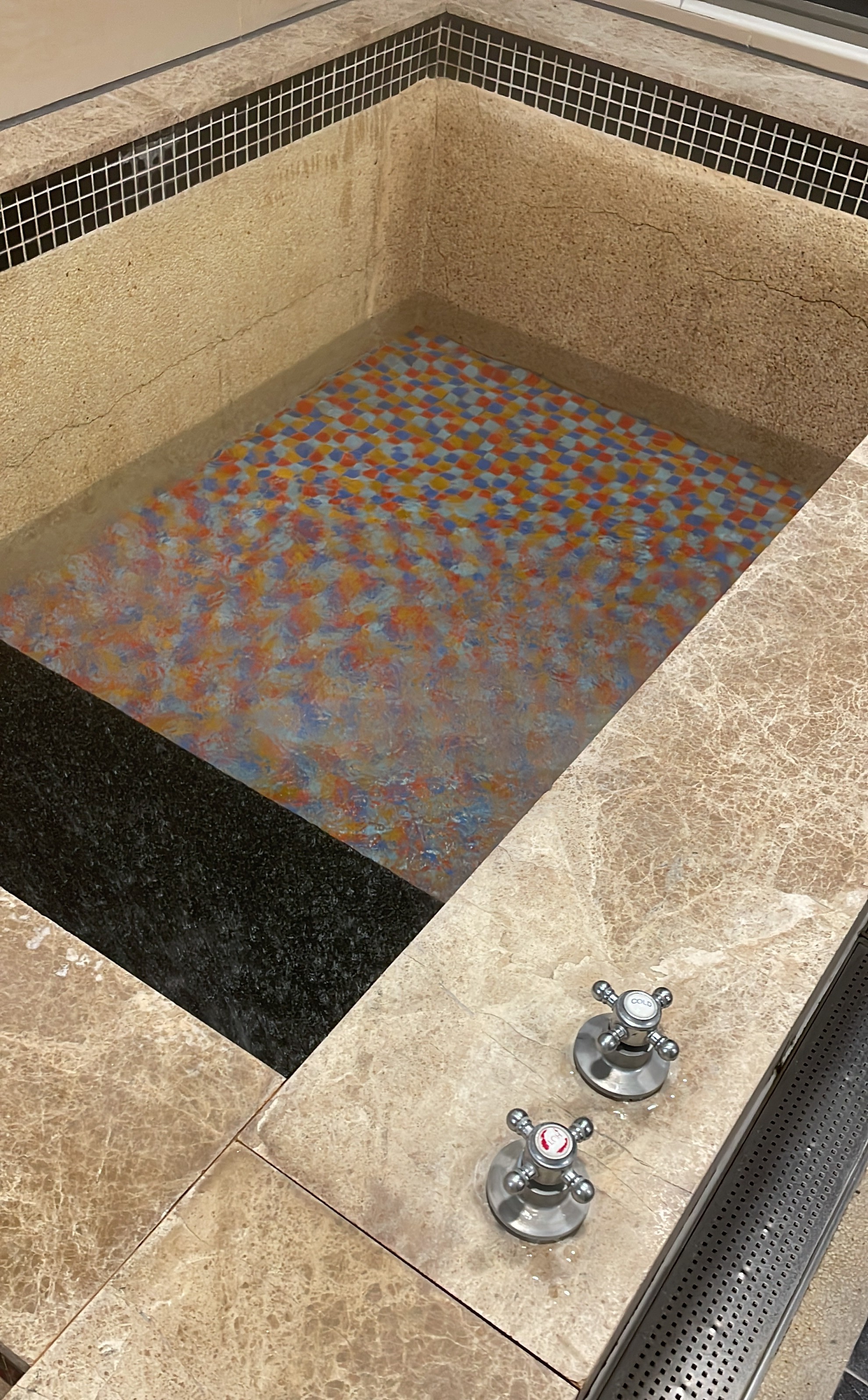
Unexpected color on the floor
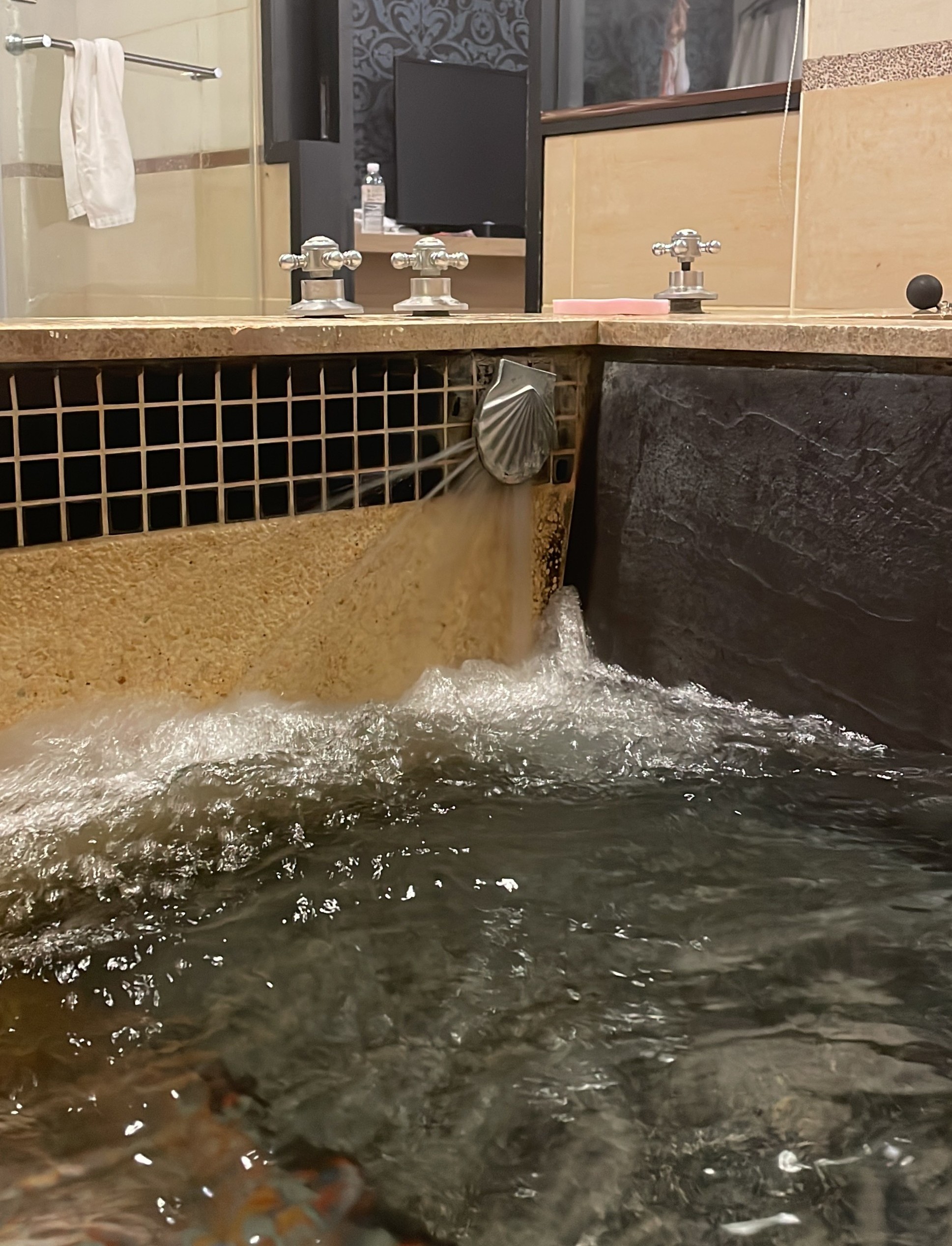
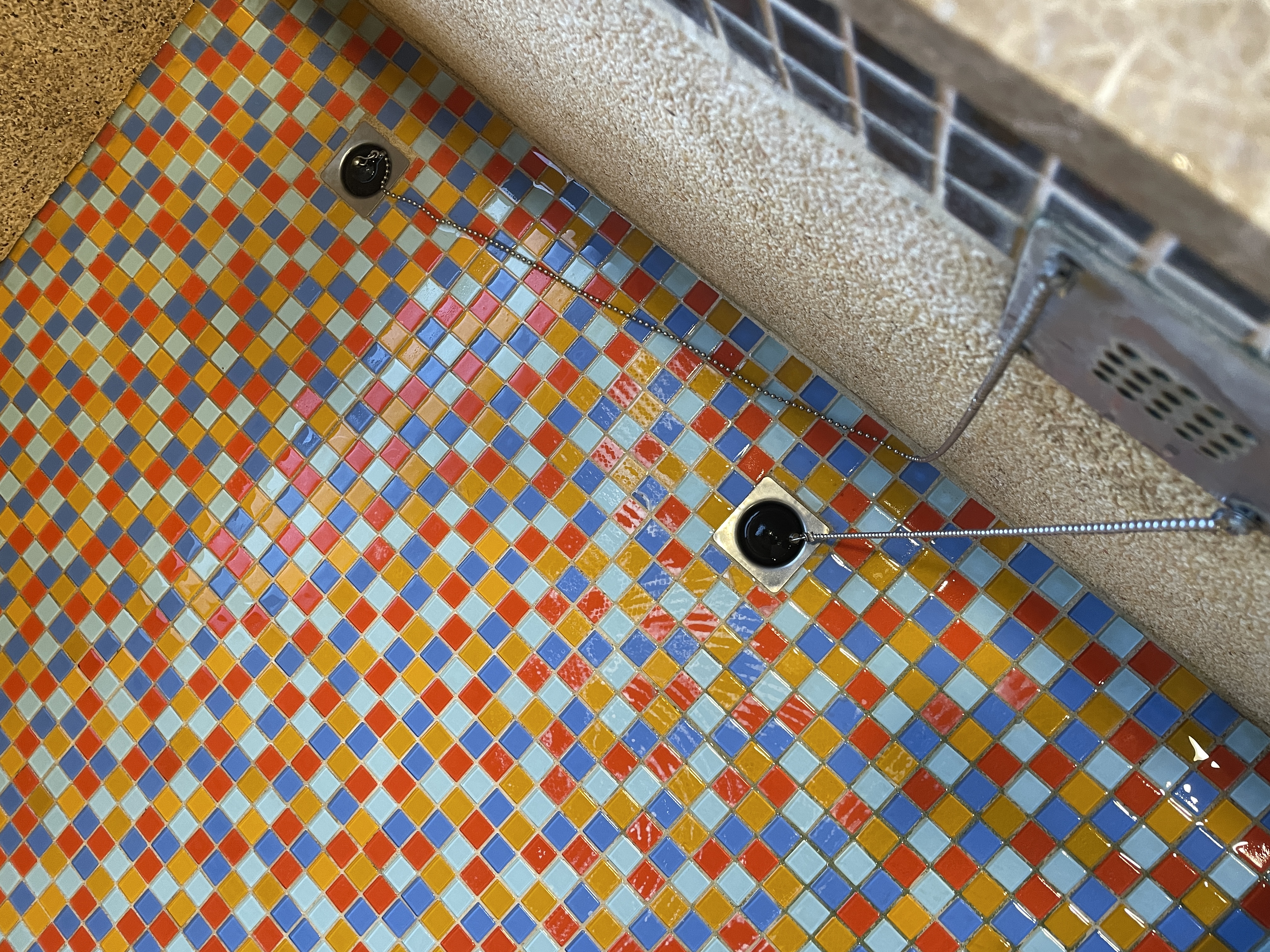
The tub floor is mosaic tile — red, blue, yellow, orange —
set against a marble surround.
The contrast is deliberate and blunt.
It reads as a design choice, not a happy accident.
The faucet releases water in a steady mid-weight pour.
Not dramatic. Not minimal.
The sound fills the room without announcing it.
A black ball-chain drain stopper.
Small, considered, easy to miss.
The kind of detail that signals something about everything else.
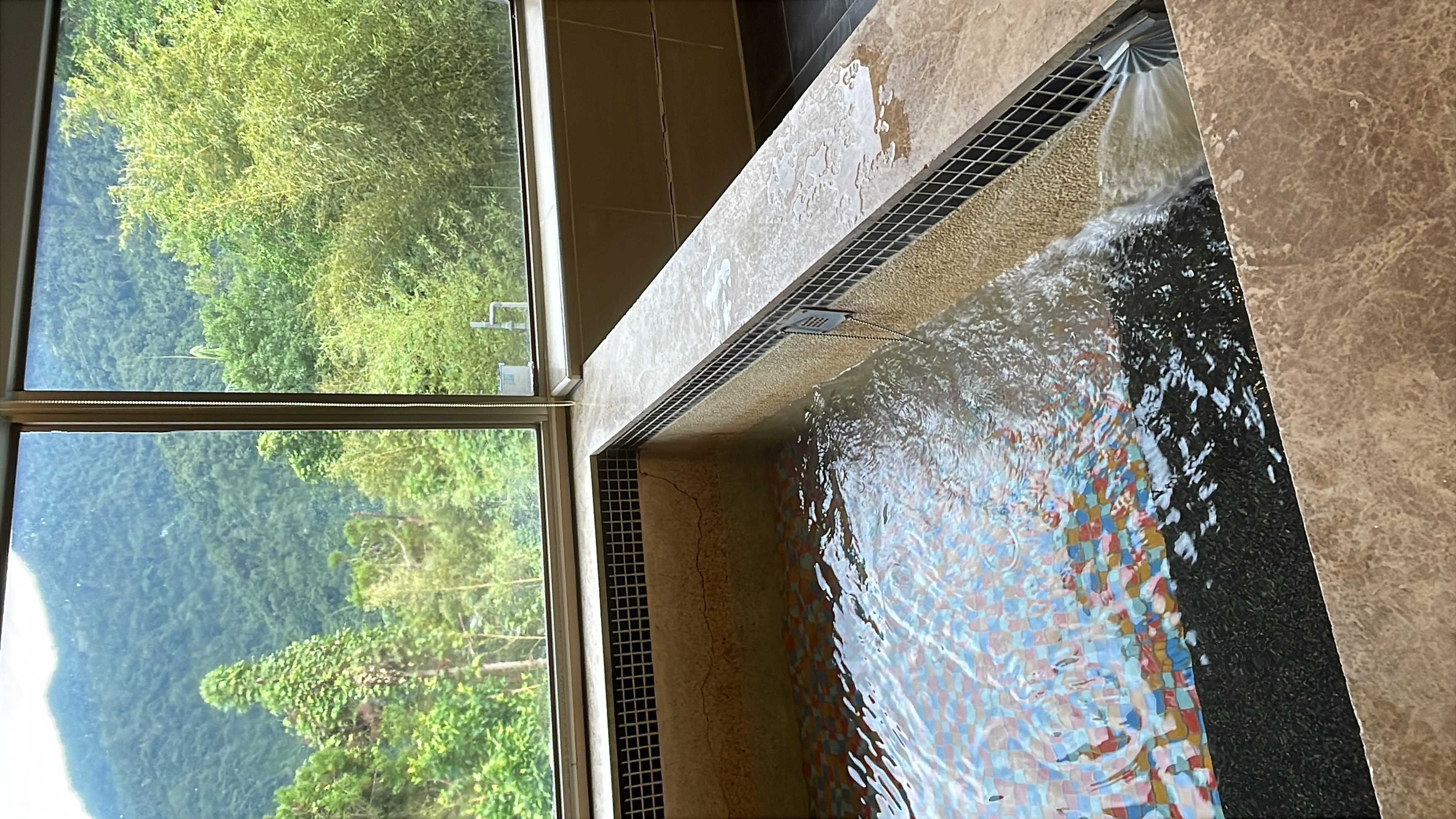
Two sensations at once
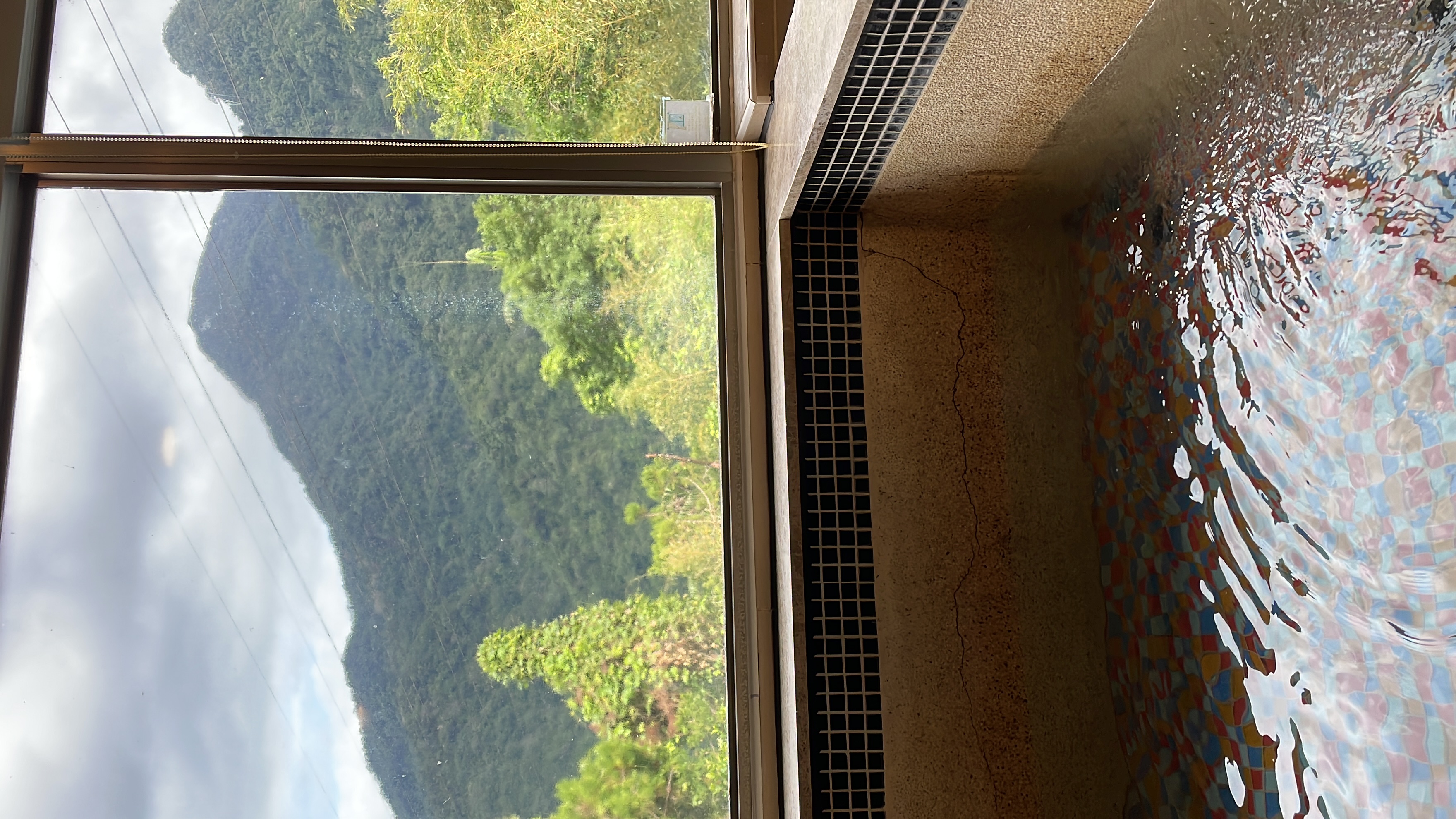
As the tub fills, the window becomes the view.
The Wulai hills shift with weather —
clear green in morning light, grey and layered in rain.
The eye moves there without being directed.
The temperature of the water and the color of the mountain
reach the senses at the same time.
Morning, afternoon, evening — the tub was used each time.
The view was different every time.
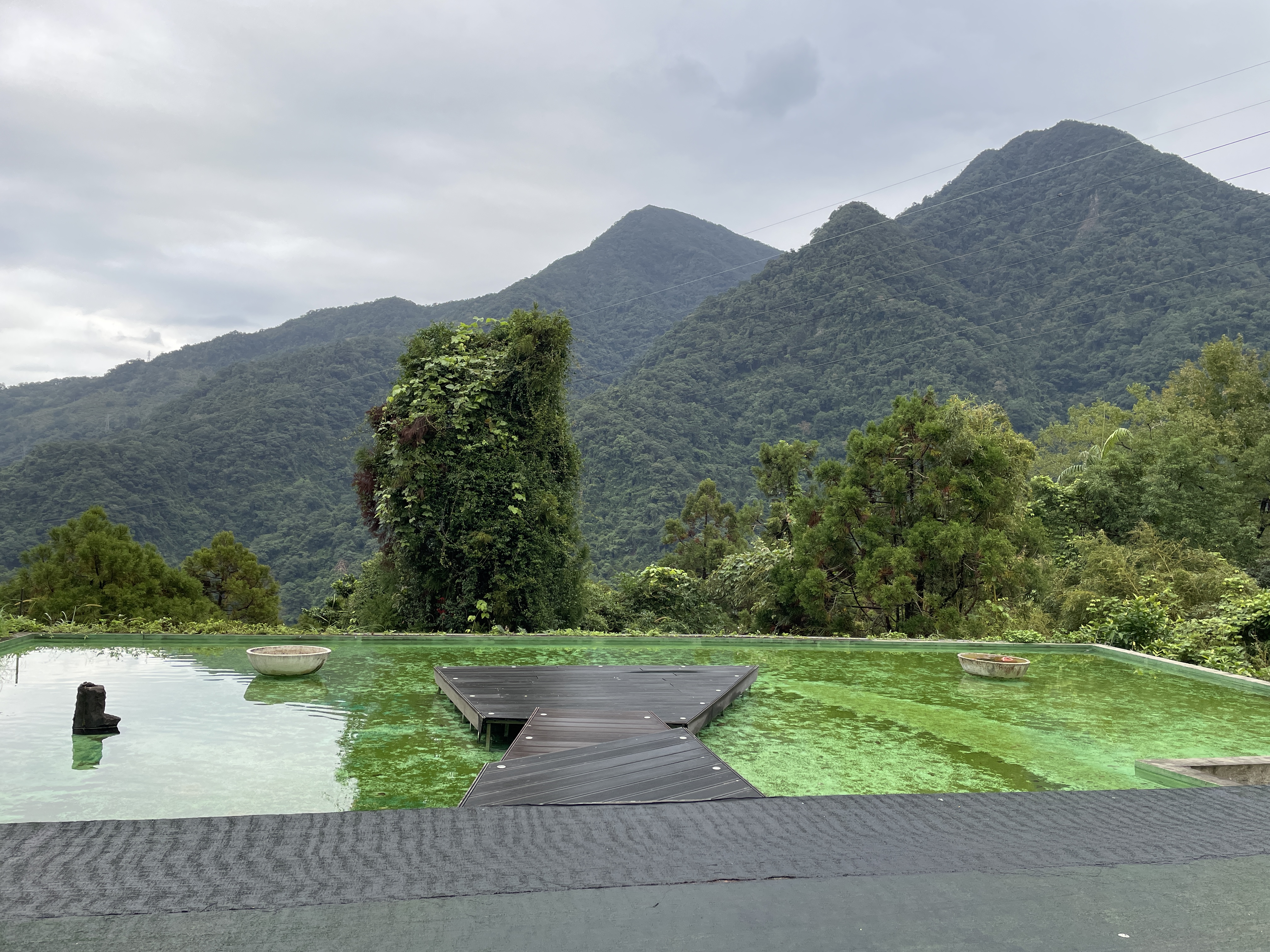
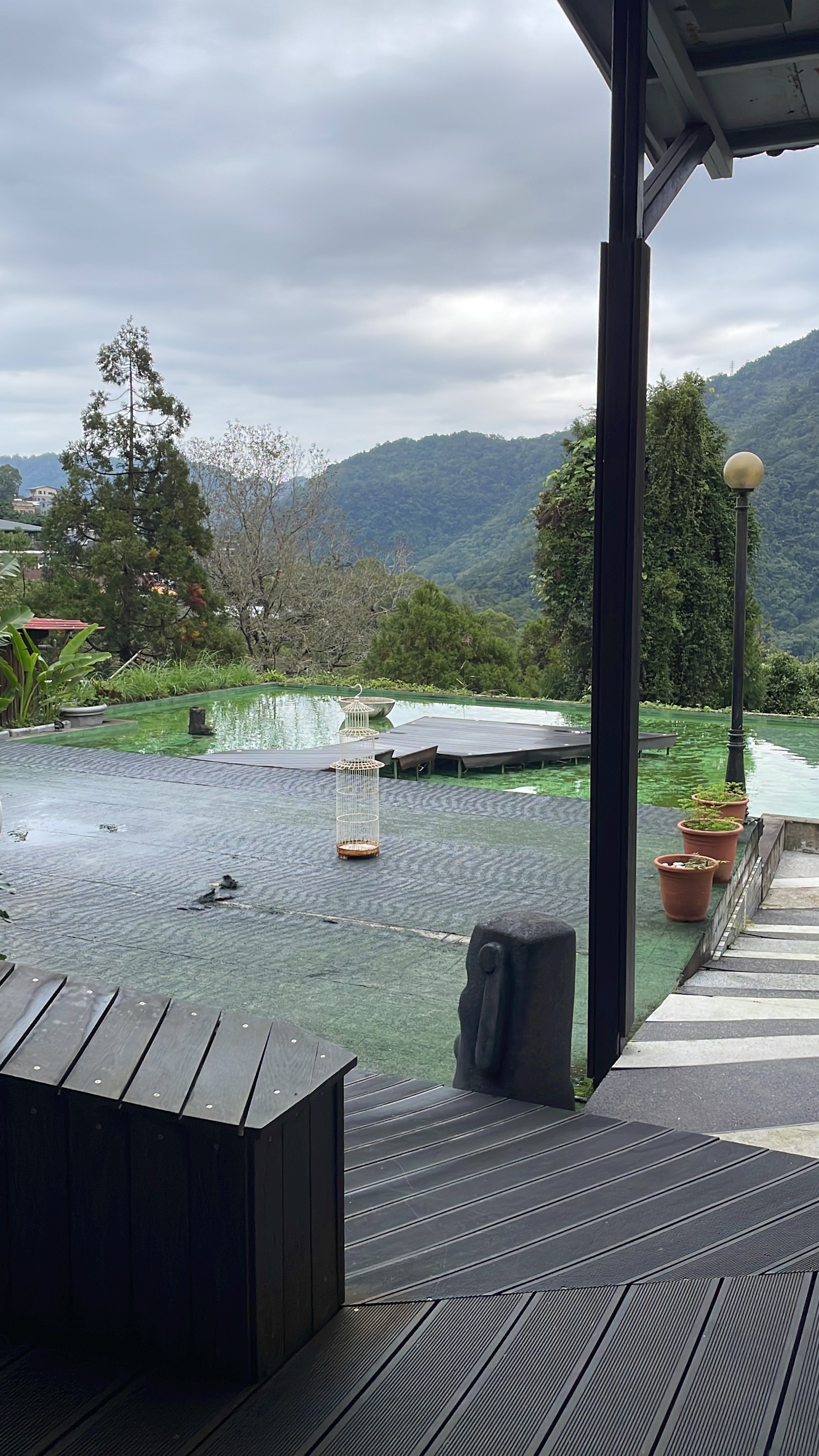
Before the room entrance, a small open-air garden —
no roof, low plants, stone underfoot.
At the far end: a shallow water feature, the mountain beyond it.
The same pairing as inside the room, restated outdoors.
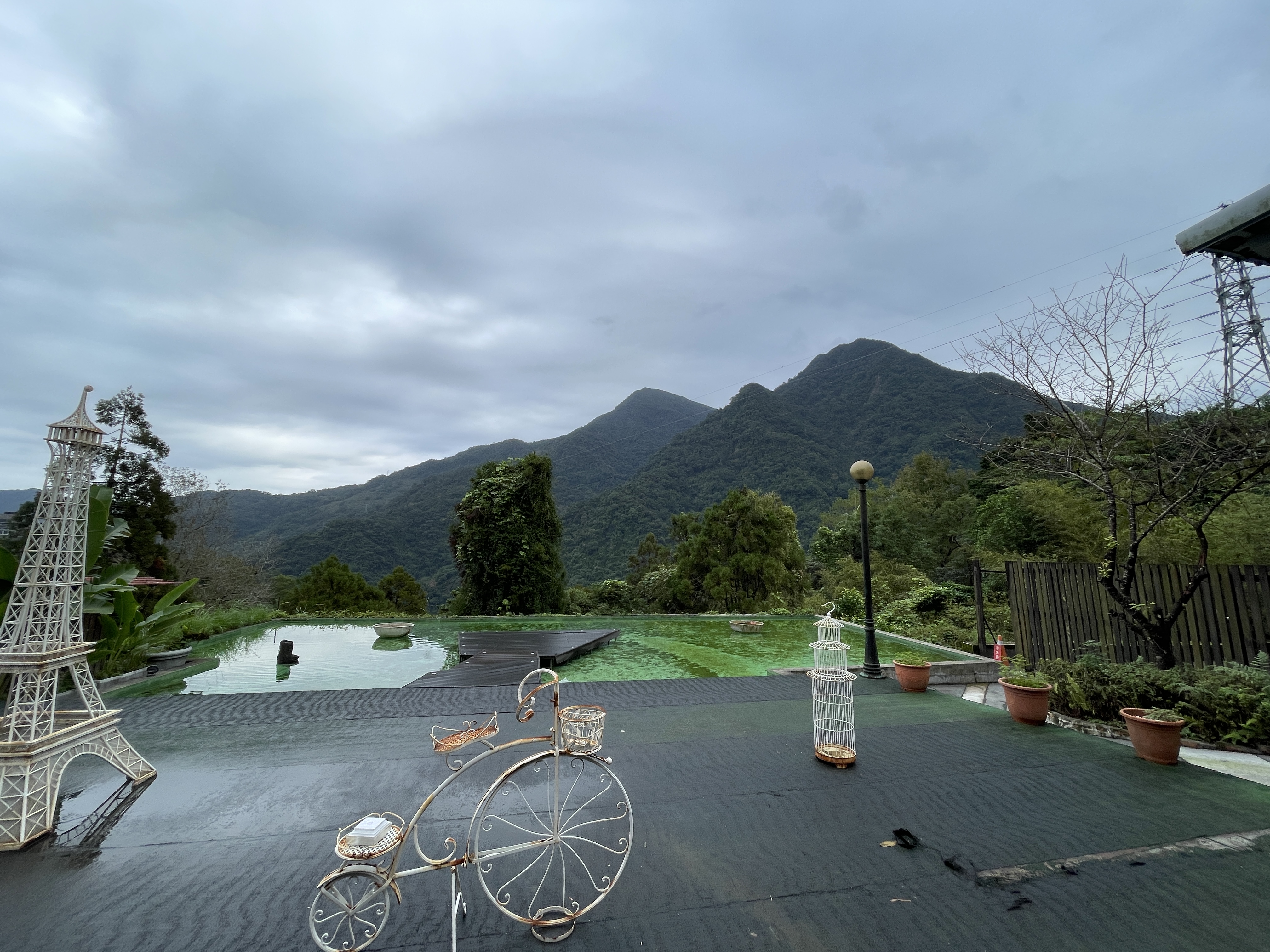
The terrace sees the mountain at close range.
European ornaments are placed around — a miniature tower, a birdcage, wrought iron accents.
The aesthetic mix doesn't resolve neatly.
You look at it anyway.
Most onsen resorts draw guests toward communal baths.
This hotel made the opposite decision: bring the onsen into the room.
That single decision restructured everything.
The bathroom claims half the floor plan.
The window faces the tub, not the bed.
The day organizes itself around bathing — without the guest deciding to.
Structure creates experience.
The guest doesn't soak three times because they're disciplined.
They soak three times because the room leaves them no reason not to.