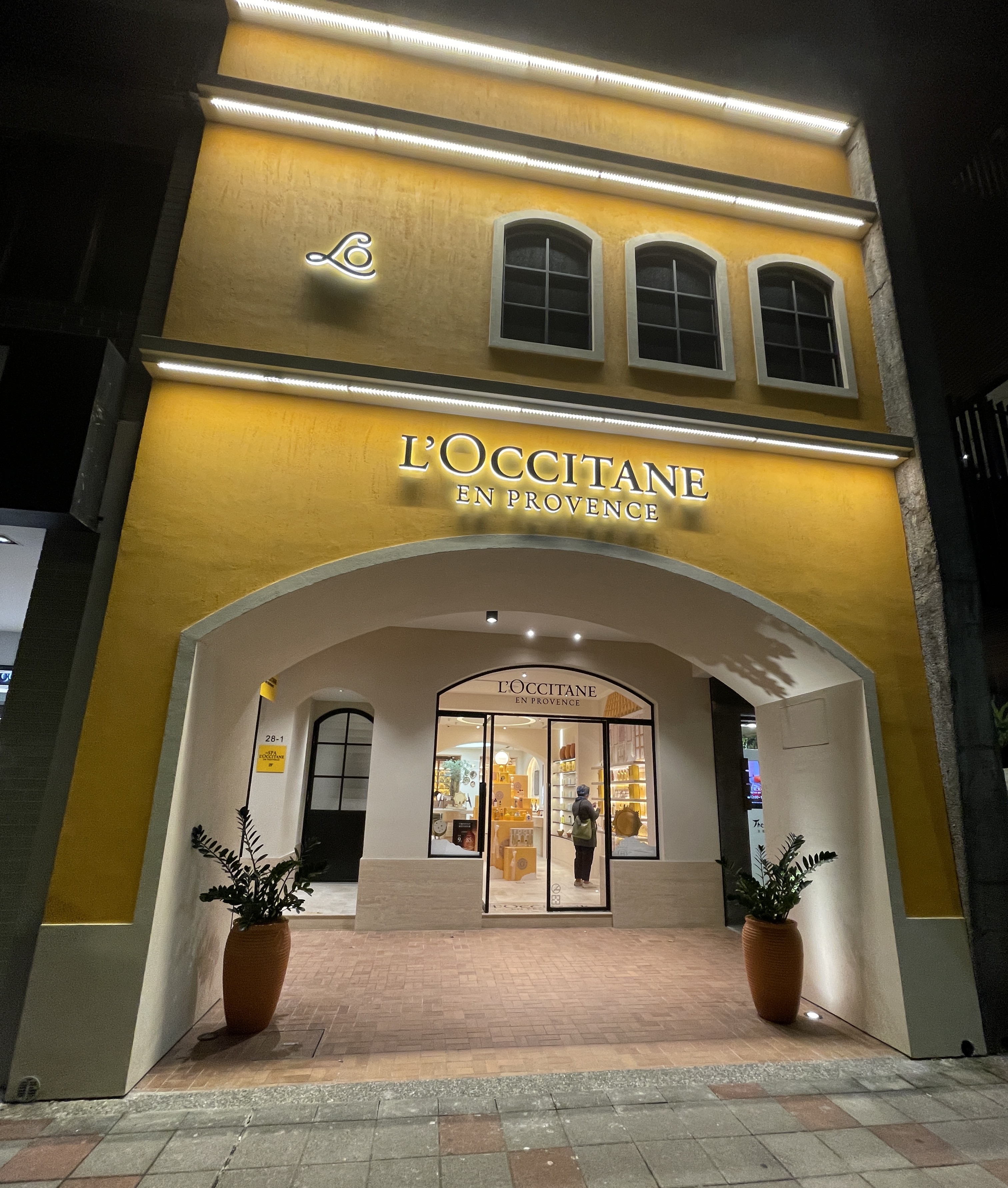
I stopped walking down Zhongshan Street in Taipei.
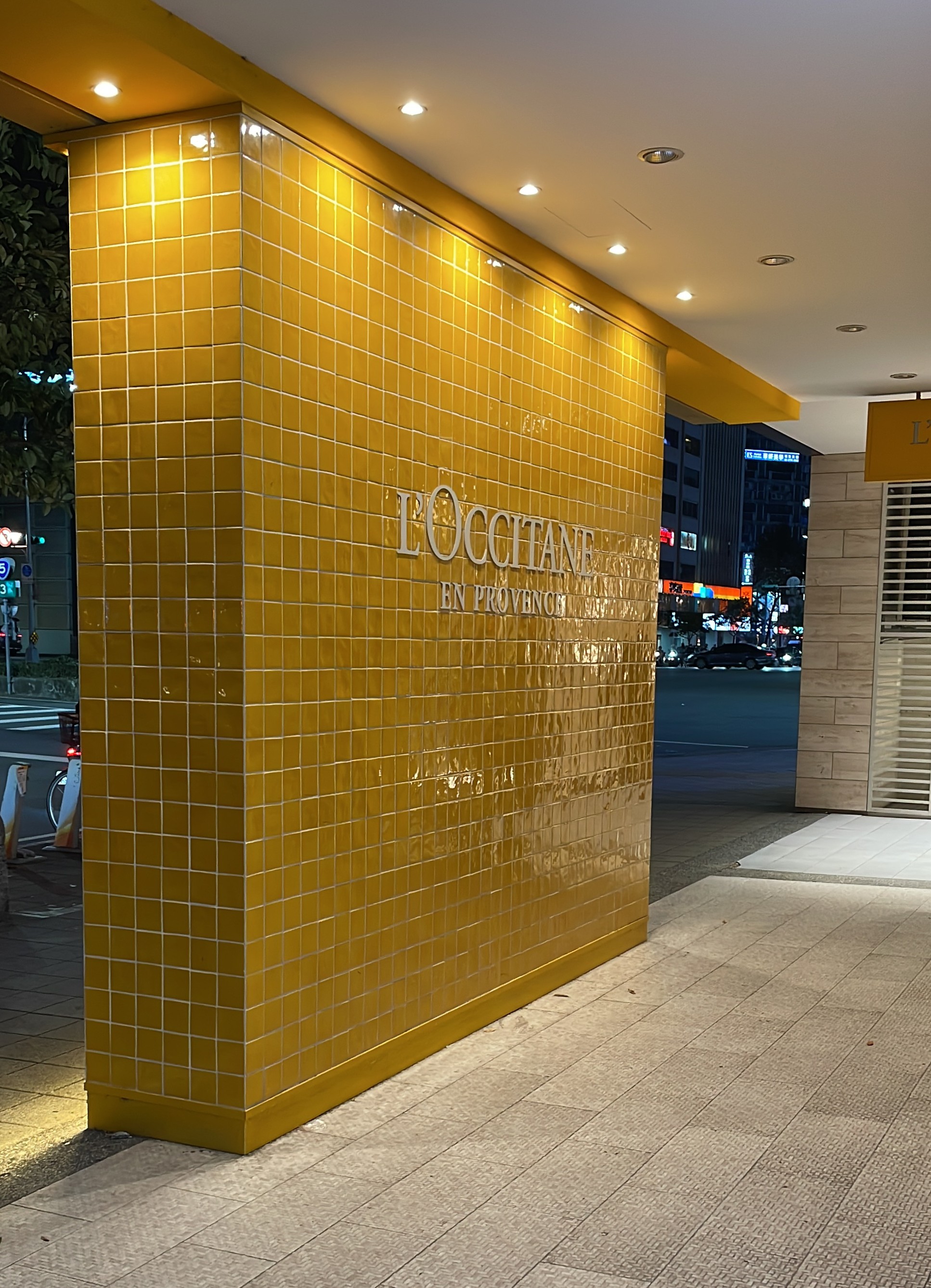
A column of yellow pulled me in from across the road.
Up close, it wasn't paint — it was tile. Small square tiles,
each one catching light at a slightly different angle.
The intensity of that yellow made me step inside before I'd even decided to.
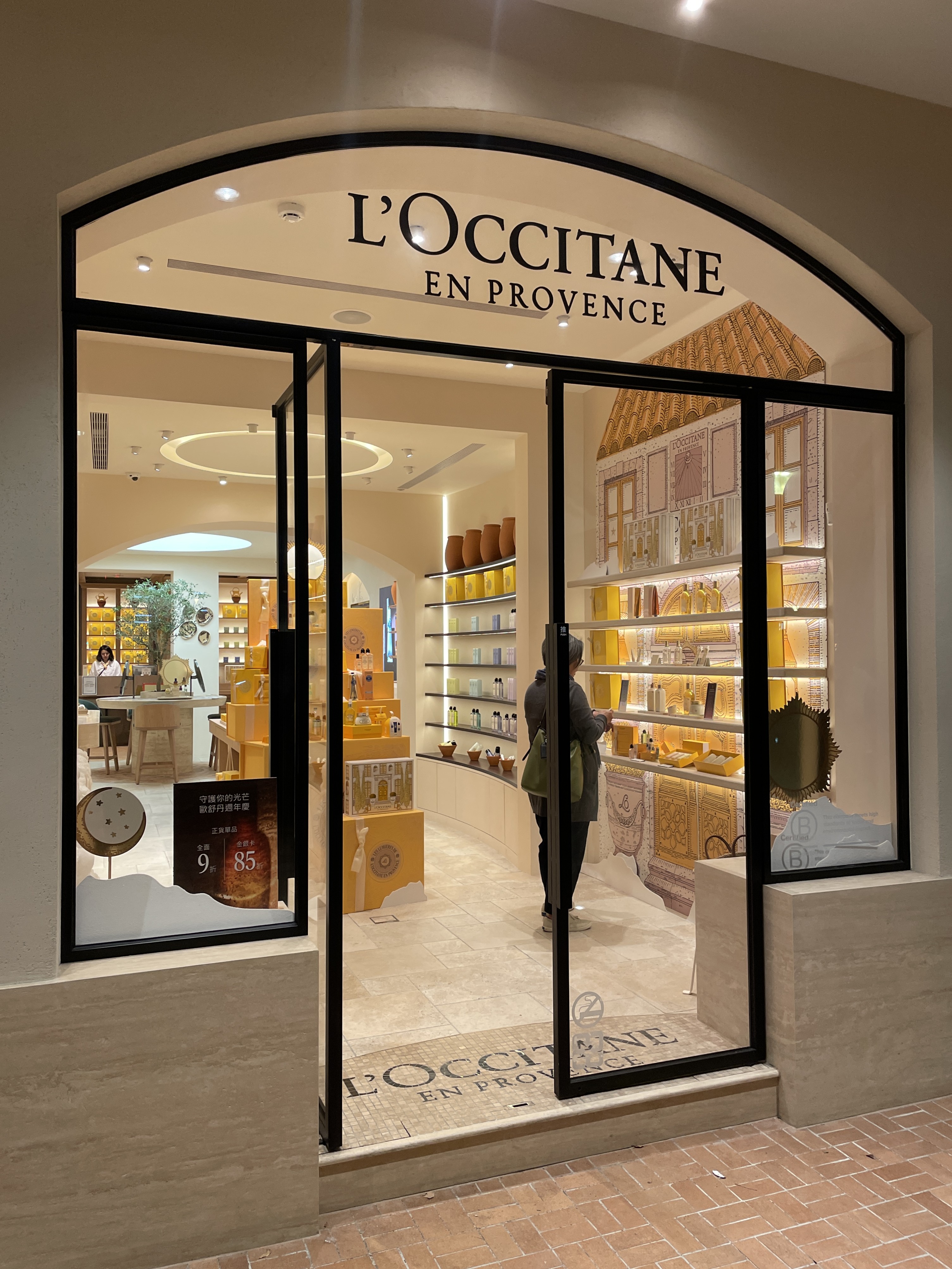
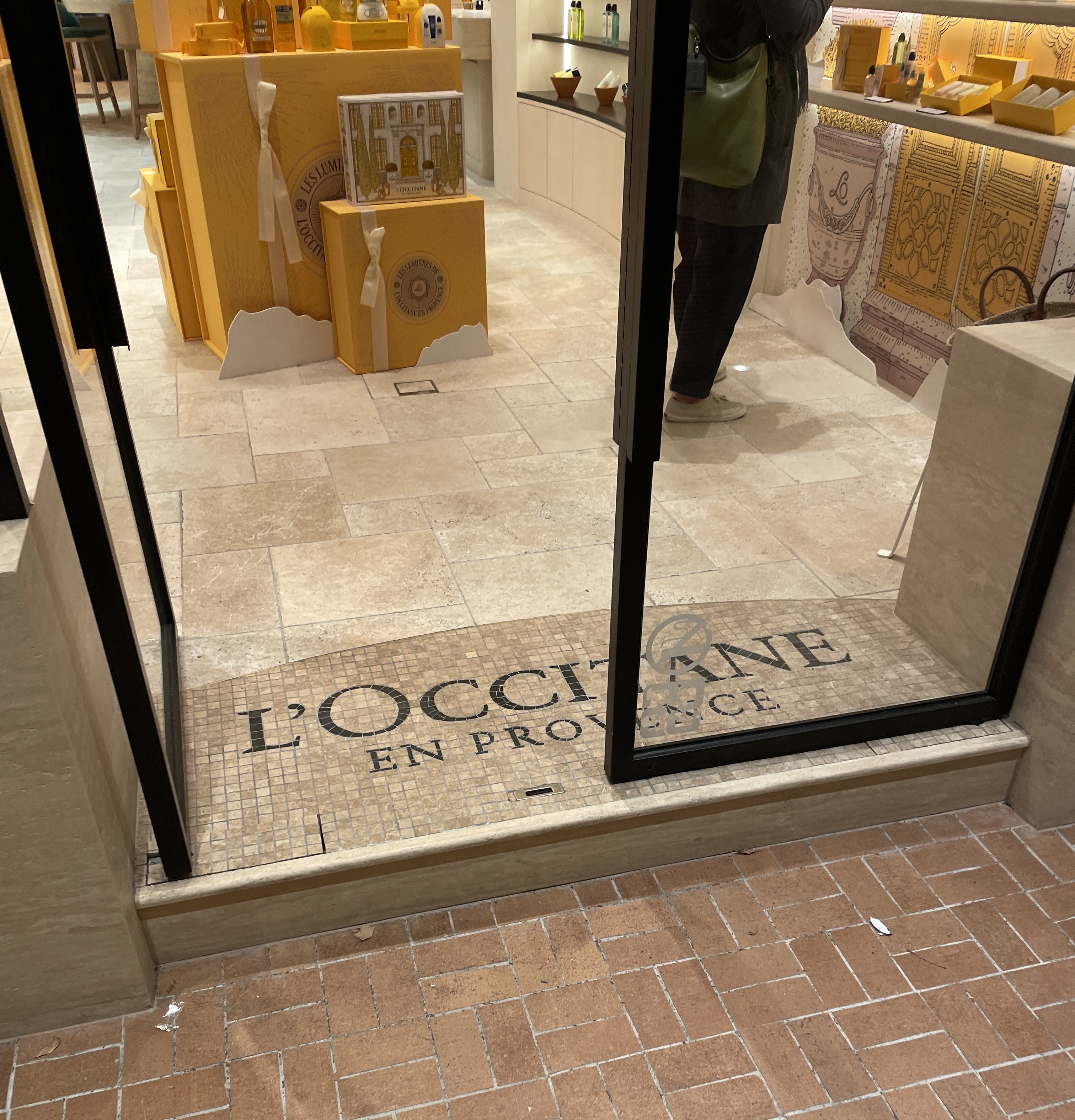
Standing before the arched glass door, I looked down.
L'OCCITANE EN PROVENCE — spelled out in mosaic tile on the floor.
The branding had already begun before I crossed the threshold.
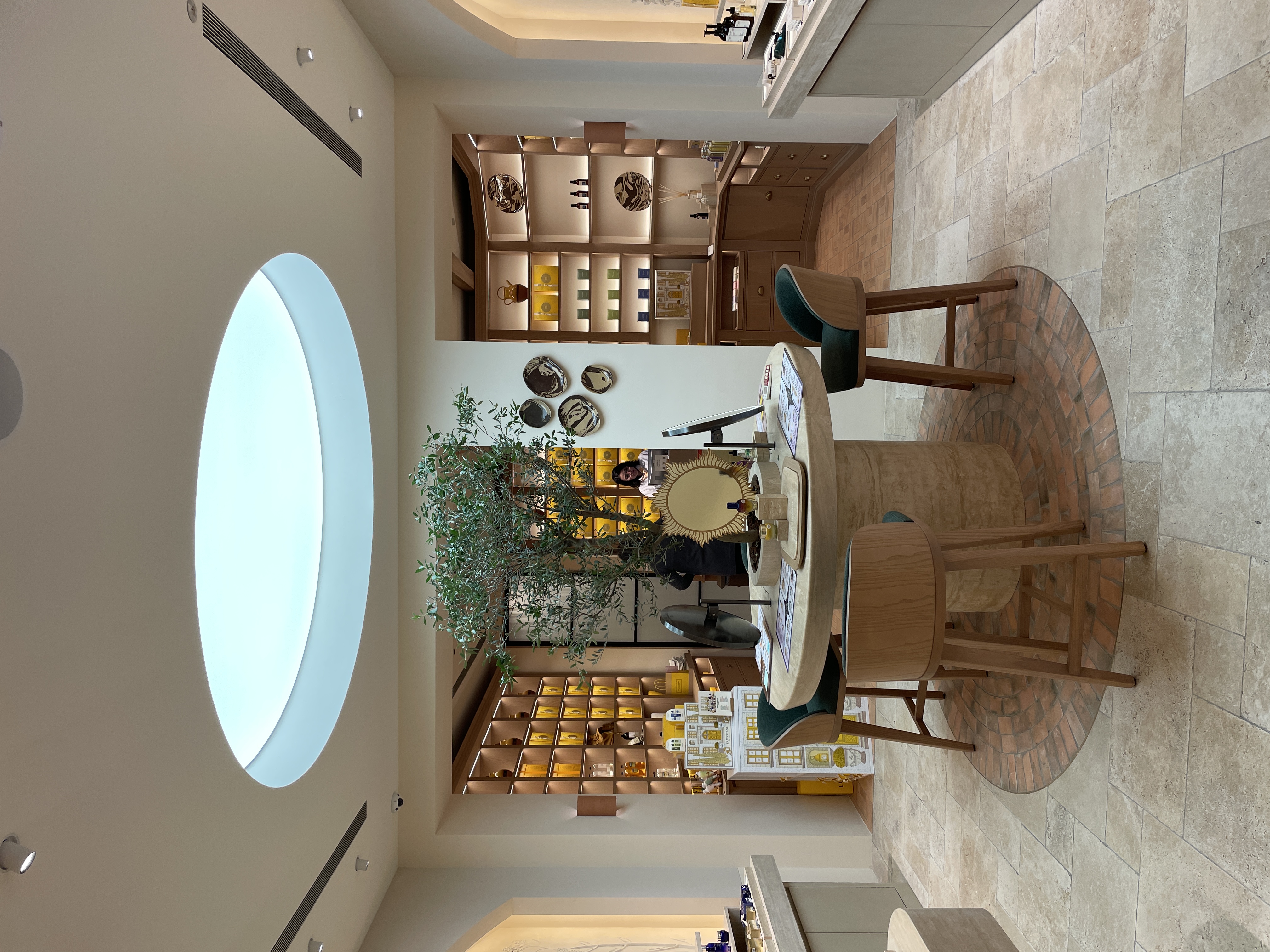
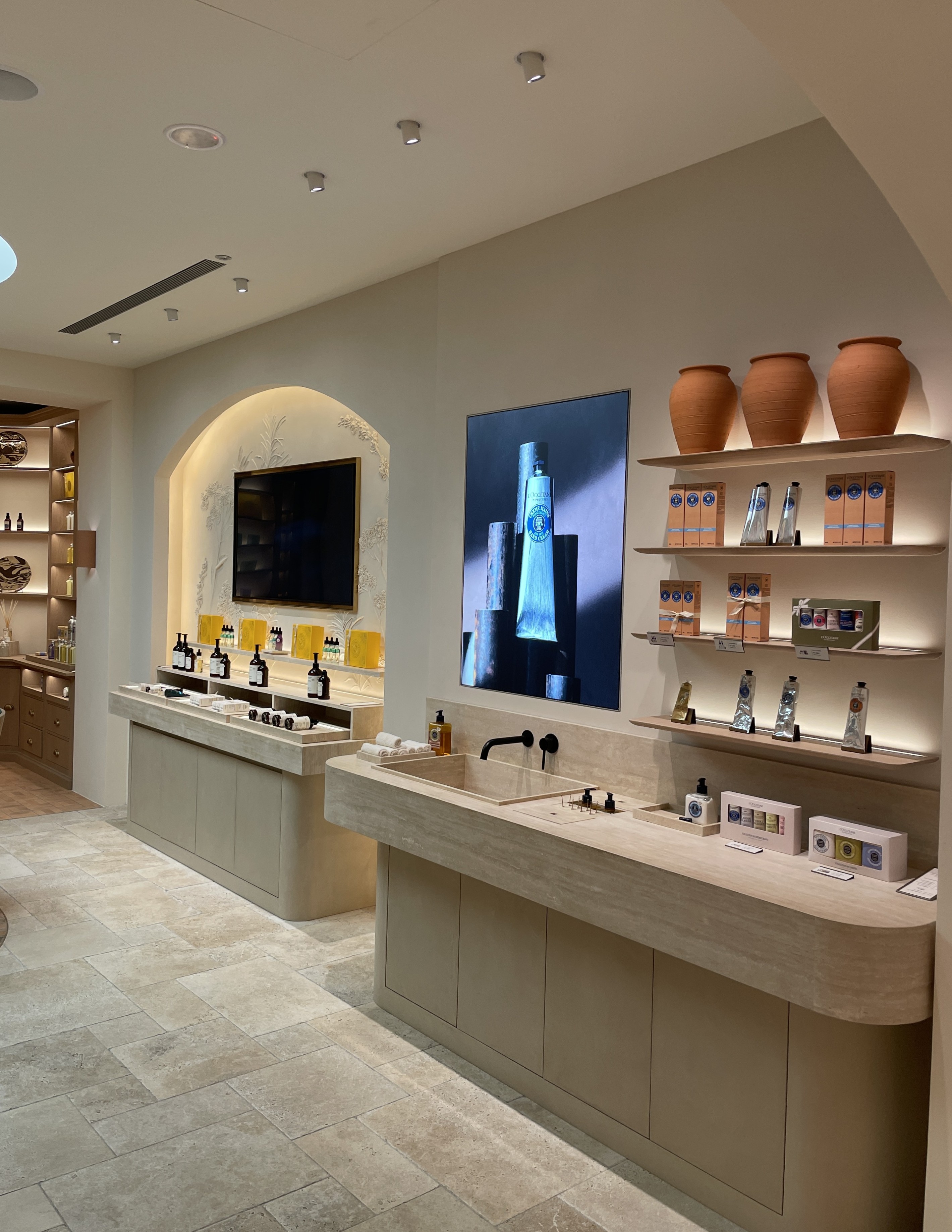
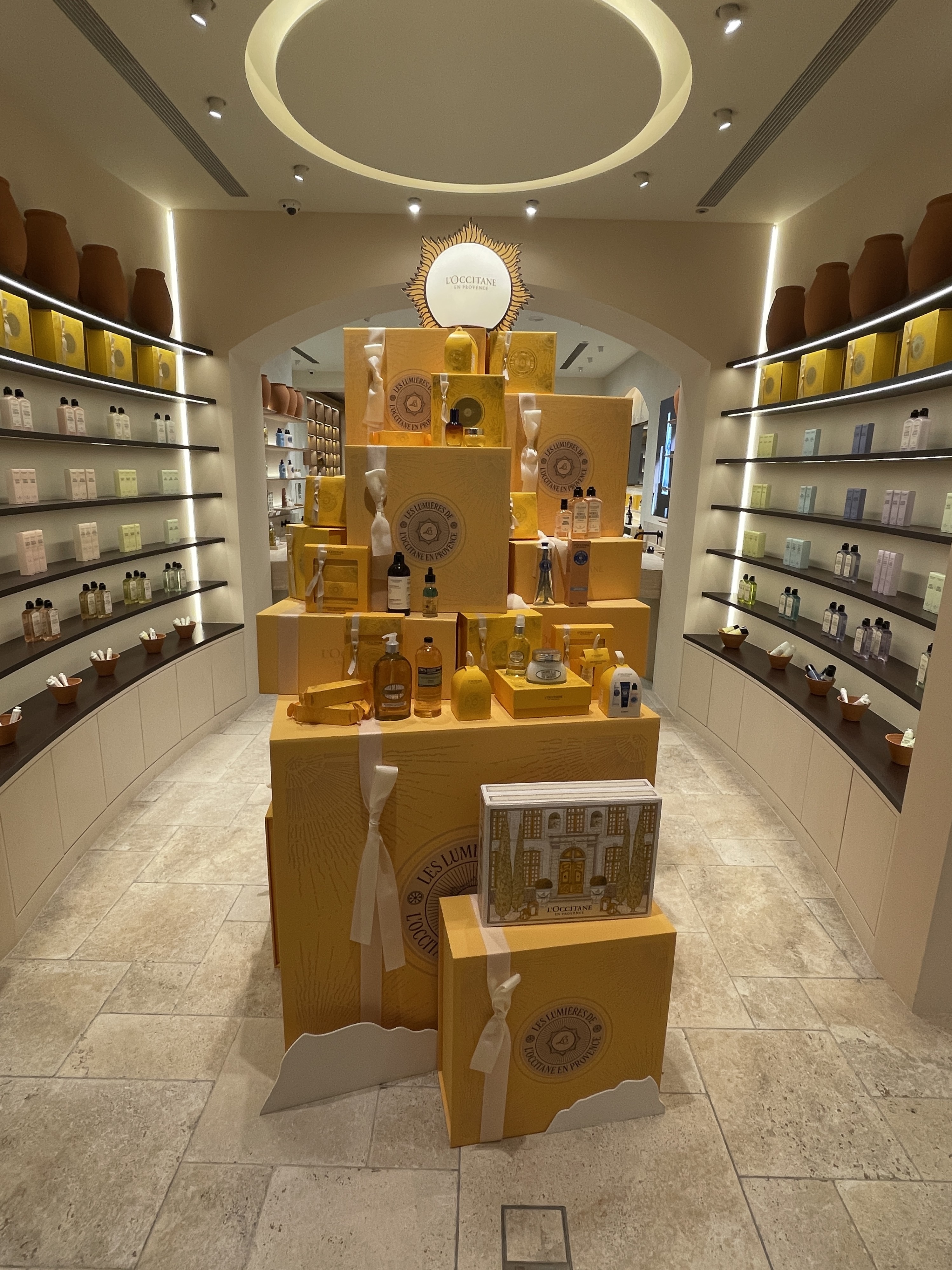
The moment you walk in, it's clear this space wasn't designed to sell products.
The center is arranged like a village square, with merchandise displayed throughout.
Arched structures wrap both sides. Beneath an elliptical skylight,
a single olive tree stands — the same tree you'd find in a plaza in the south of France,
now planted in the middle of Taipei.
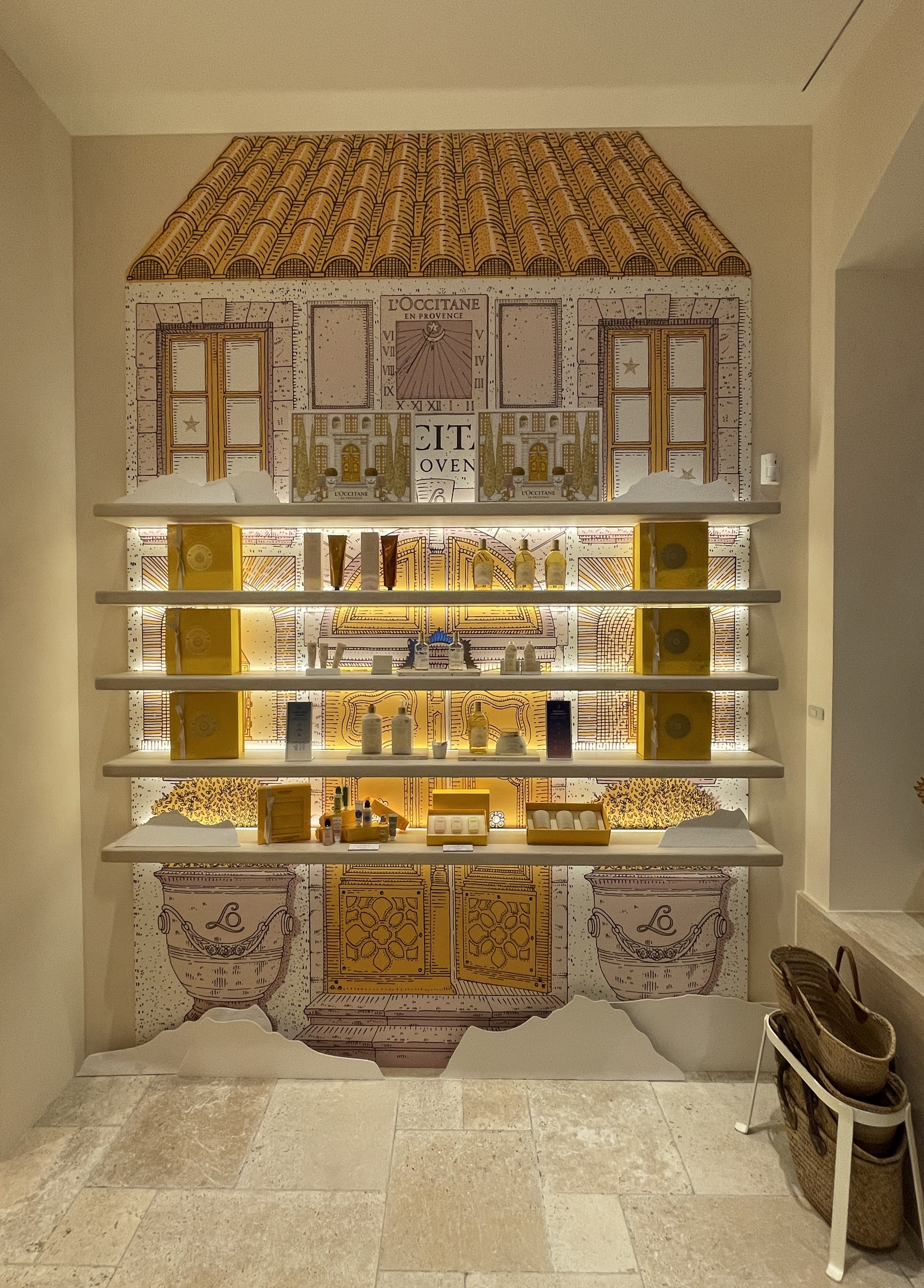
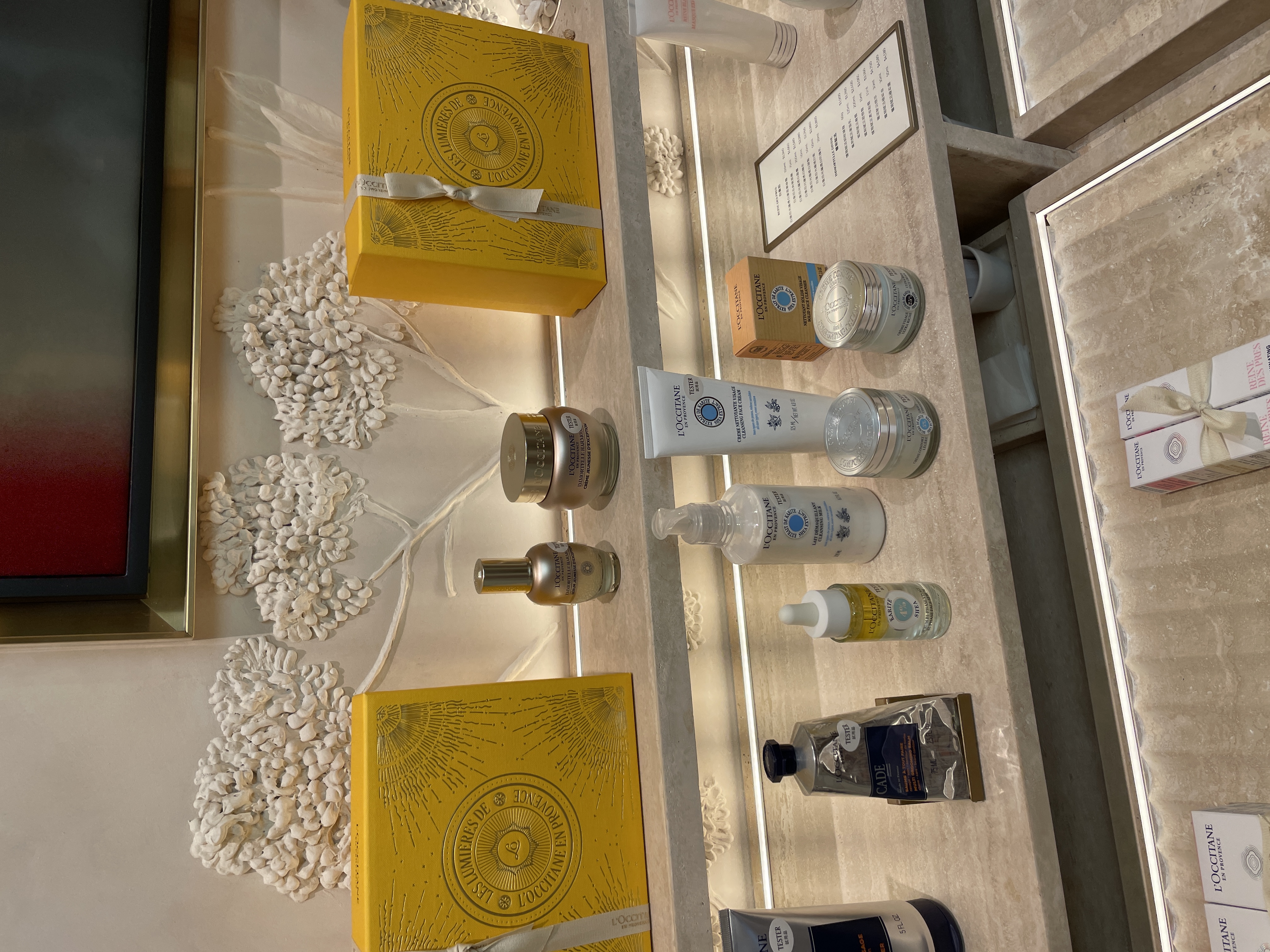
The walls carry a Provençal village mural — houses, lavender fields, winding lanes.
This isn't decorative wallpaper. It's a map. It tells you where you are.
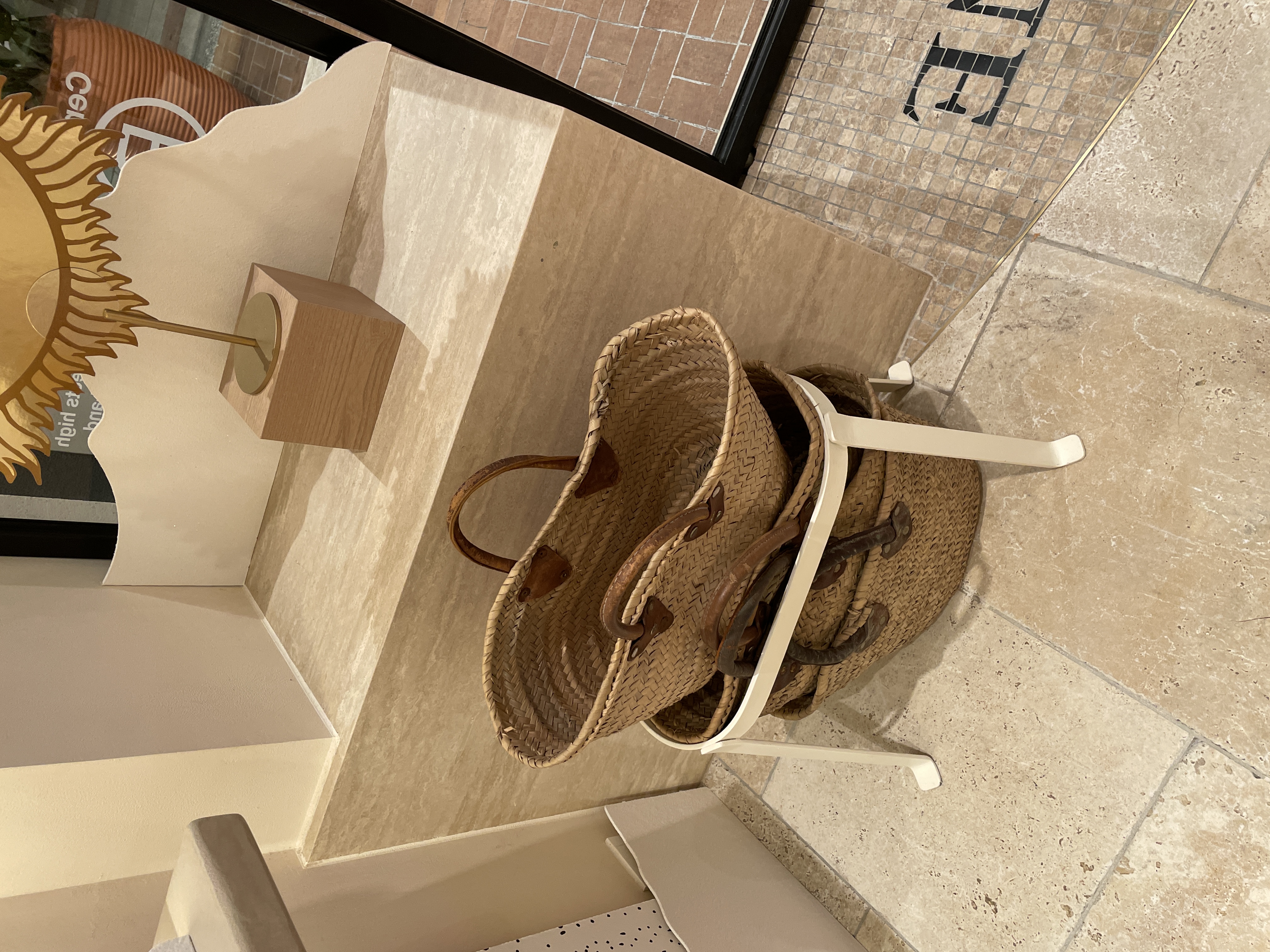
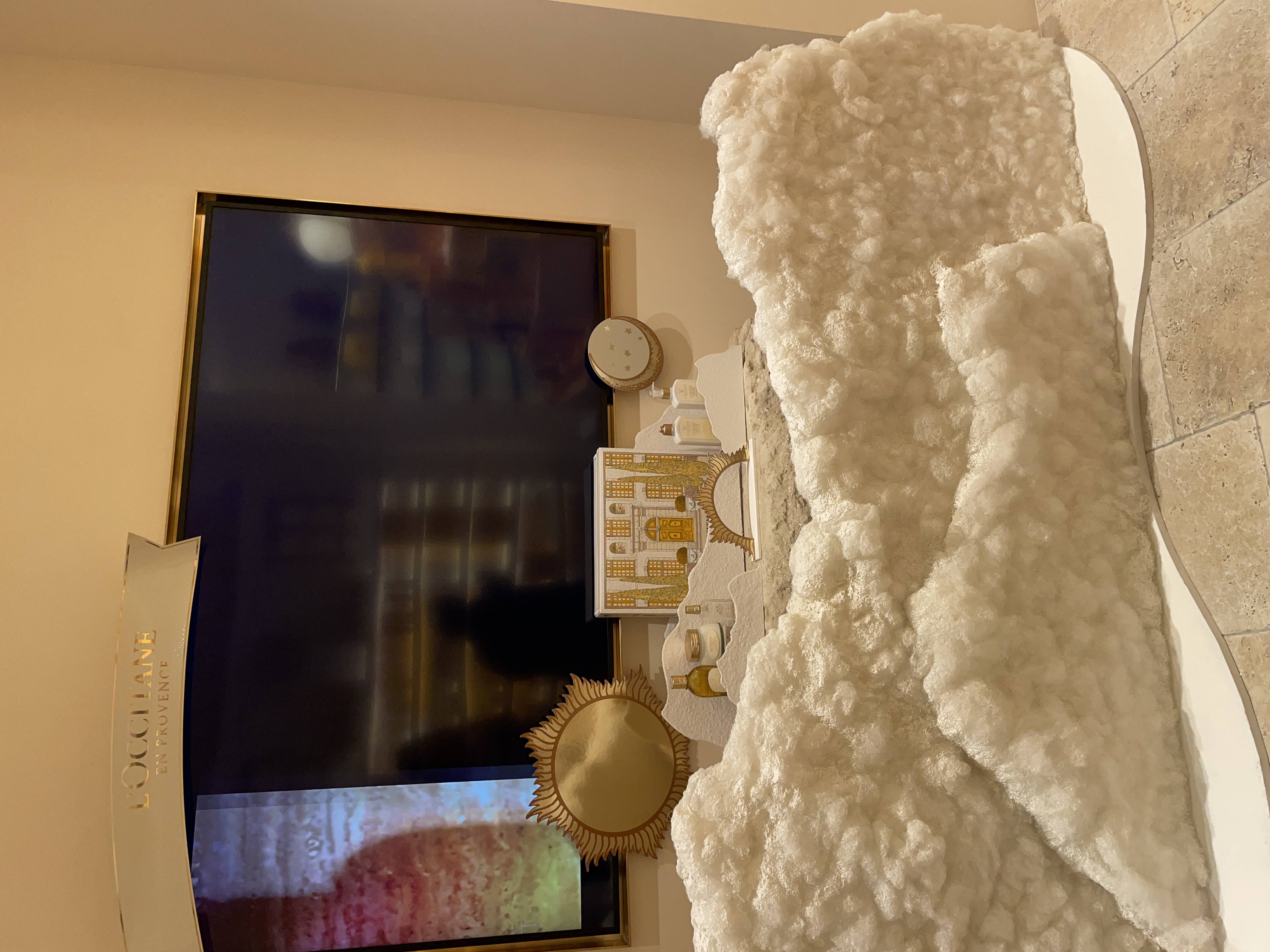
Every object in the store speaks the same language.
Provençal wicker baskets, terracotta jars, golden sun mirrors.
A single flower arrangement, a woven basket — each one part of the same story.
Everything here says one word: Provence.
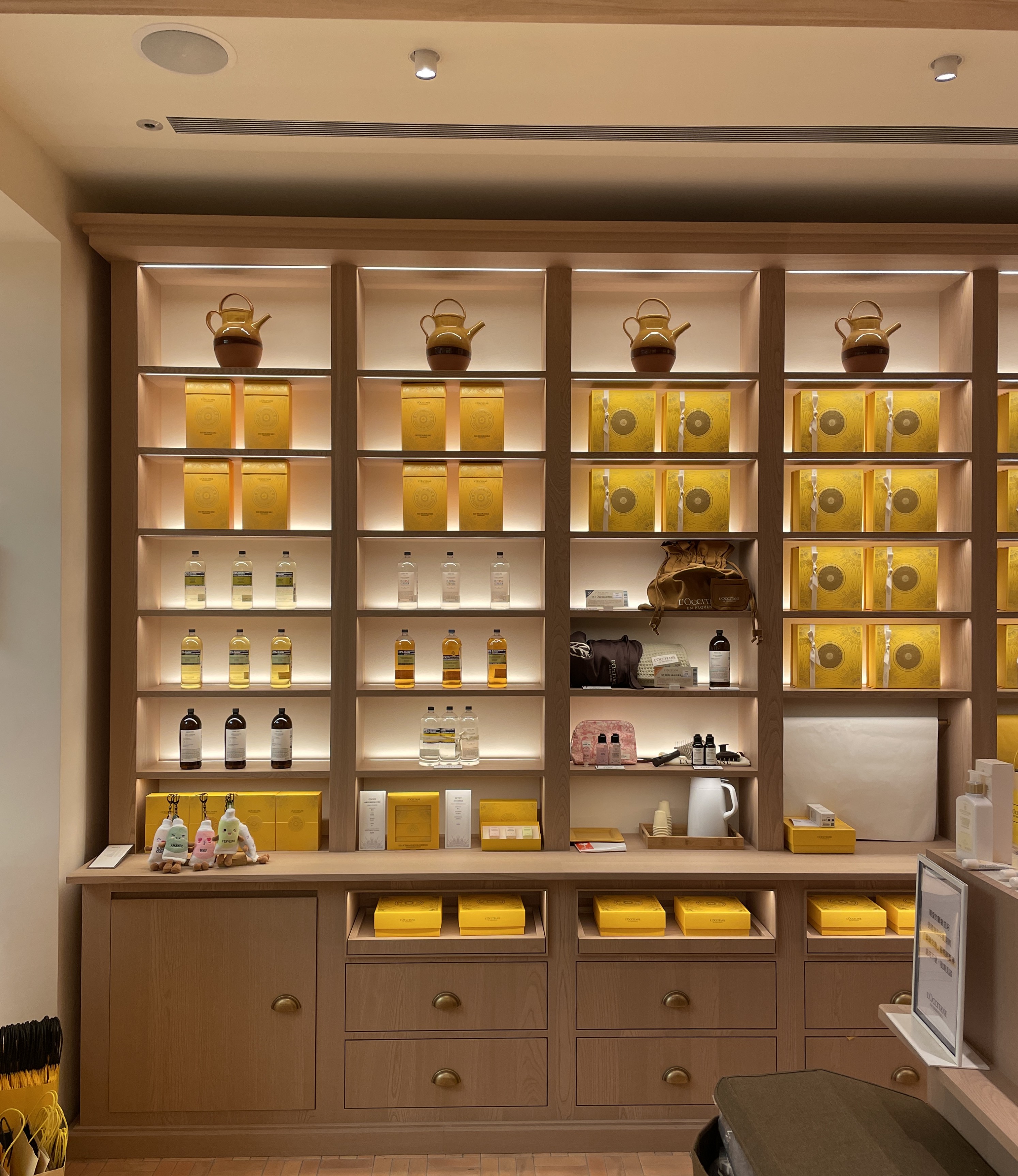
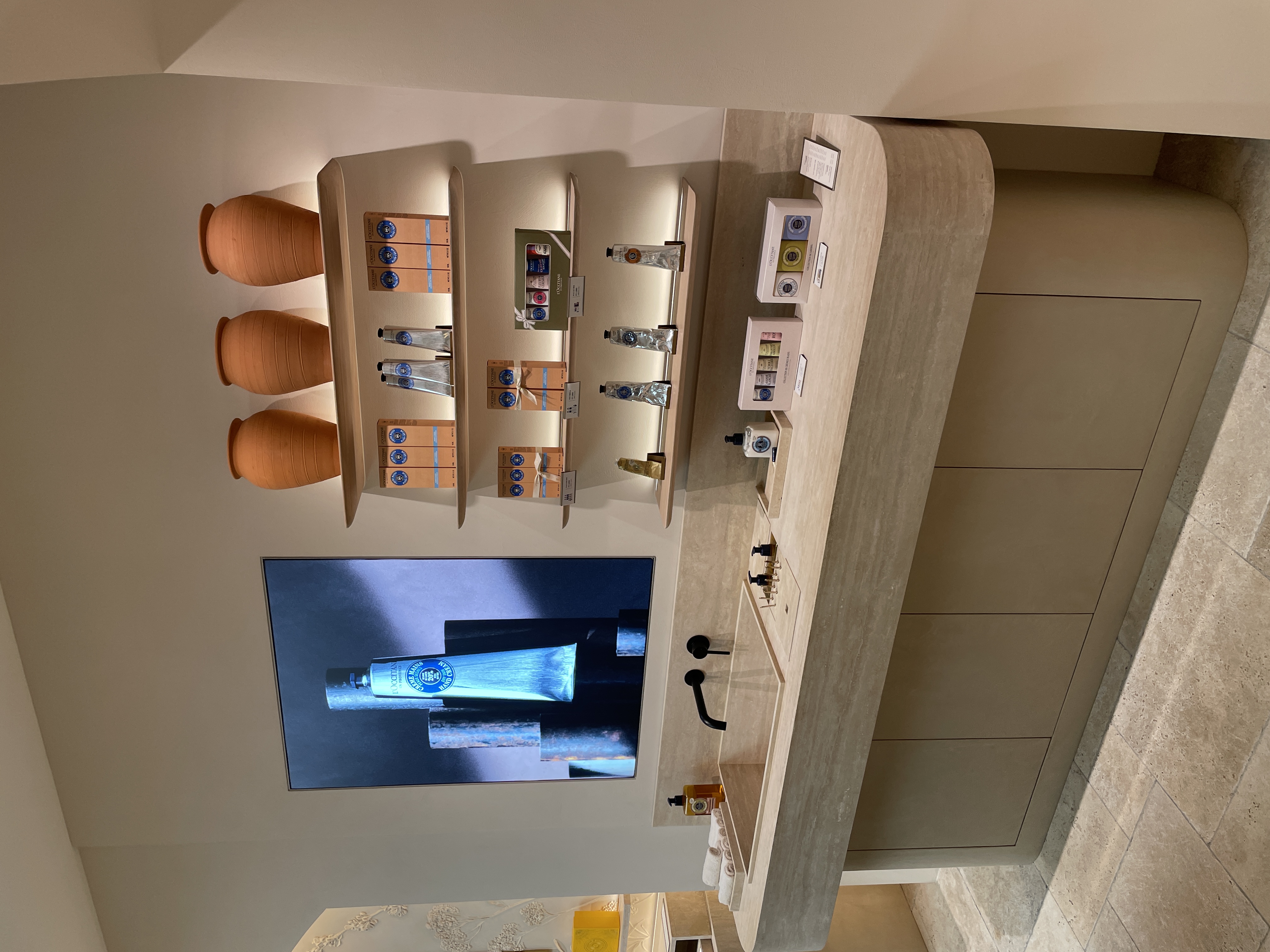
The floor is travertine. A natural limestone with horizontal grain running across its surface —
the kind of stone that looks unprocessed because it is.
The sink counter uses the same material.
Oak wood shelving. Yellow glazed tile on the exterior.
Everything in this store shares a similar texture — raw, pre-industrial, close to its source.
When you consider that L'Occitane sells products made from natural ingredients,
the space material itself becomes an extension of the product.
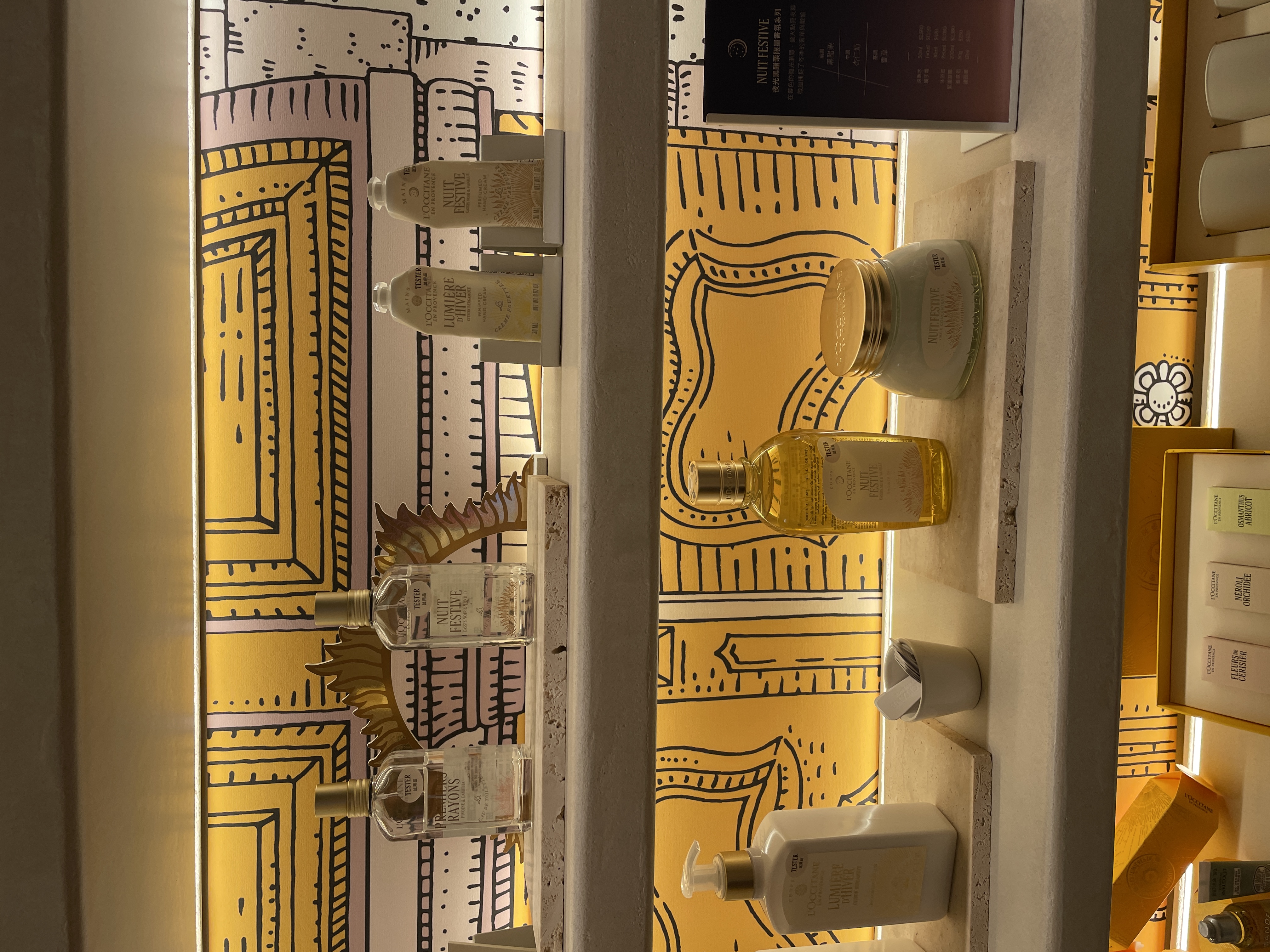
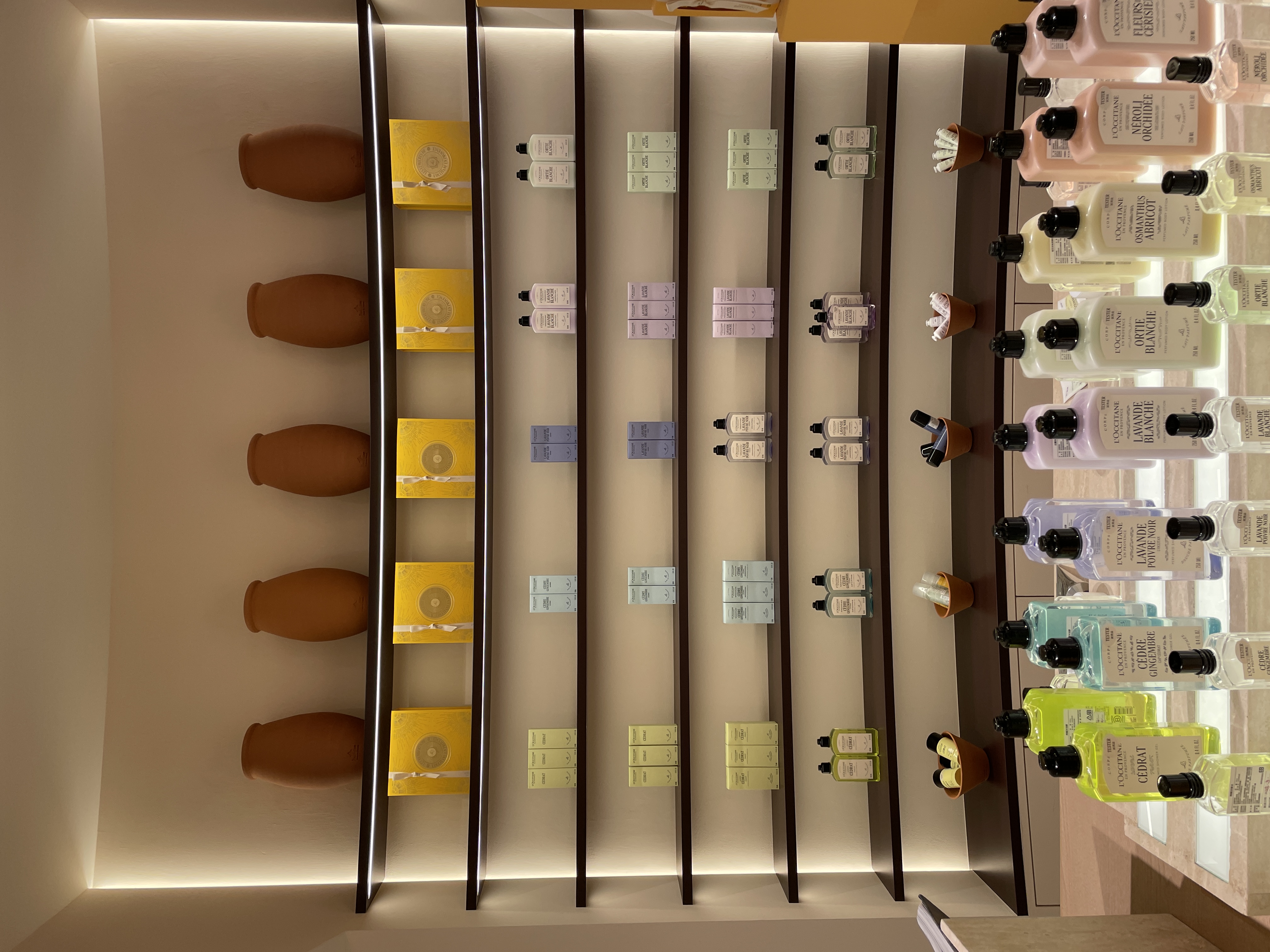
The lighting here is nearly invisible.
Backlight bleeding from behind shelves. Indirect wash from the ceiling.
During the day, natural light pours in through the elliptical skylight.
It reads like a Provençal afternoon — diffuse, warm, unhurried.
Nothing is spotlit. Instead, the whole space turns golden together.
There is a sink inside a retail space.
You apply a product to your hands, rinse it off, and feel what remains on your skin.
That is categorically different from rubbing a sample on the back of your wrist.
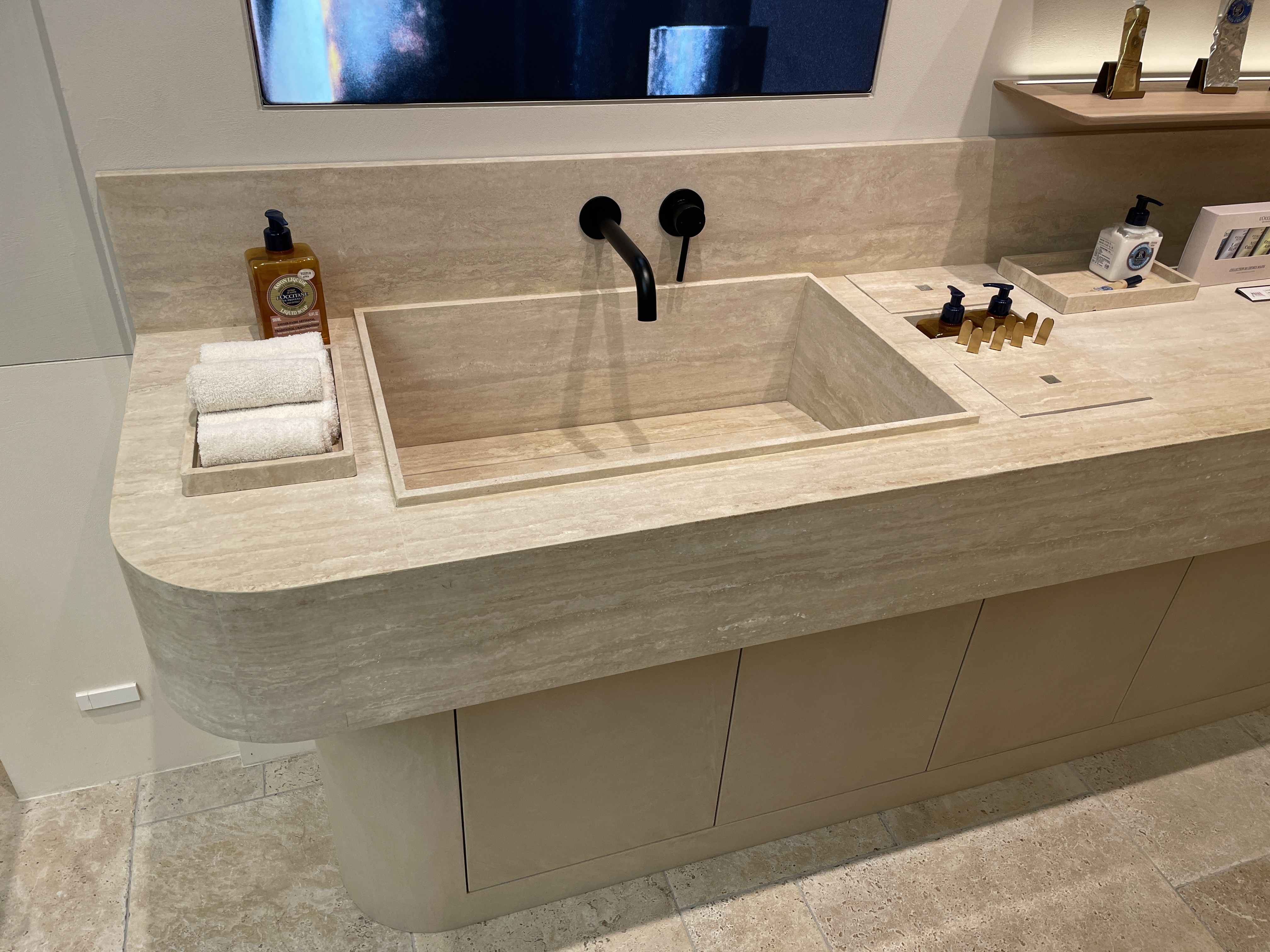
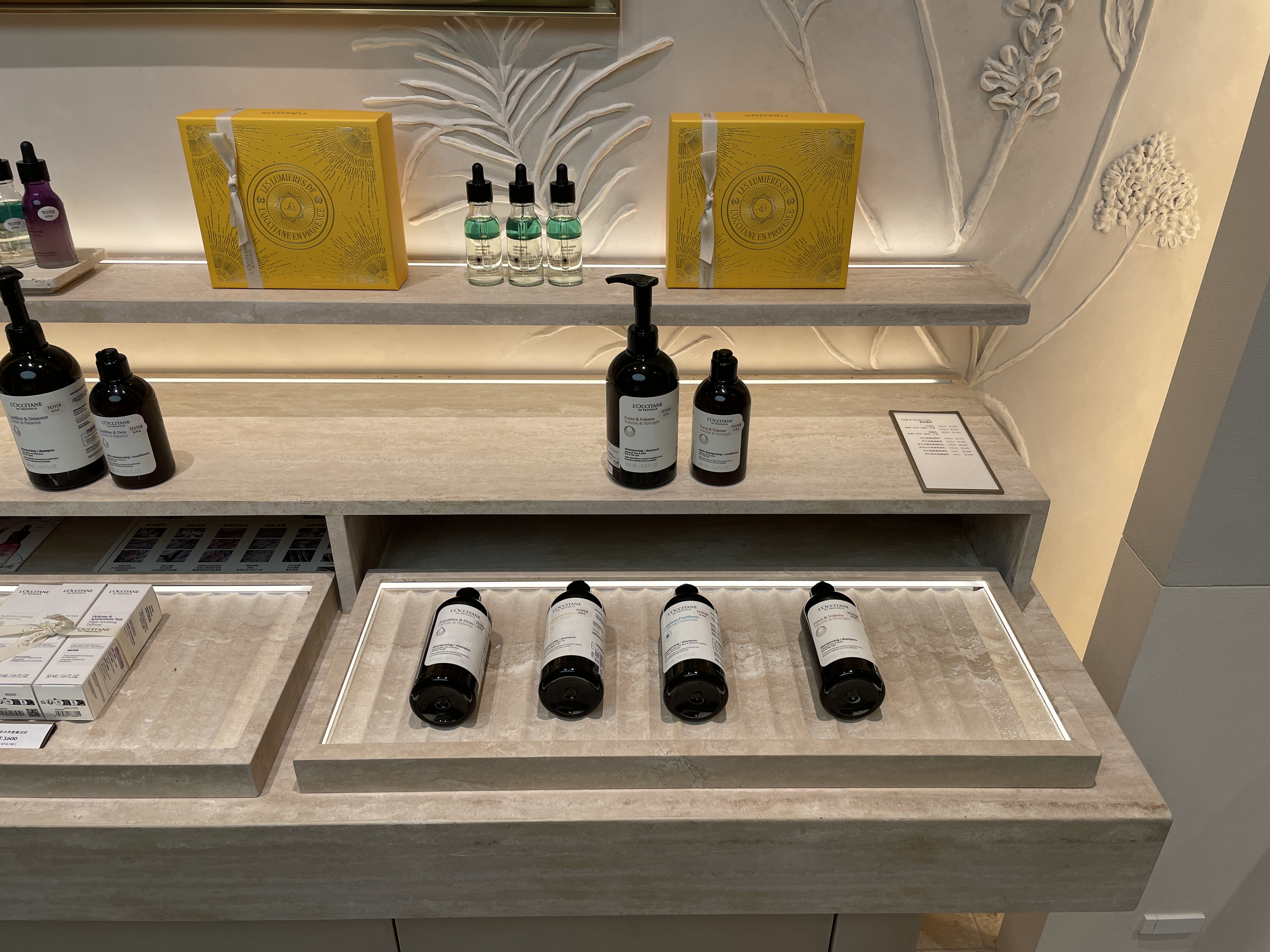
L'Occitane gave this sink zone an official name: Ice Breaker.
A device for creating natural first contact between customers and staff.
For a brand whose signature product is hand cream,
placing a sink inside the store is not a convenience — it's a designed experience.
This is not a test station.
This sink is the peak of the brand experience.
L'Occitane is a cosmetics brand.
But walking out of this space, the feeling isn't "I bought a good cream."
It's closer to: "I just spent a few minutes in Provence."
This spatial language wasn't invented for this one store.
In 2017, L'Occitane rolled it out across 40+ stores worldwide under a single framework.
They called it the Sunshine Concept.
Yellow = the sun.
Natural materials = the origin — lavender fields, olive groves.
The arch = Provençal alleyways.
The central circular space = the village square.
Scent = the nature of Provence itself.
Once you know that, you look back at the space and see it clearly:
this store is a compressed stage set of a Provençal village.
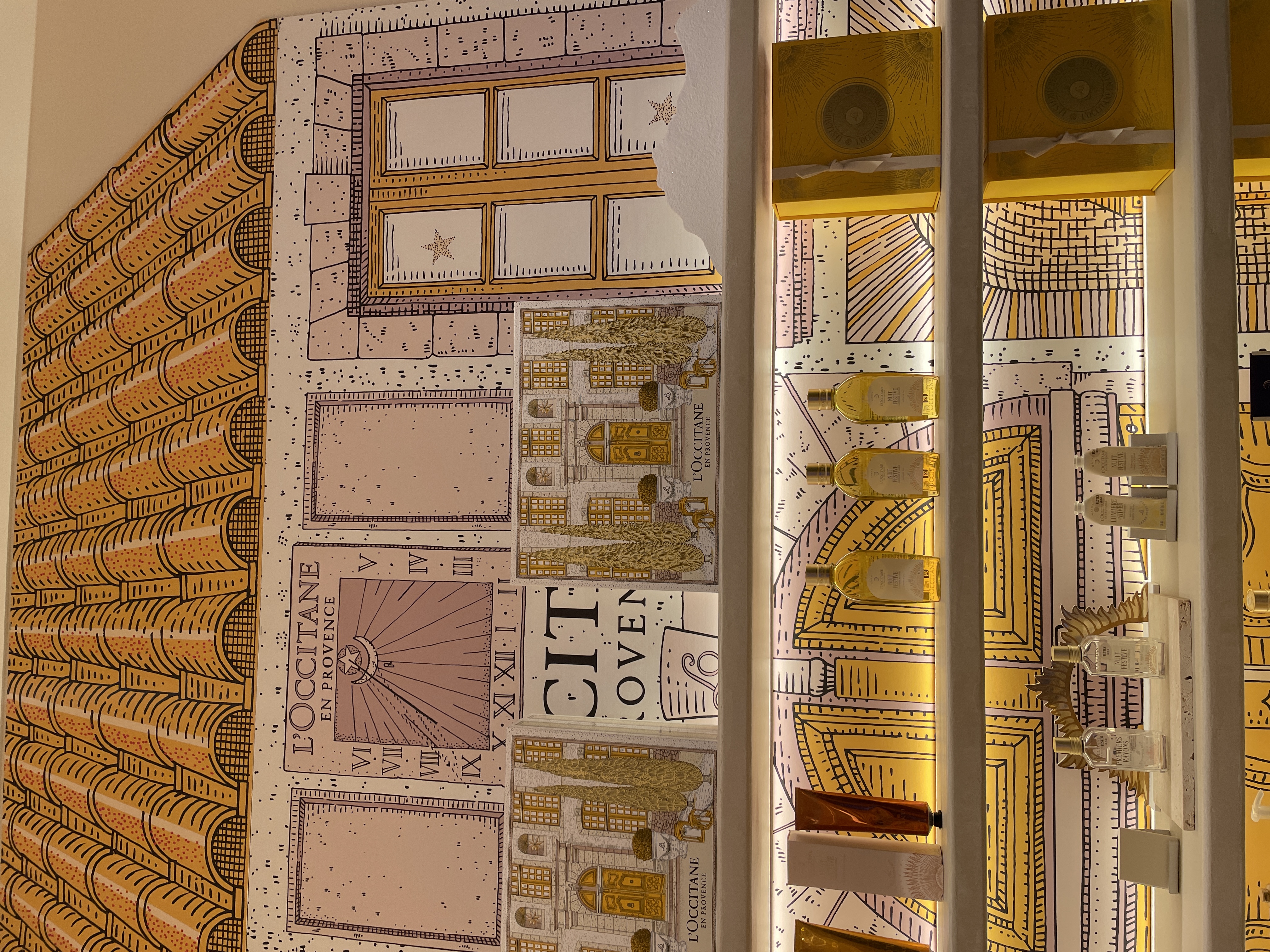
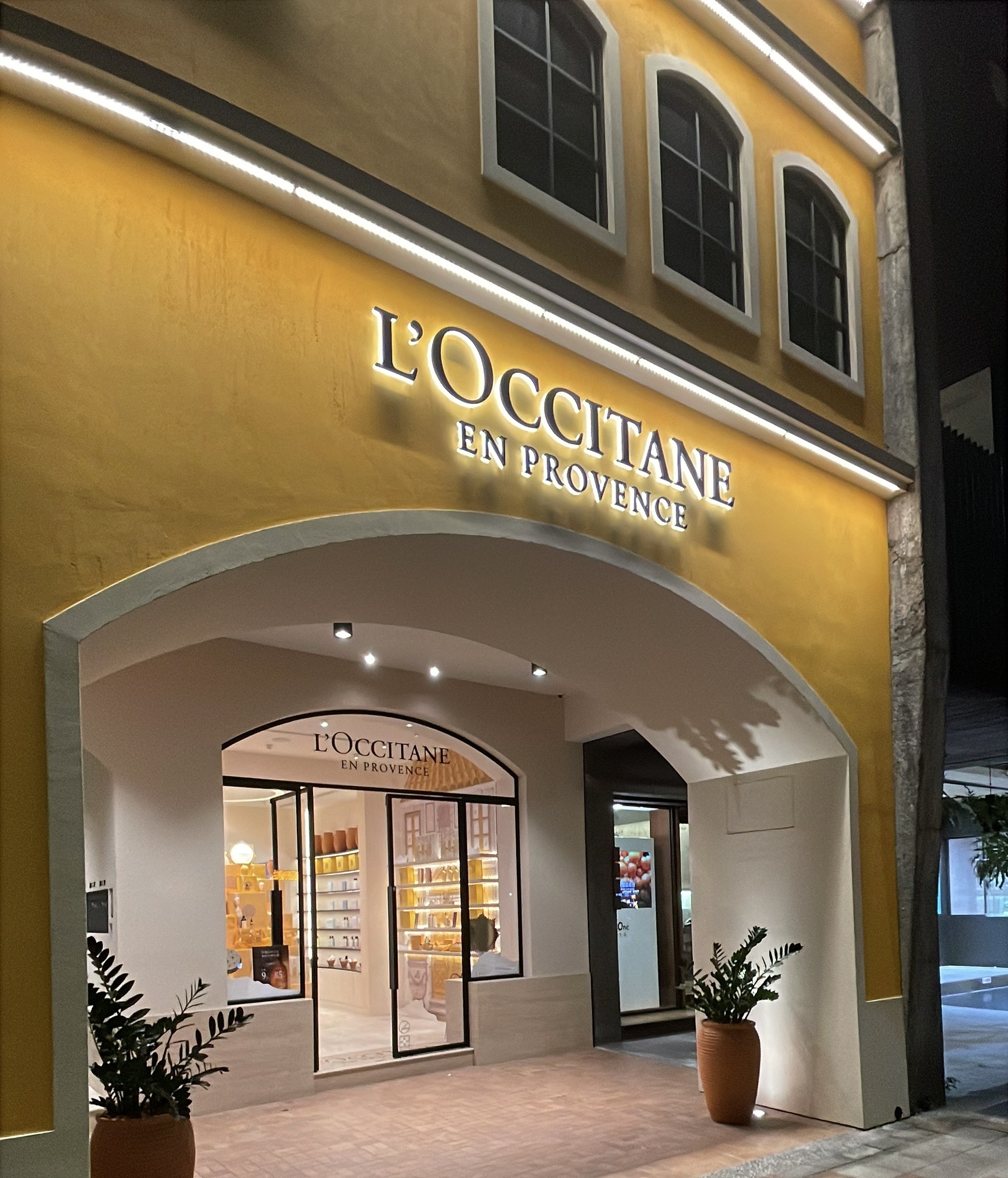
Customers leave carrying not a product, but a memory.
This is how L'Occitane operates across 147 countries.
The space is the brand. The brand is the space.