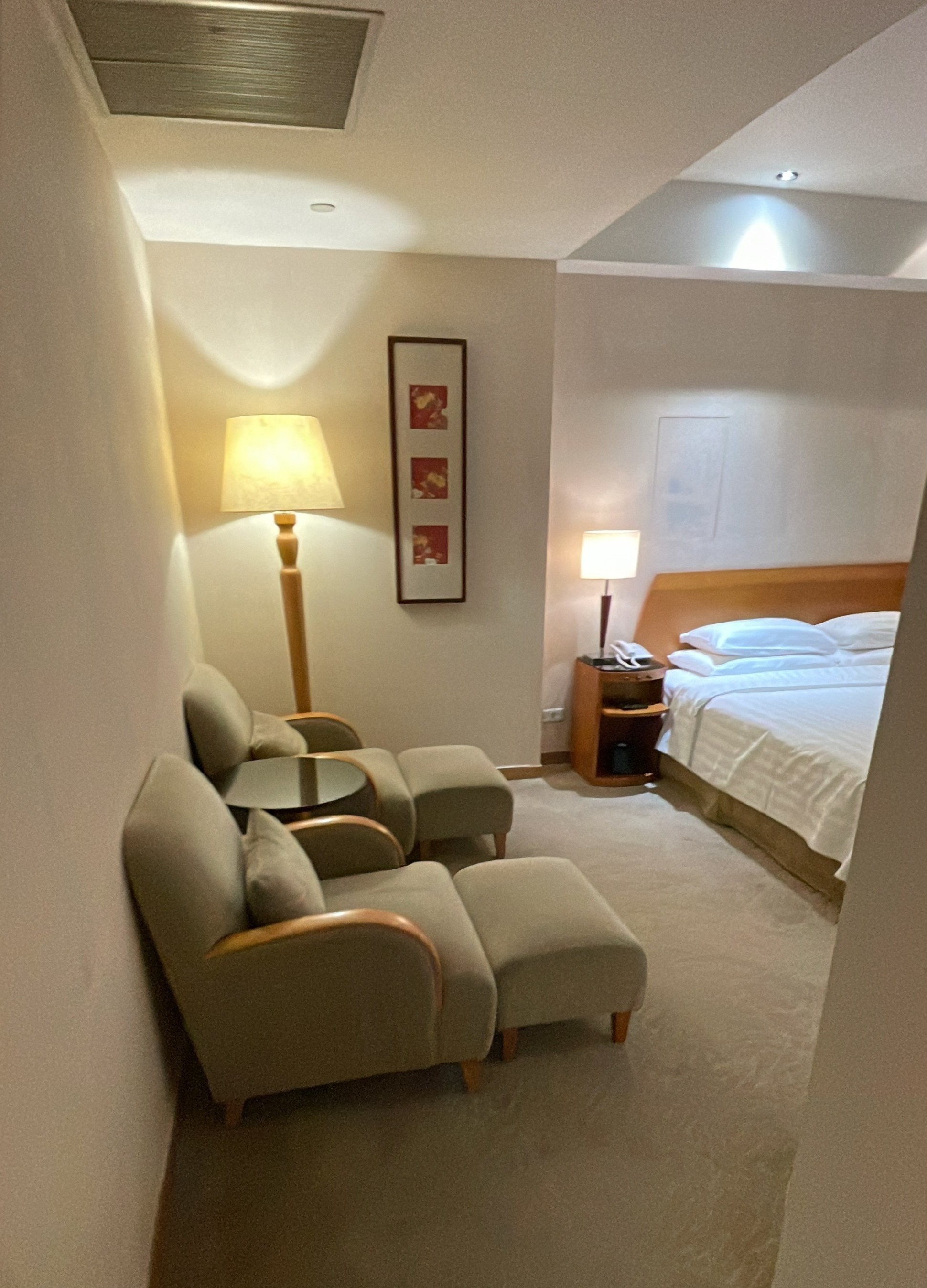
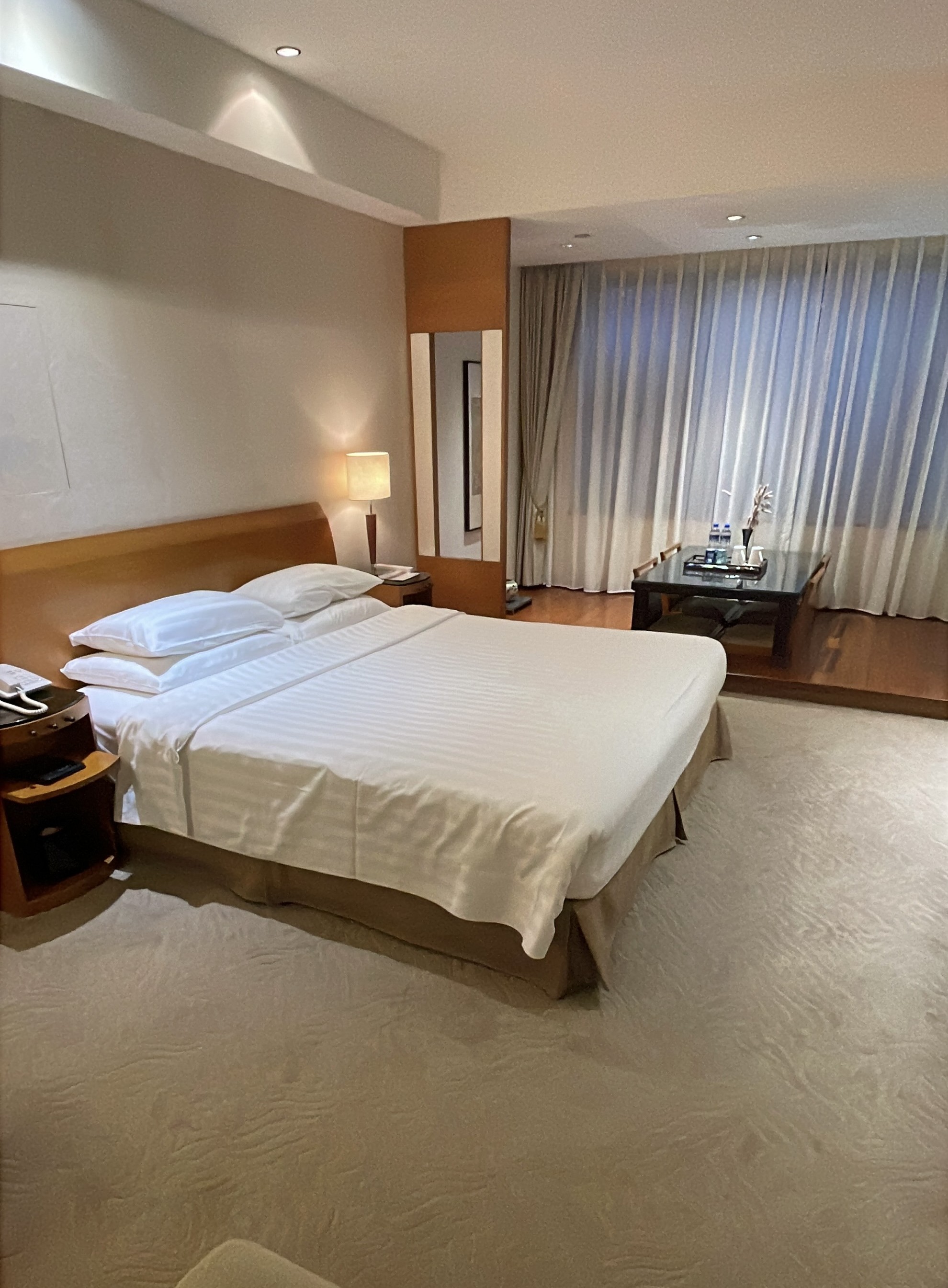
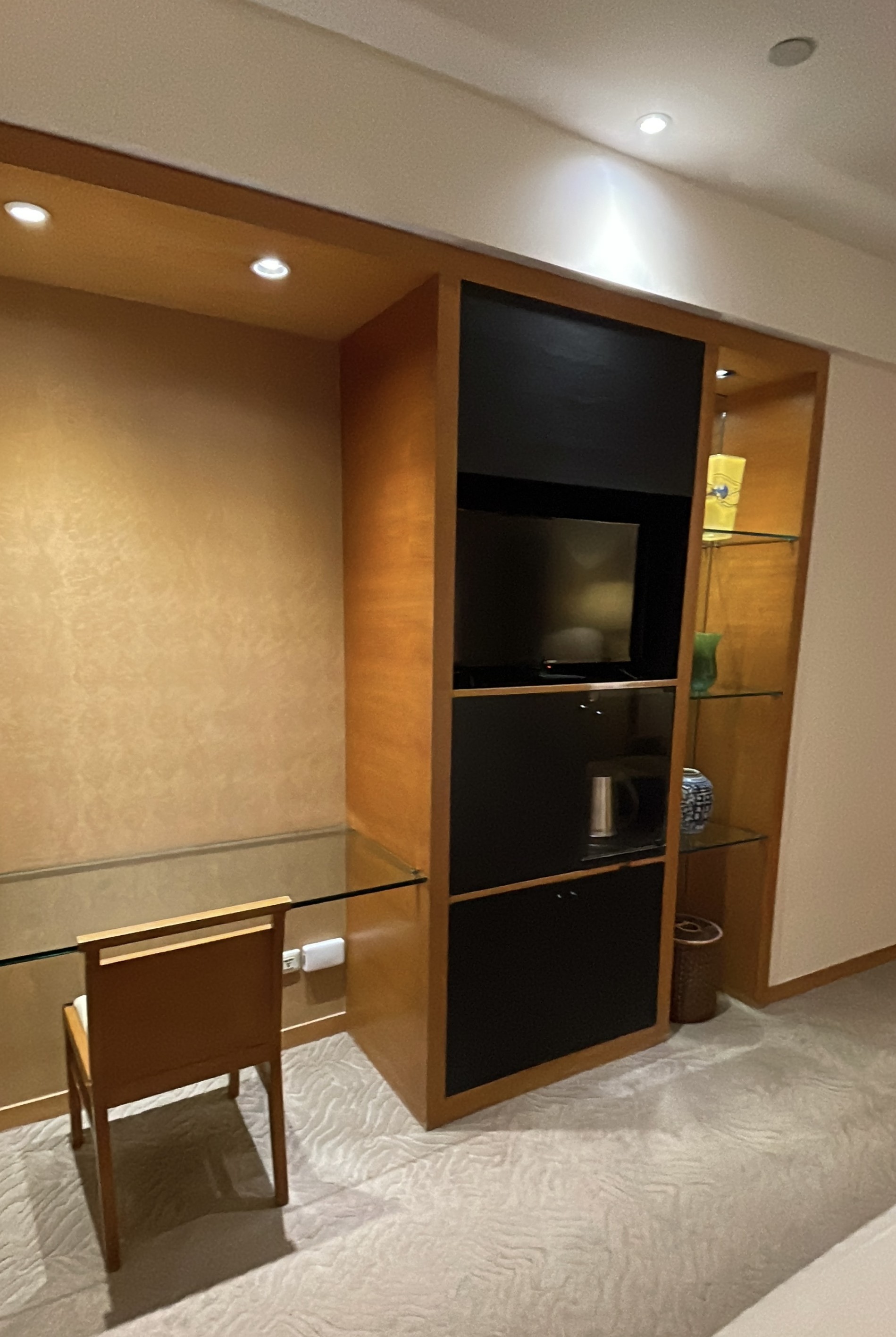
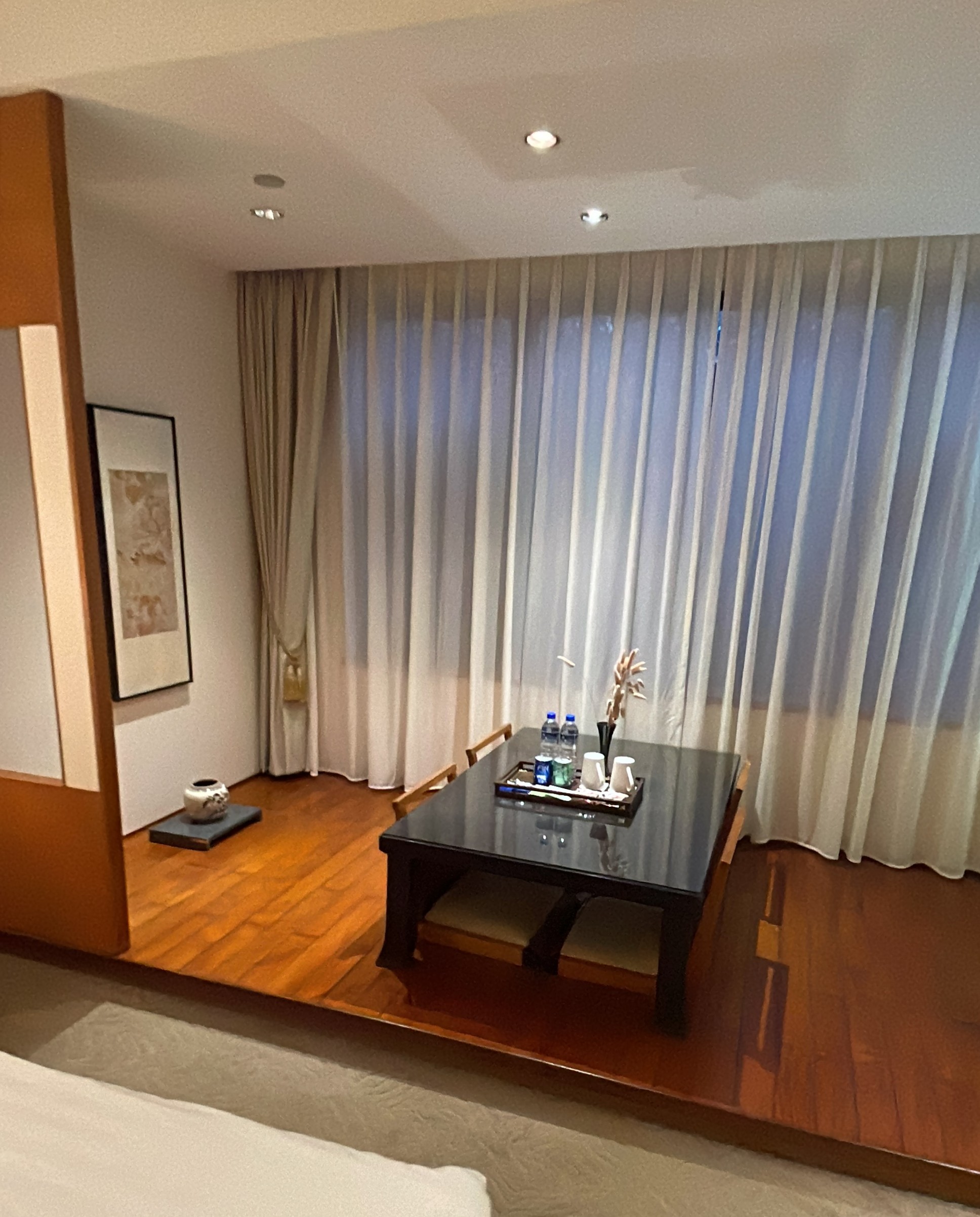
The room was larger than expected.
Not just in floor area — in how time could be spent inside it.
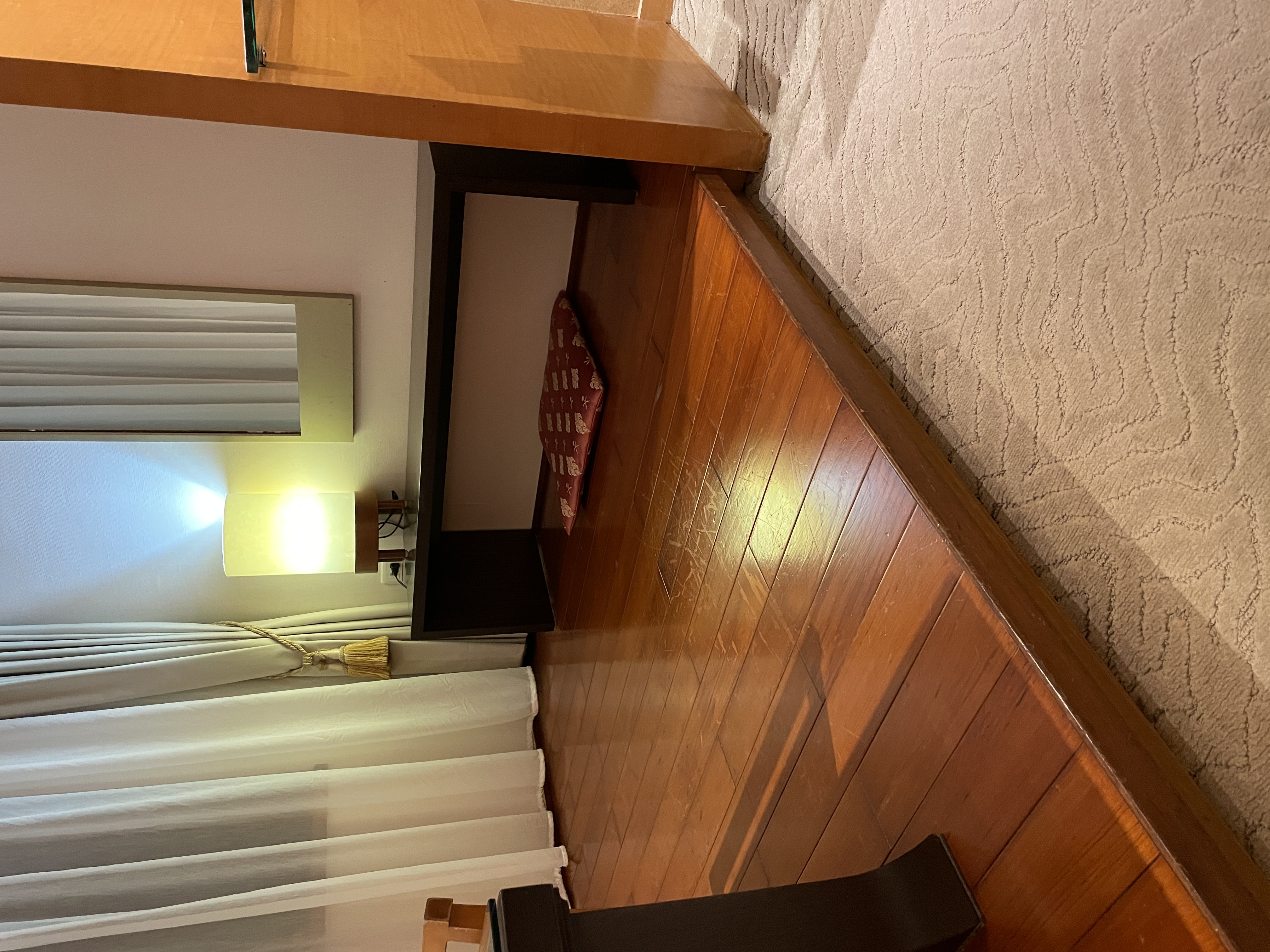
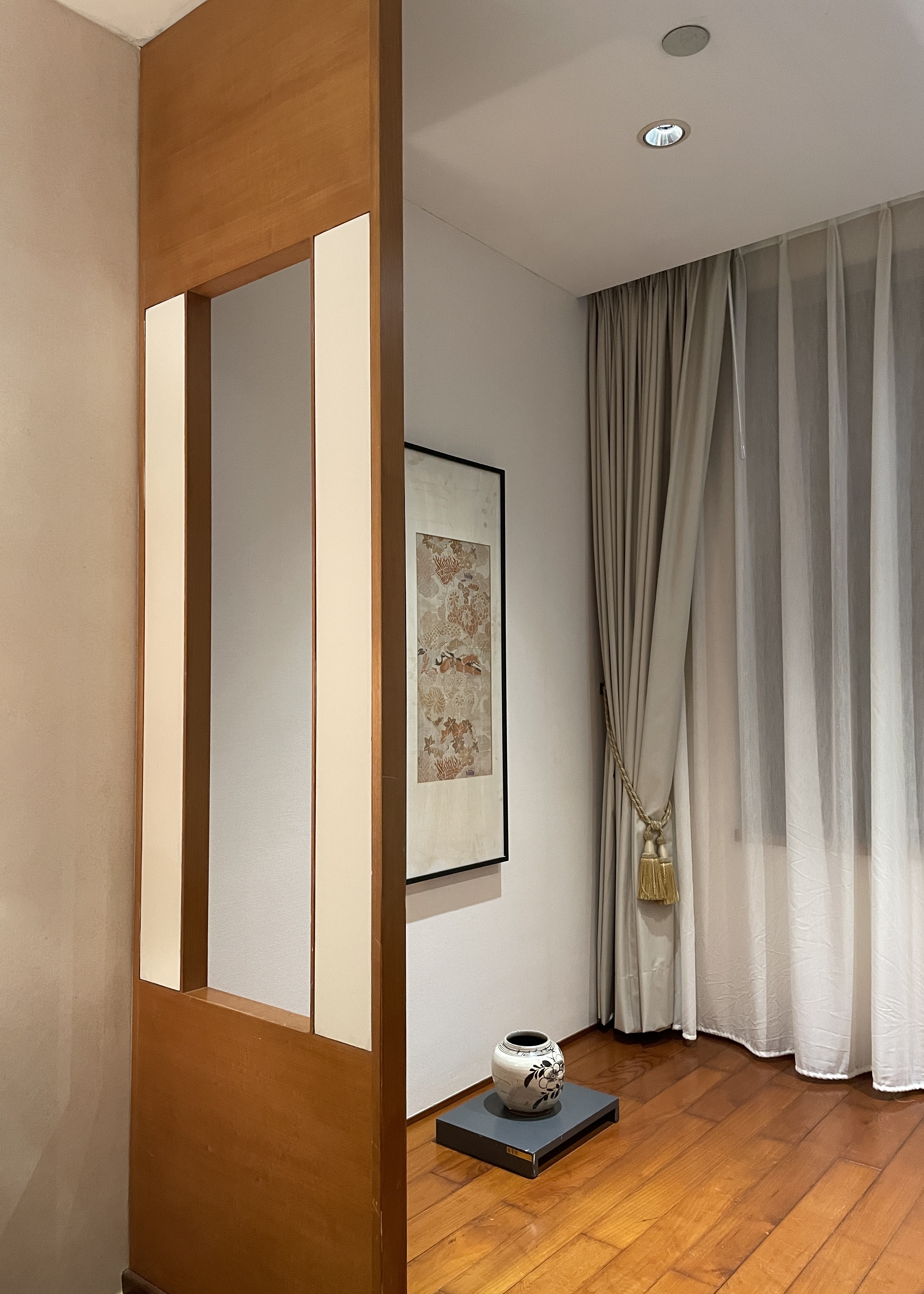
A bed, a sofa, and then, further in, a floor seating area:
low table, cushioned platform, a different way to sit and stay.
Most hotel rooms offer one mode. This room offers two.
Sleep here. Settle there.
The separation of sleeping space from dwelling space
is what makes the room feel layered rather than merely large.
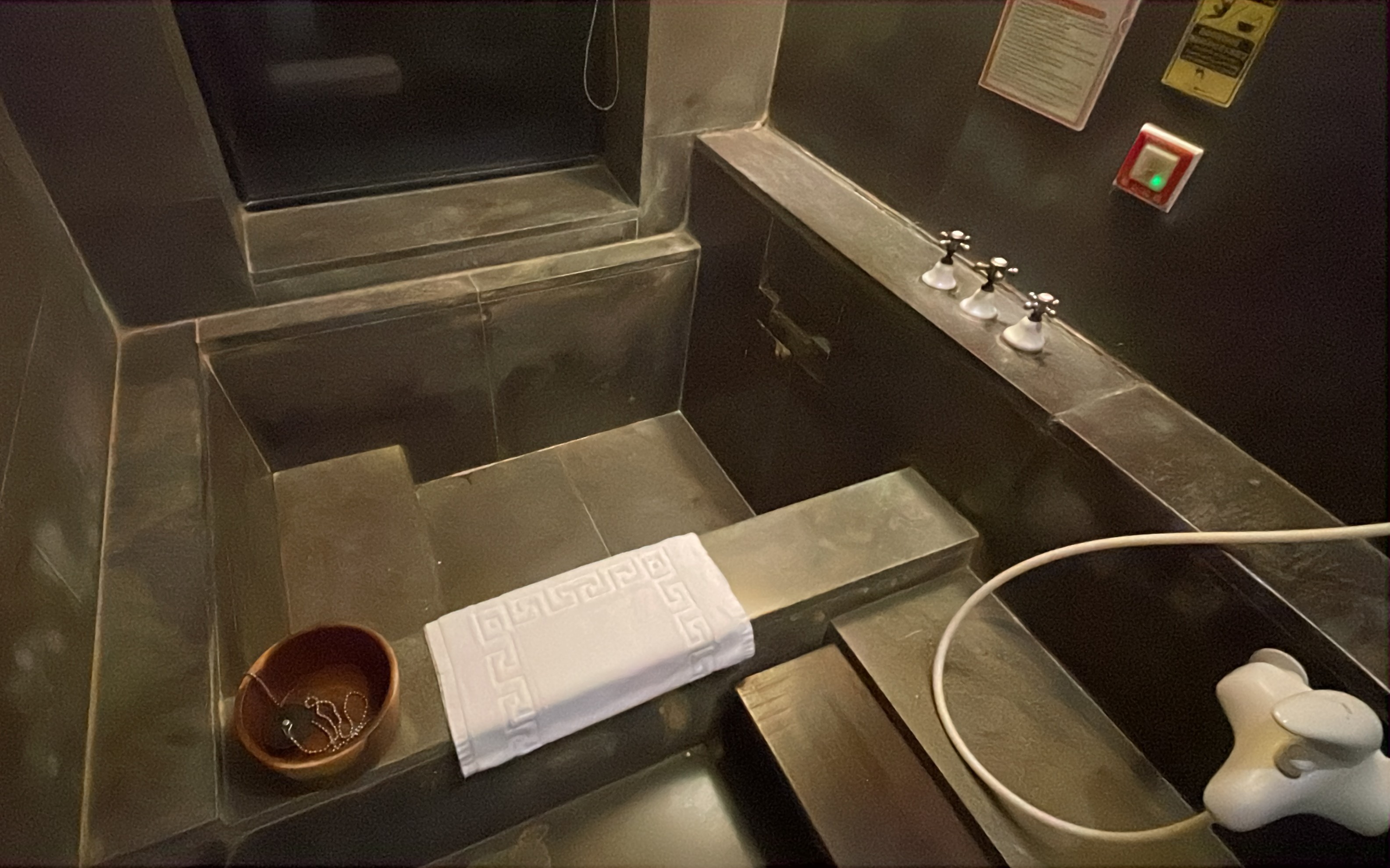
The bathroom doesn't look like a hotel bathroom.
Dark basalt slab covers the floor and walls from corner to corner —
a cold, dense material that encloses the space completely.
Hot water against heavy stone.
The contrast is the experience.
The thermal spring doesn't announce itself; it arrives through material weight.
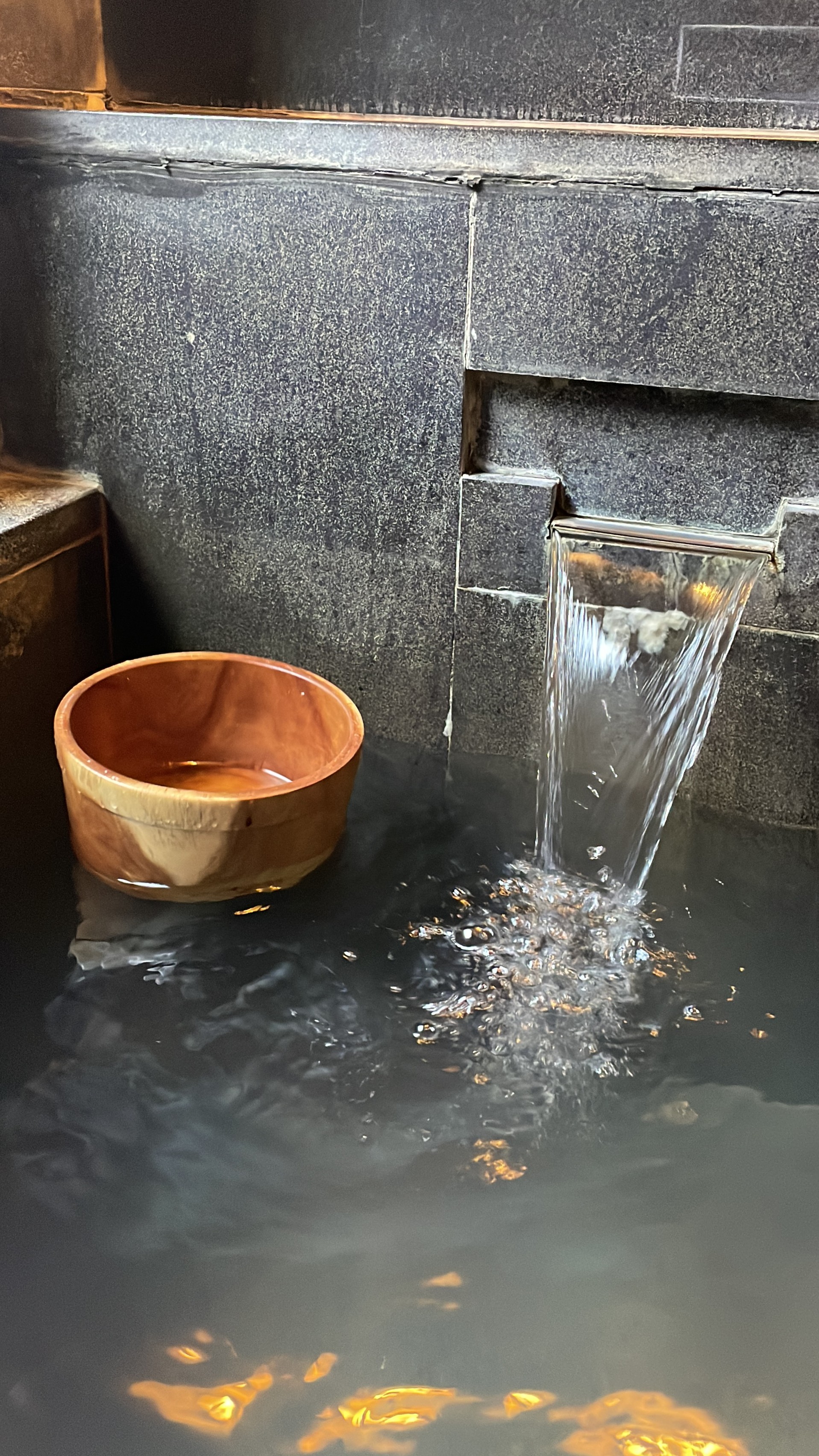
The private bath has a larger window than expected —
but it's positioned so no exterior view comes through.
The eye line empties out. What enters is light alone.
In the morning, soft natural light falls across the water surface.
By evening the space dims on its own.
Time here isn't read by a clock.
It's read by light.
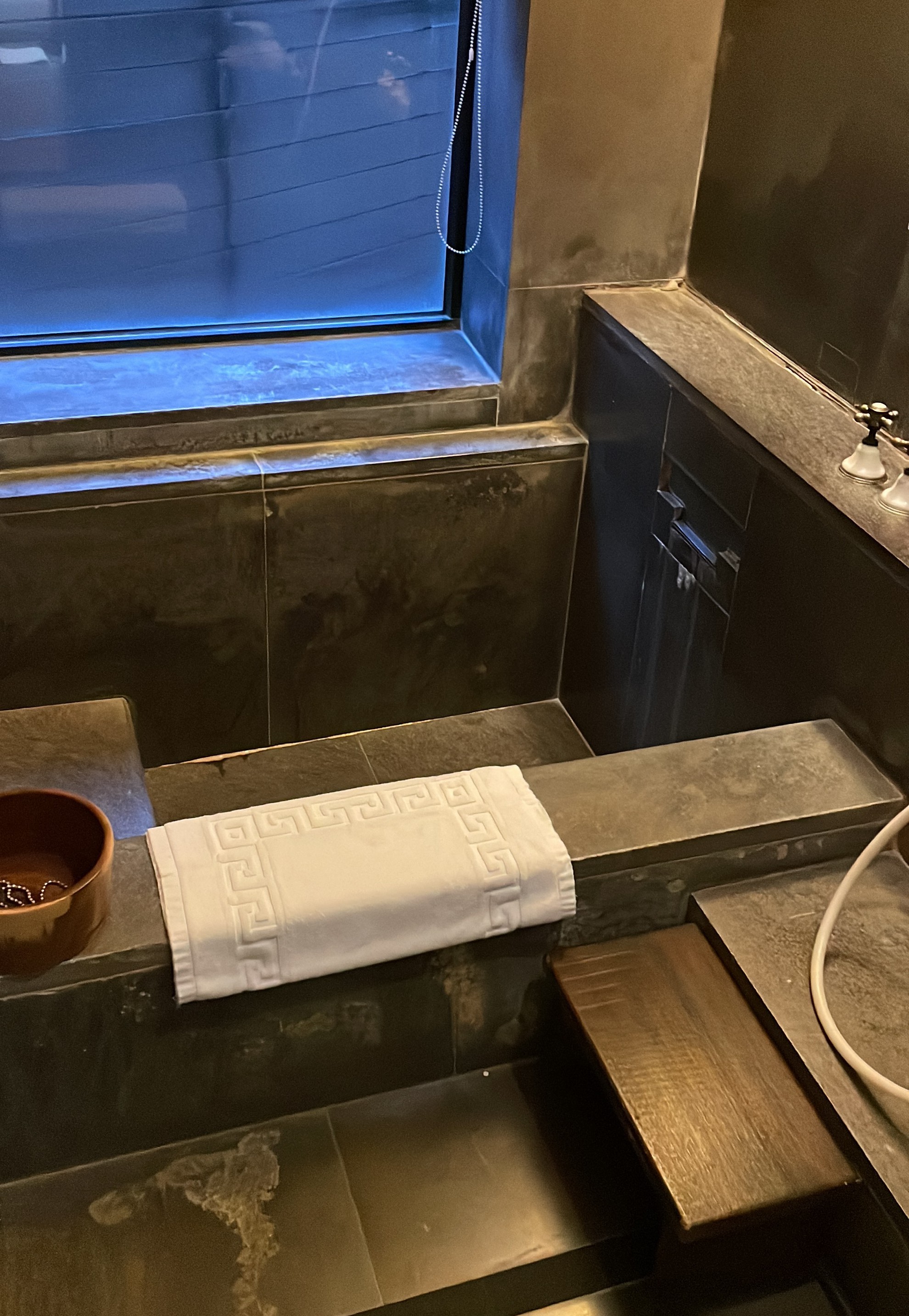
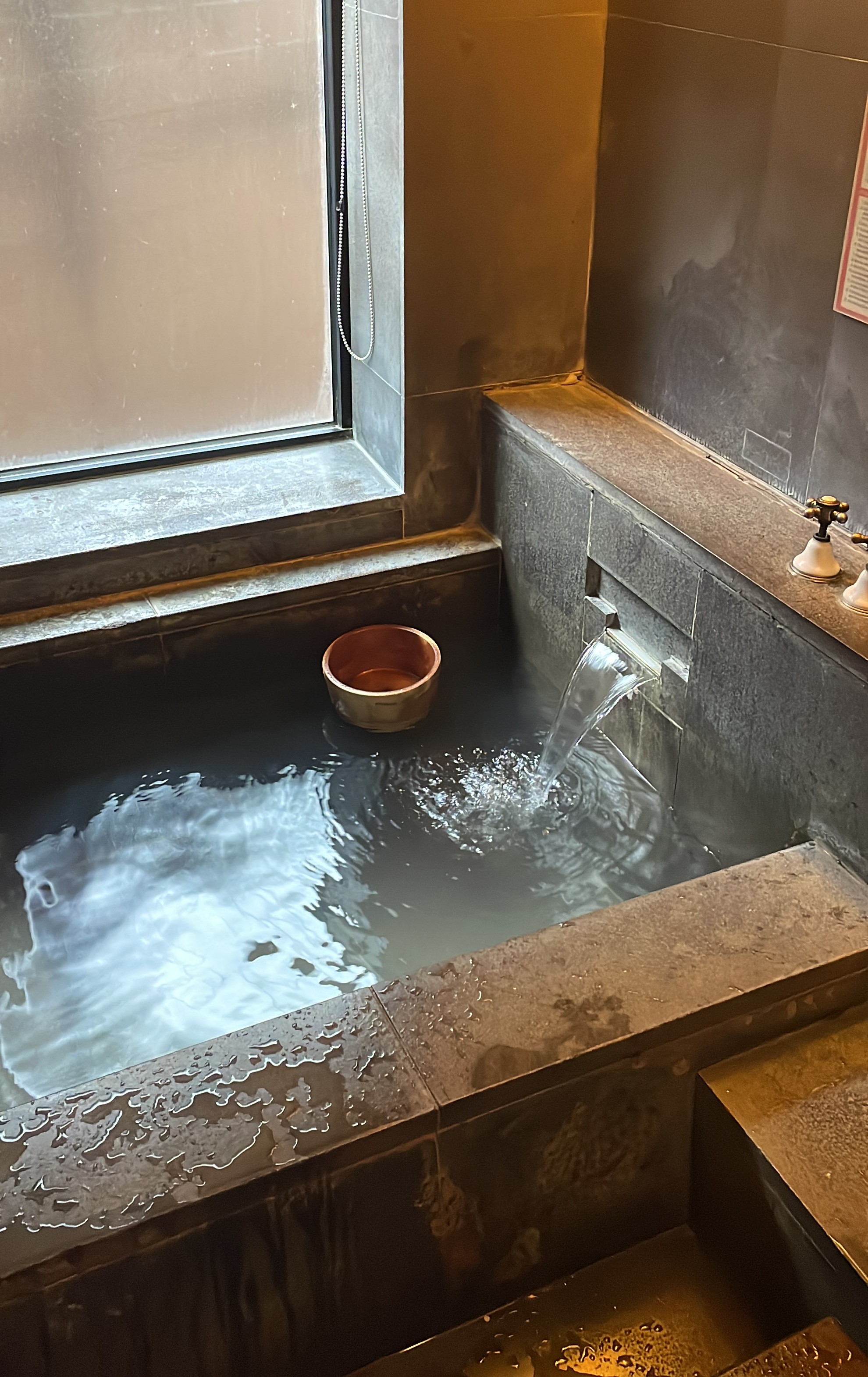
The defining move of this hotel is simple:
the hot spring is inside the room.
Not a shared facility. Not a communal bath.
It's yours, from the moment you close the door.
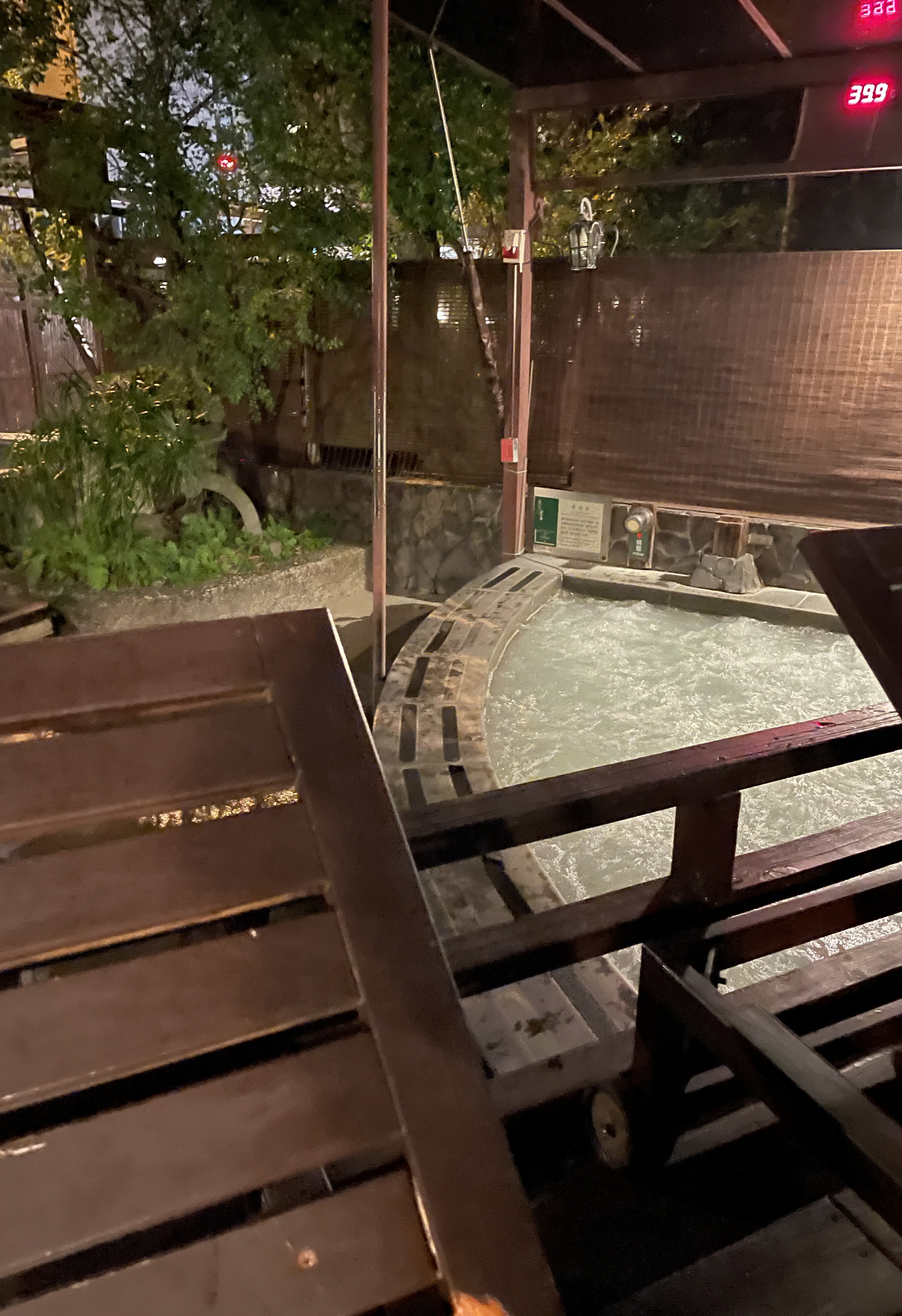
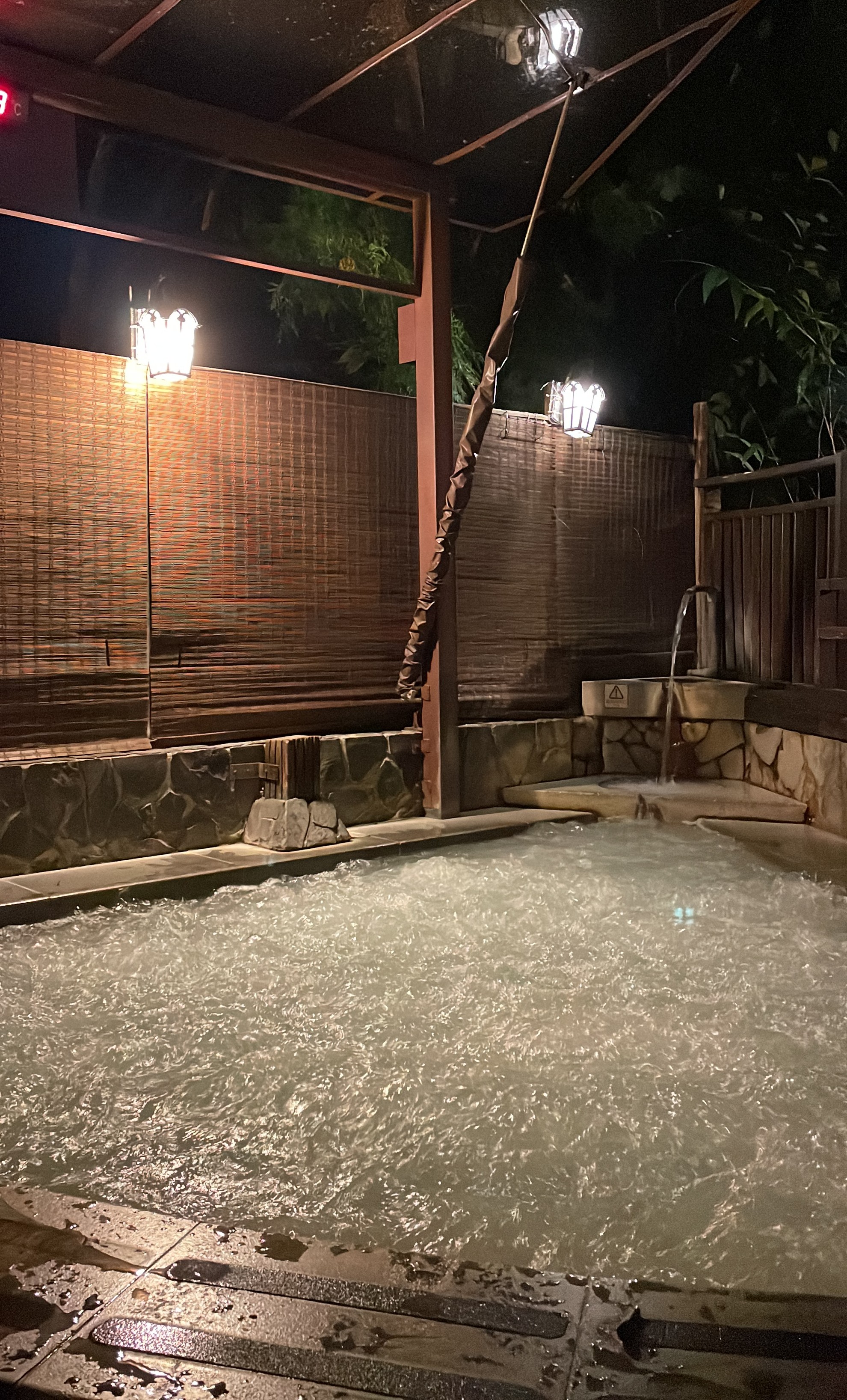
And it doesn't end there.
From the private bath, the experience extends outdoors —
into the open-air pool surrounded by forest.
Interior stillness opens into air, sound, and steam.
The hot spring moves from closed to open, from private to boundless.
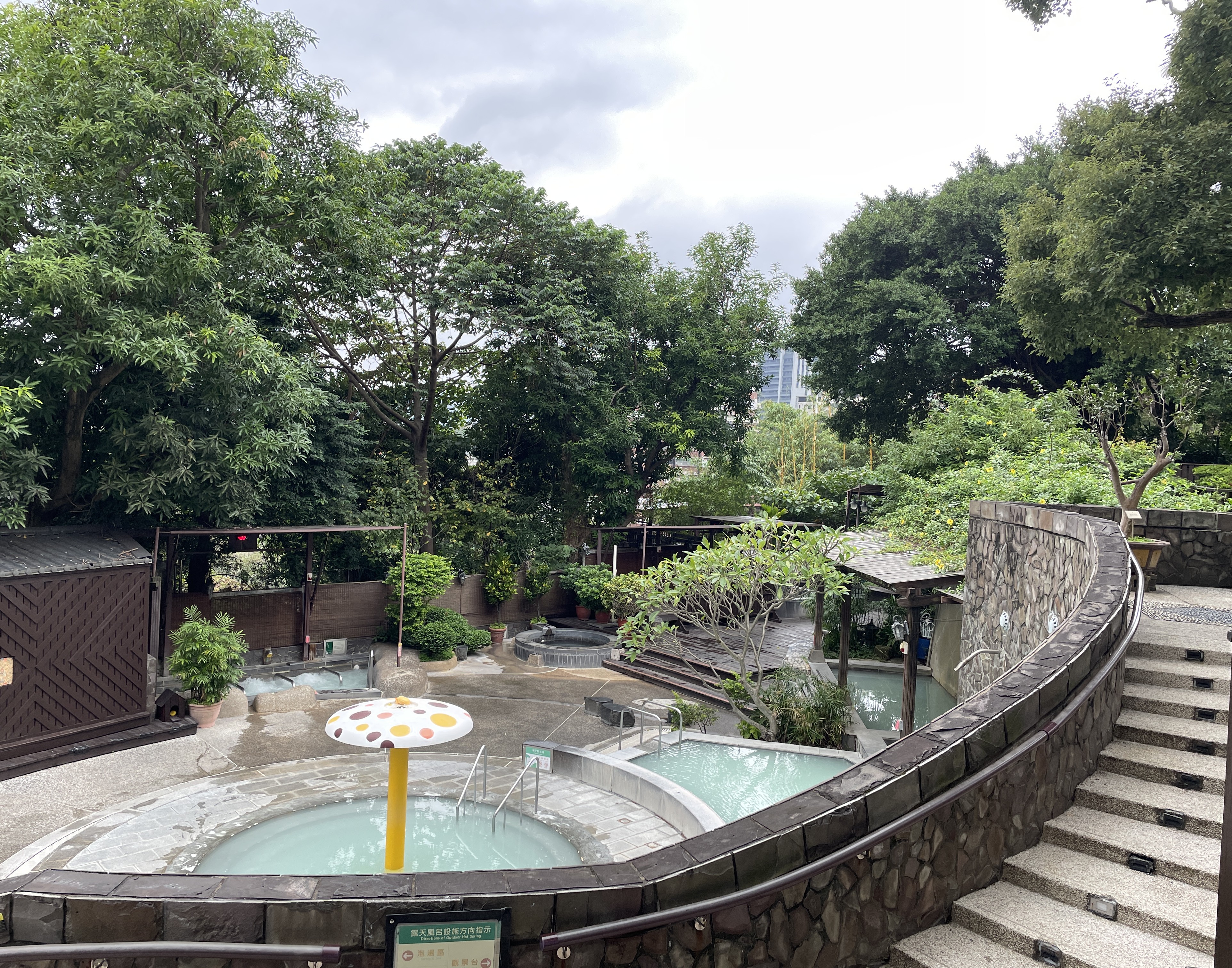
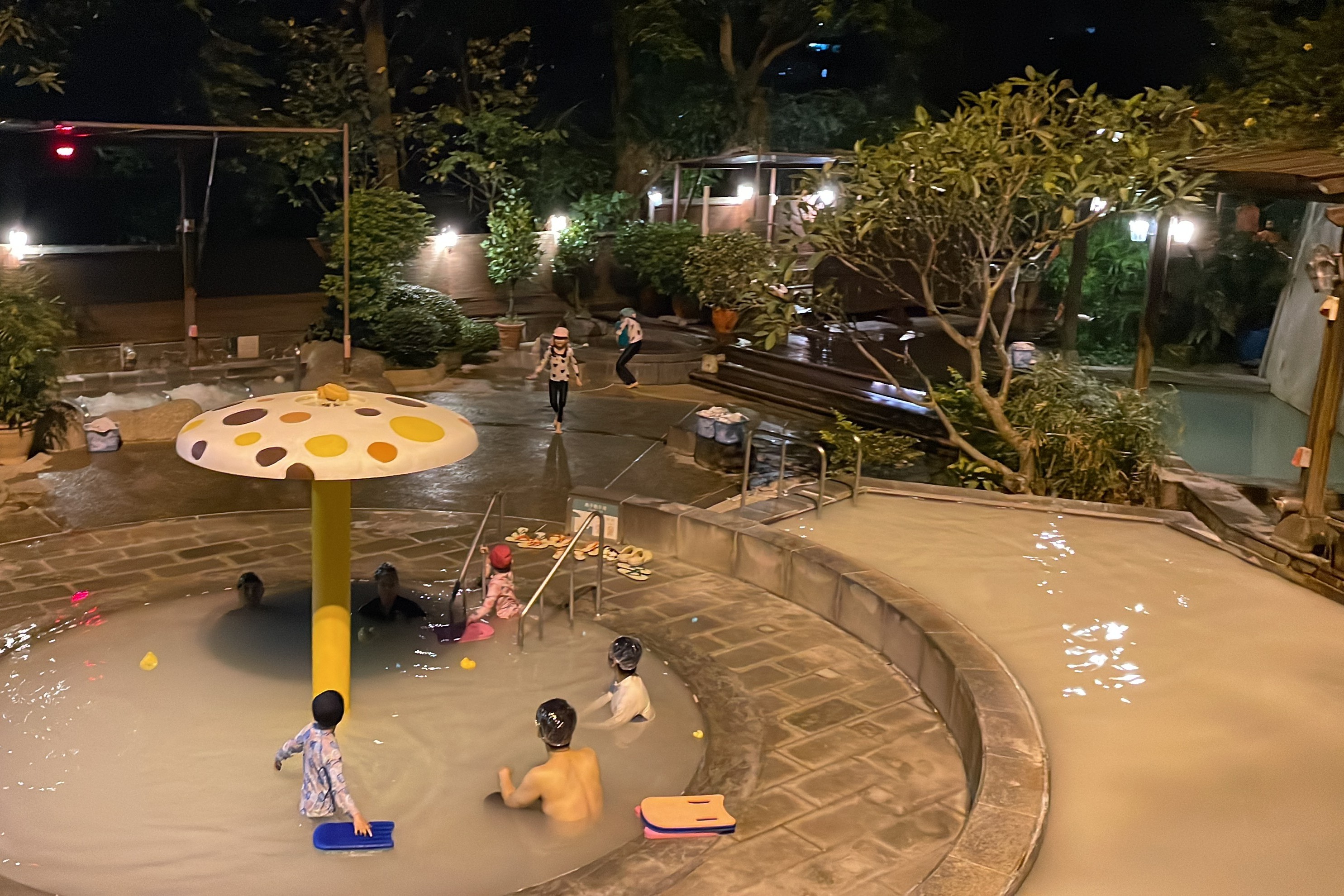
The experience of a hot spring beginning in your room and flowing out into the forest — that is the brand.
Beitou's thermal springs are radium springs — a rare and specific resource.
The typical response to a strong resource is to advertise it.
Spring City Resort does the opposite:
it makes you feel it before you understand what it is.
The branding isn't in the logo or the name.
It's in the fact that the hot spring starts in your room,
extends to the forest,
and the whole sequence happens without a single explanation.
That sequence is what makes it memorable.