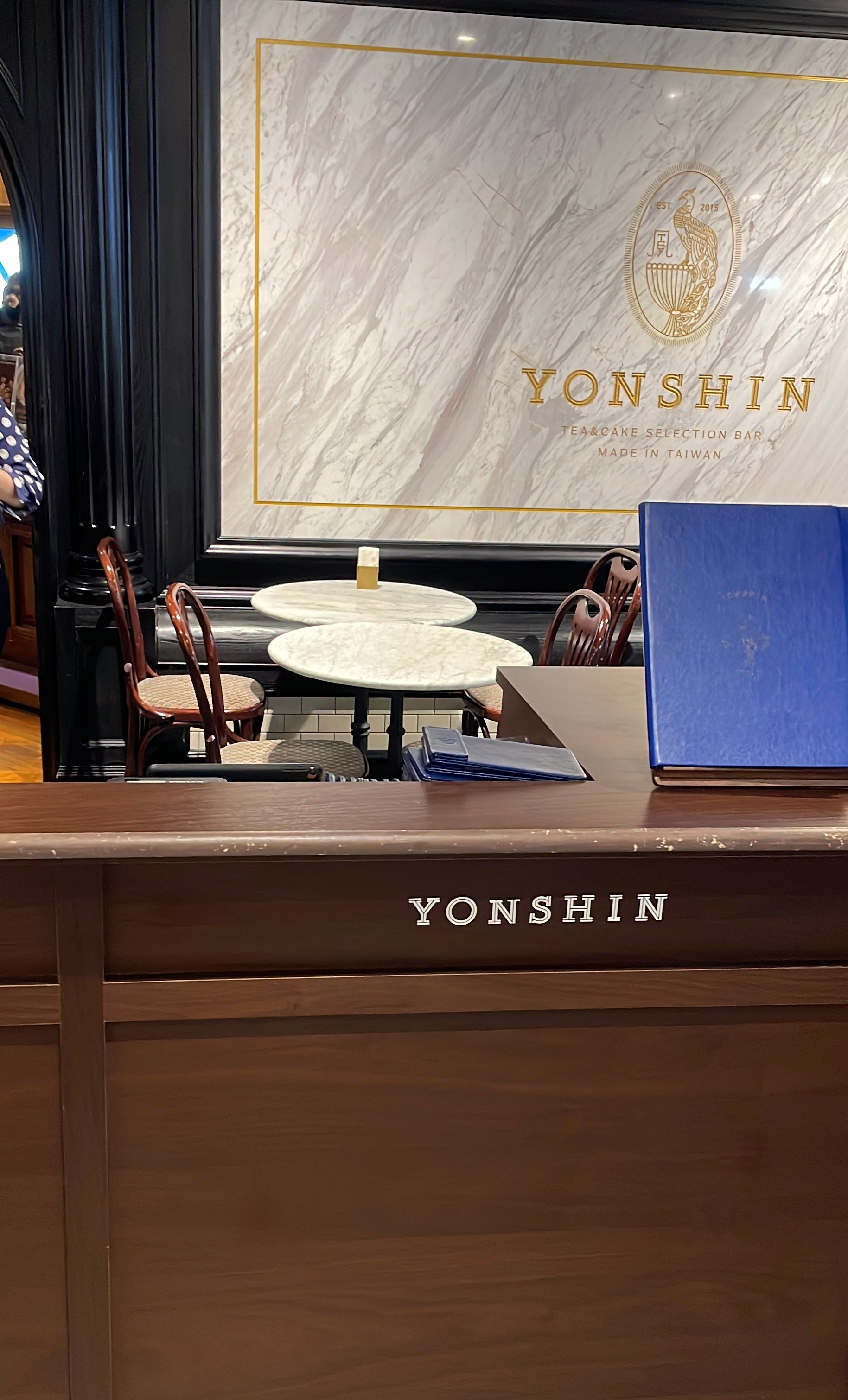
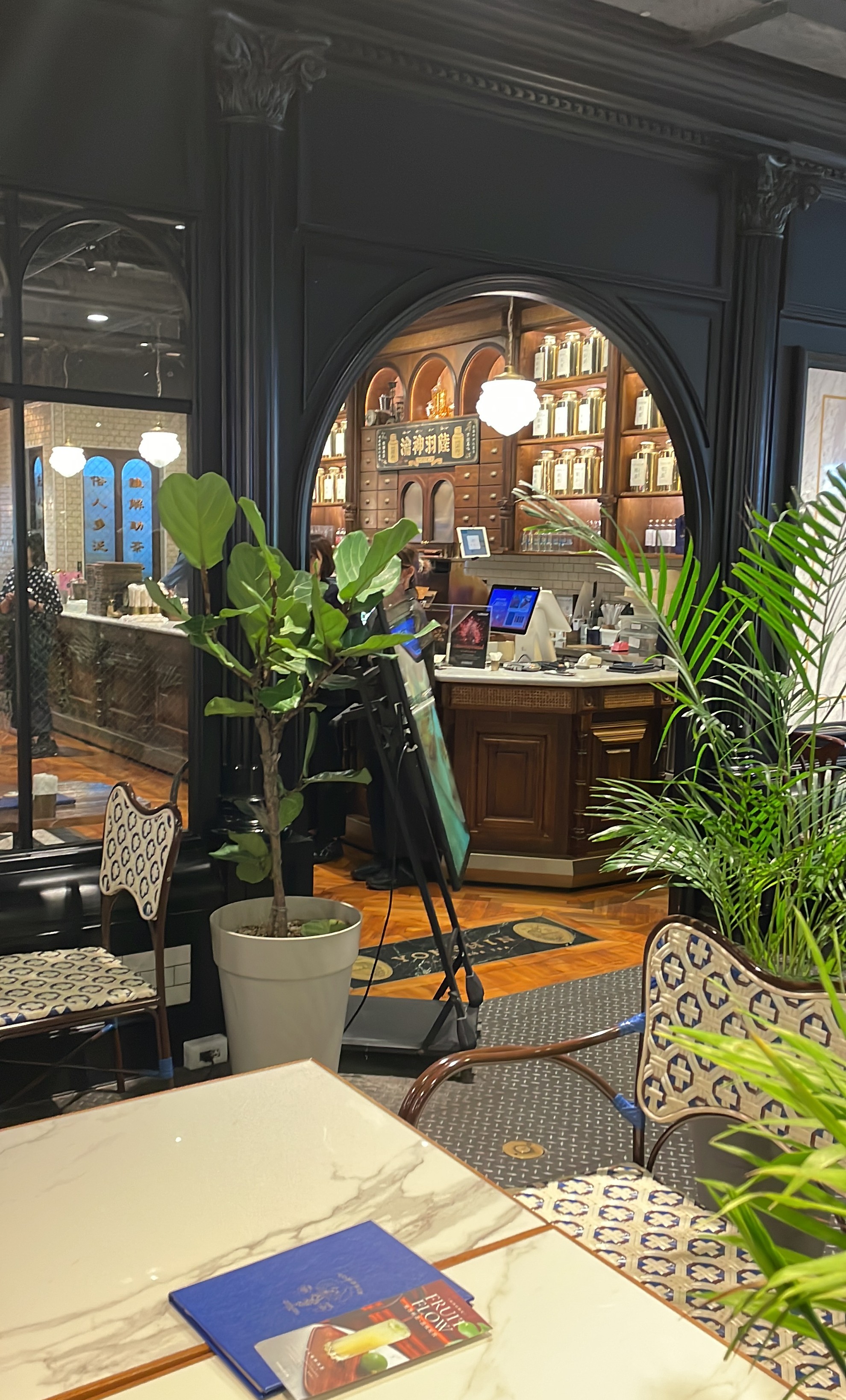
I stopped while passing through a department store. I thought it was a restaurant.
A staff member stood at the entrance. They confirmed the number of guests and guided us to a table personally. Once seated, a dedicated server was assigned. Orders, questions, recommendations — all handled by one person, for us, the entire visit.
It turned out to be a tea house. But it operated with none of the grammar of a café: no self-ordering, no name called at a counter, no pickup. From arrival to departure, every guest is guided and attended to.
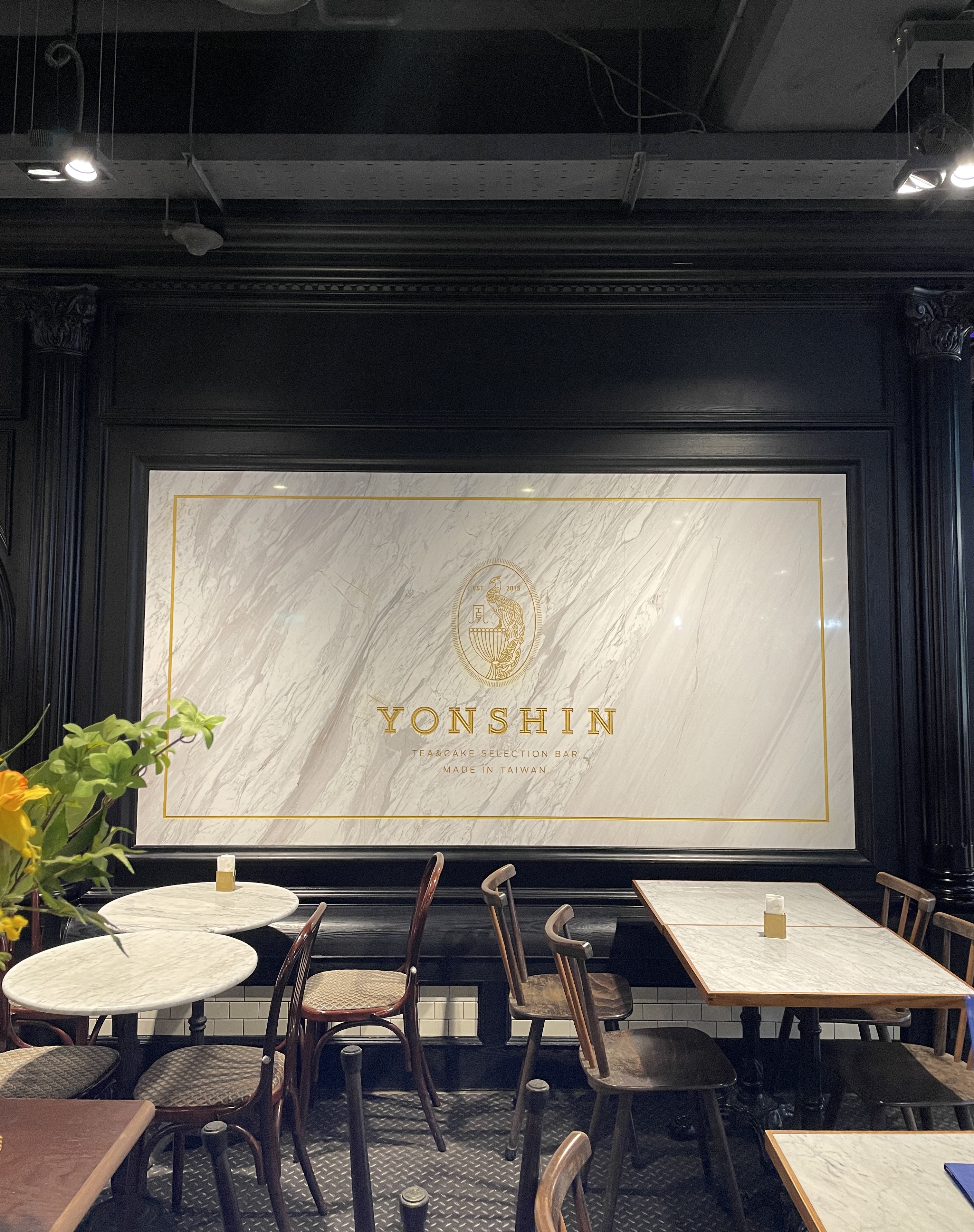
A gold logo on a marble panel. YONSHIN 幼莘. The name carries age and refinement in equal measure — and so does the space.
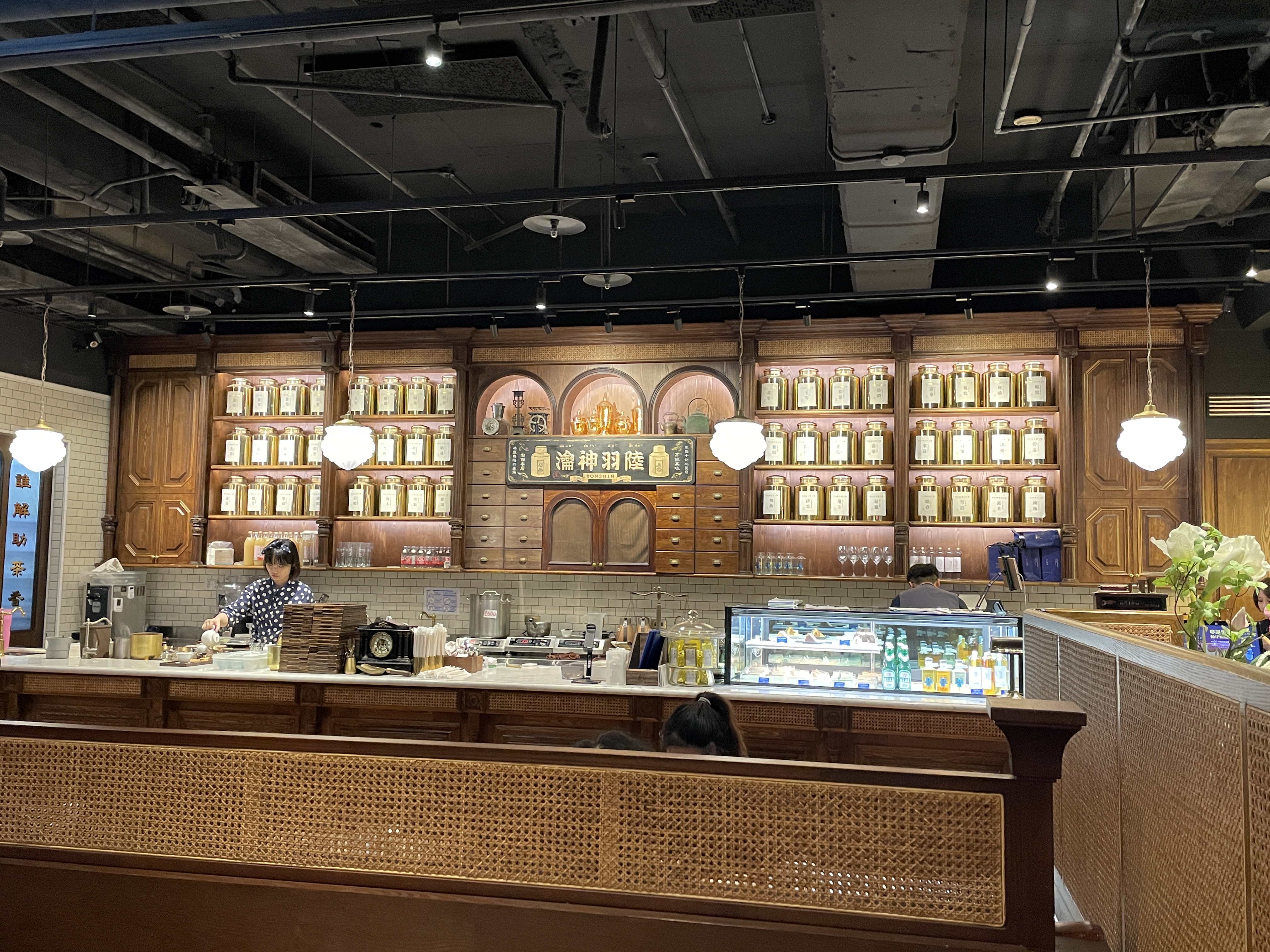
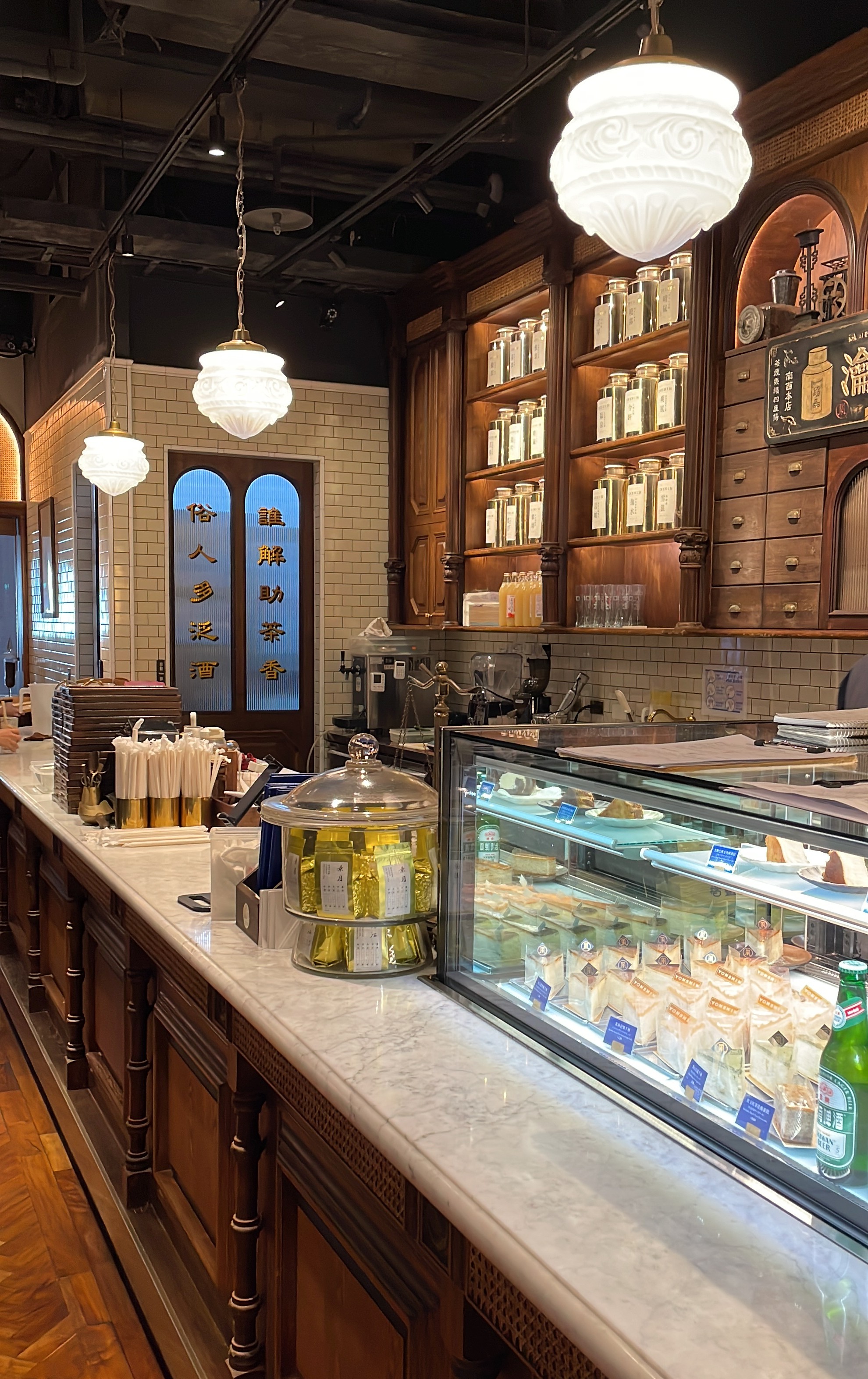
The first thing you see when you enter is the wall of solid wood cabinetry — drawers stacked floor to ceiling, each holding a different tea. It is a direct reinterpretation of the traditional Chinese medicine cabinet, the same structure used to store and dispense remedies for centuries.
The message is immediate: tea is not a beverage here. It is something that requires knowledge, precision, and care.
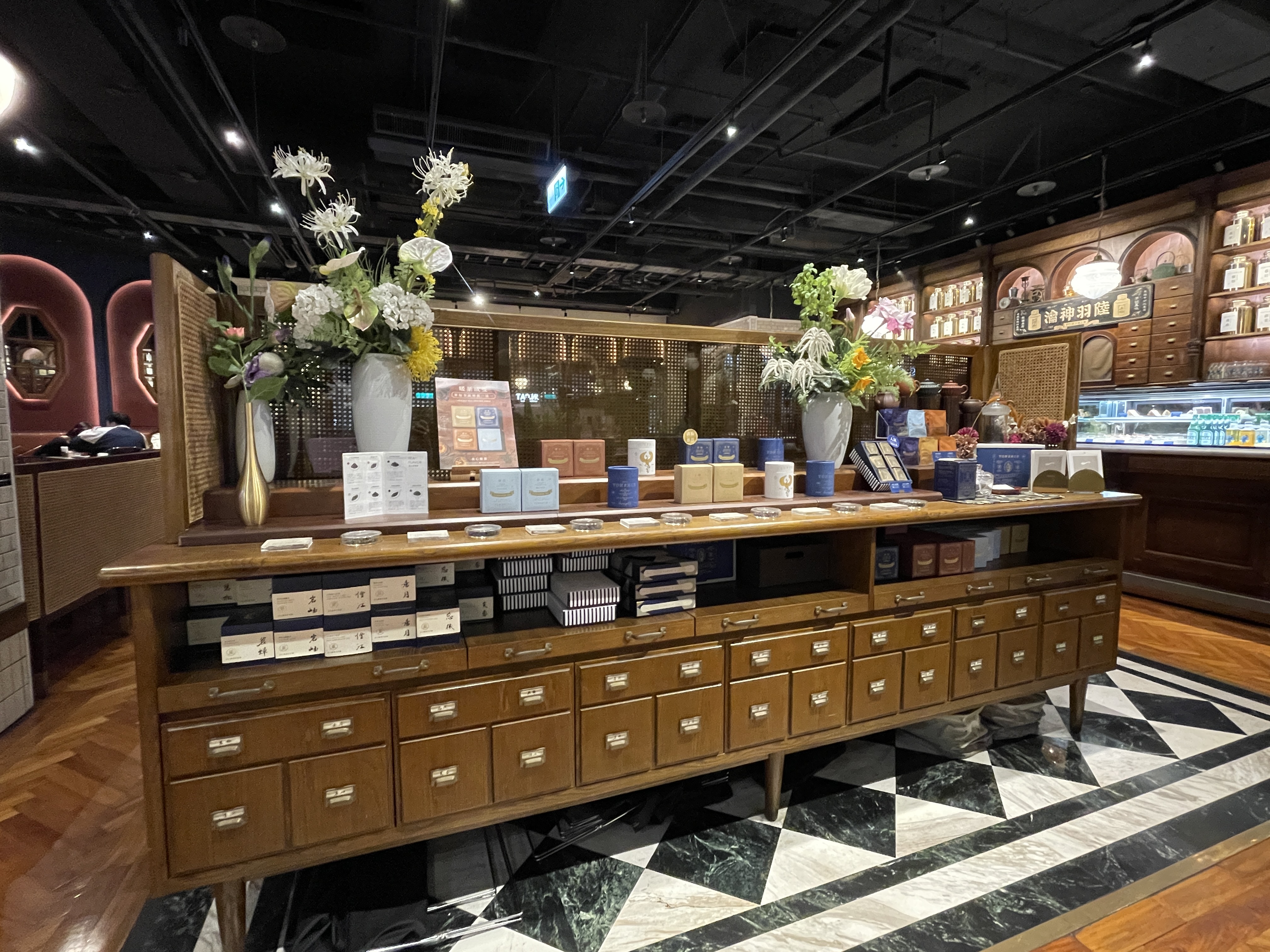
It is stored, explained, and chosen.
The central drawer cabinet serves two purposes at once: it divides the individual seating from the group area while simultaneously displaying tea for purchase. Structure and storytelling, handled by a single element.
If you want to buy tea, you can smell it first. Sample it. Discuss it with the staff before deciding. The retail experience is embedded into the spatial experience — not separated from it.
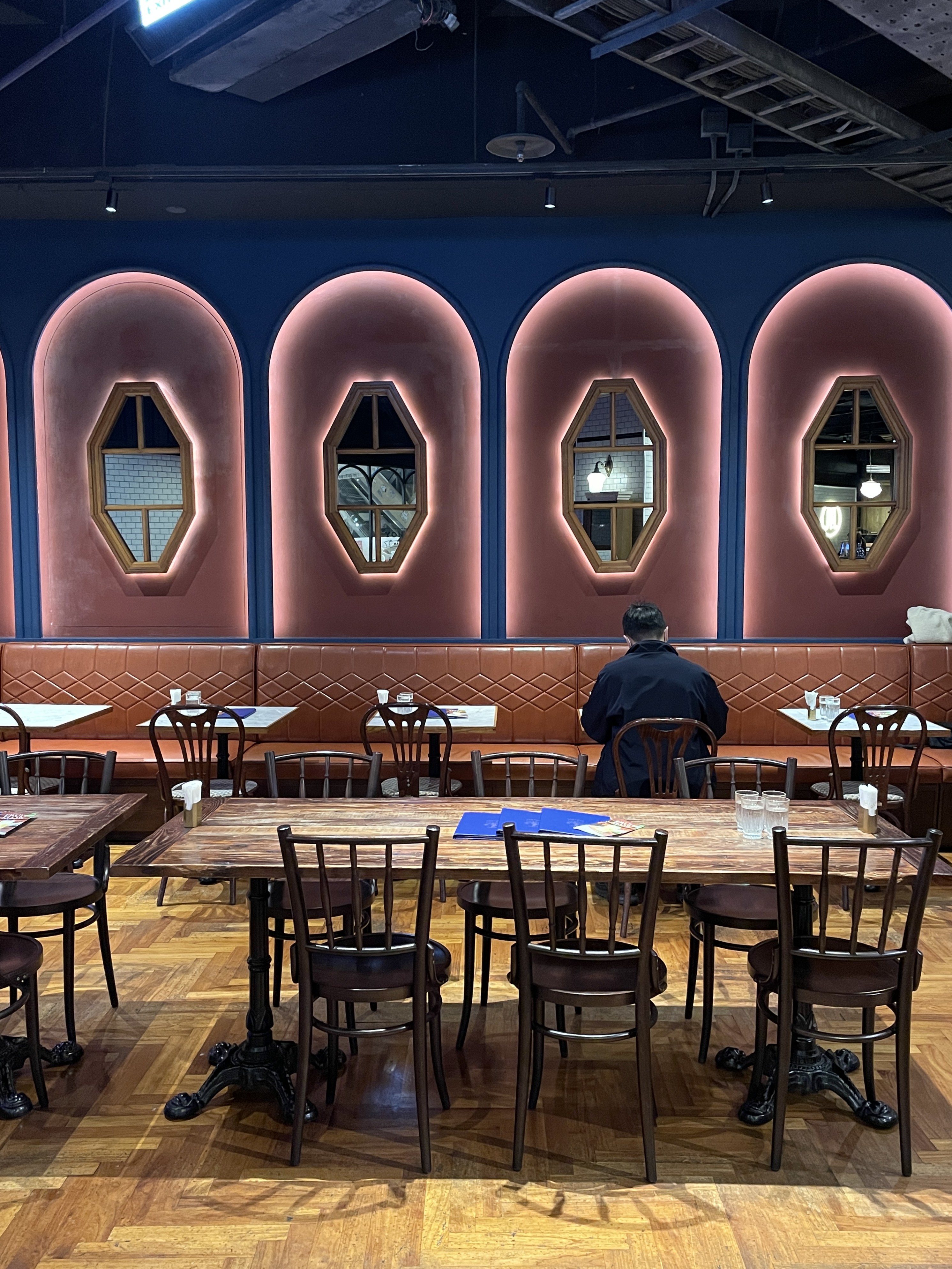
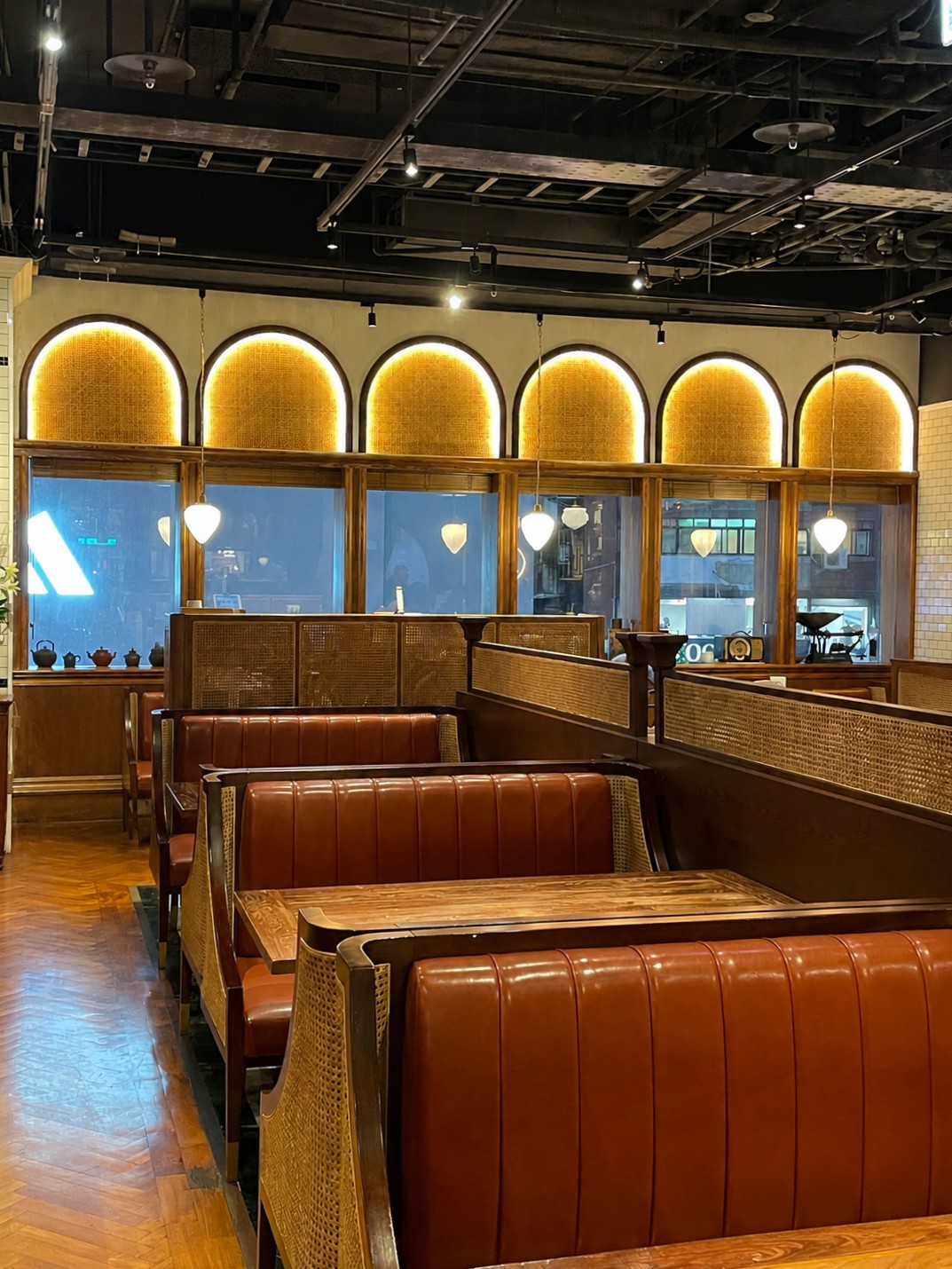
Once seated, the space reveals itself slowly.
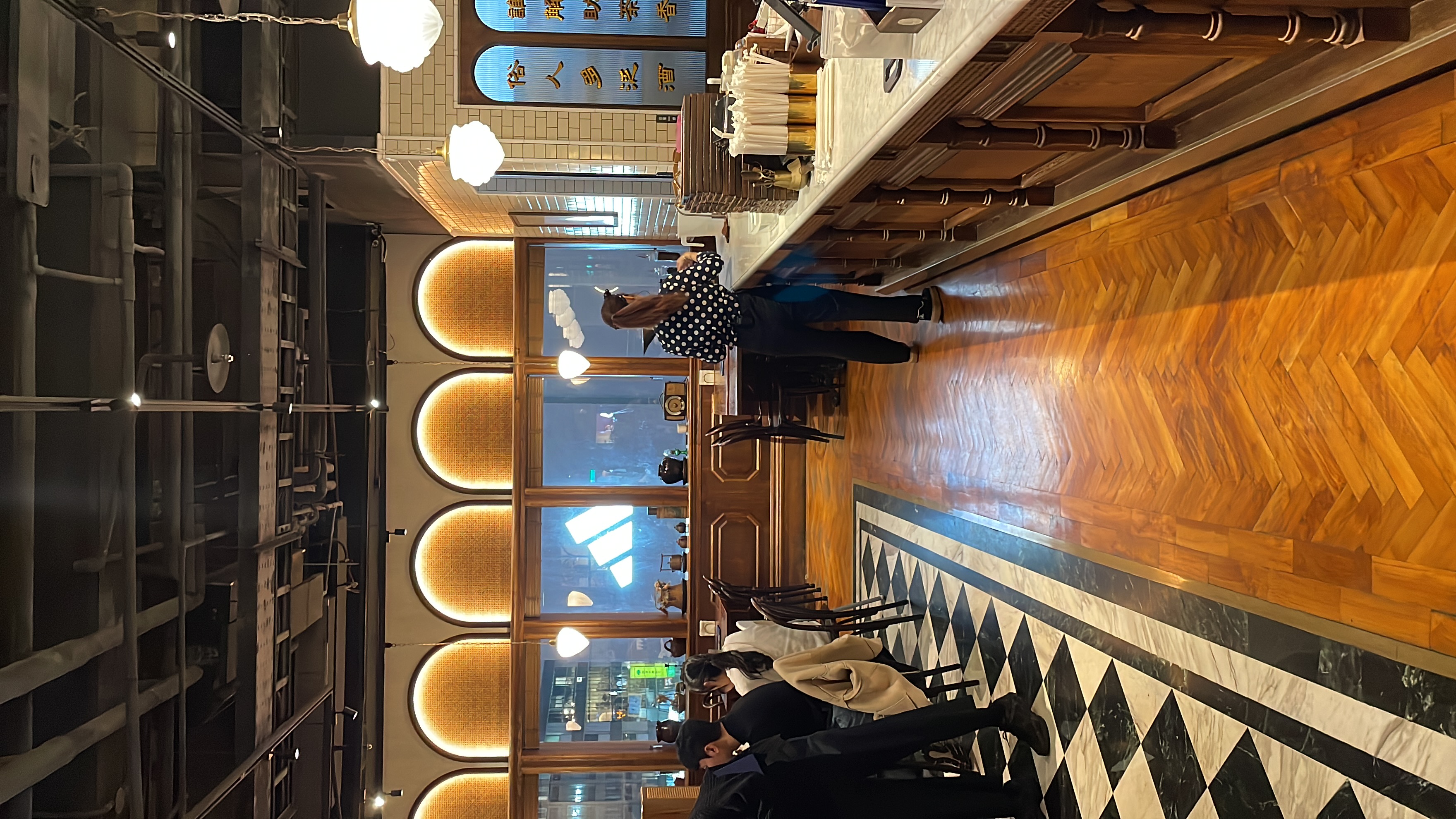
A pink arch opens onto a window zone — herringbone solid wood floor, natural light, open tables. Bright, easy, social. A yellow arch leads into a booth zone — high-backed leather seating, sight lines blocked, the temperature completely different within steps of the first.
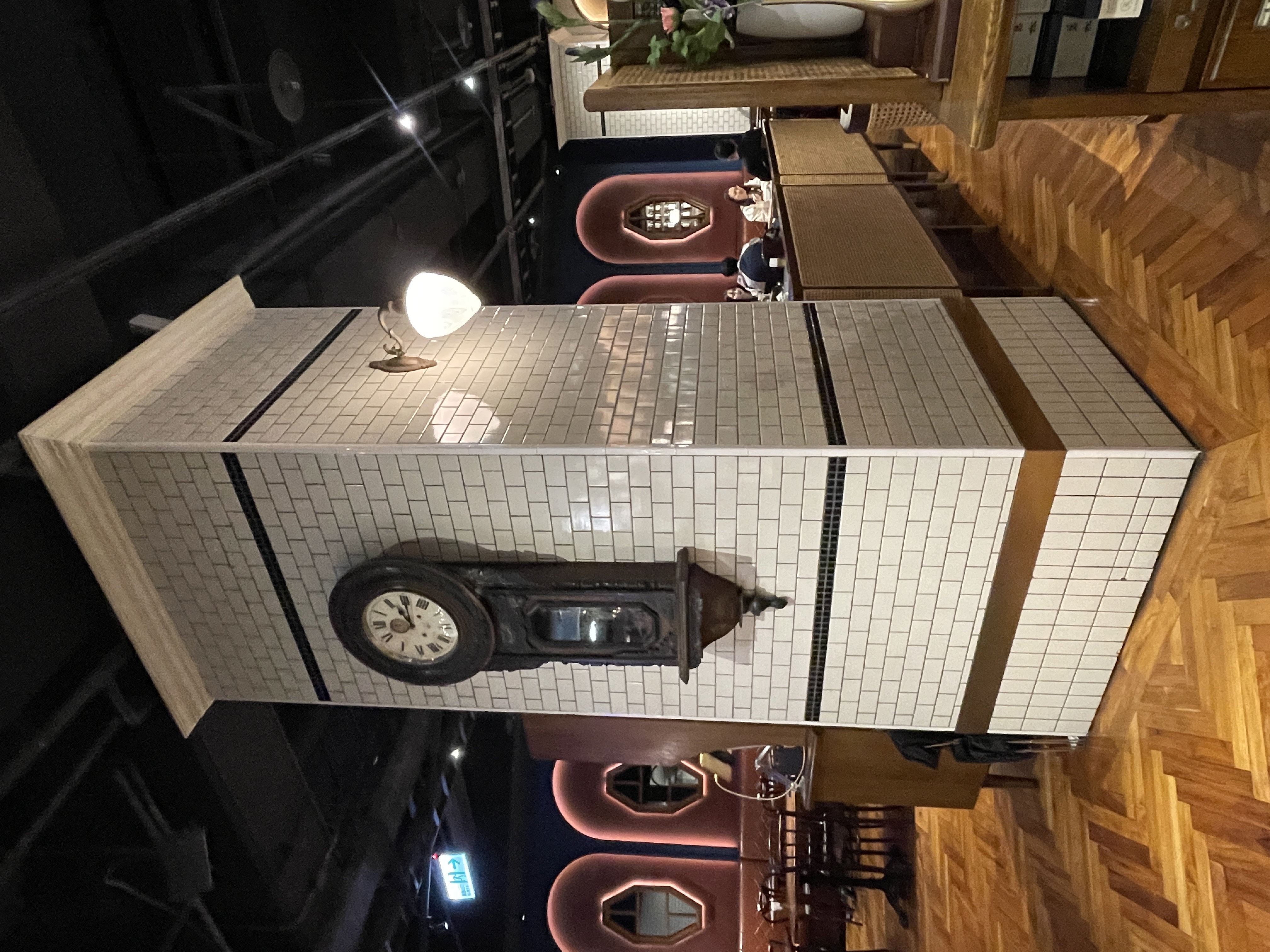
A tile column at the center supports an antique clock. Time feels uncertain here. The space does not declare a particular era. It does not recreate the past or announce the present. It uses the forms and materials of something older to meet you where you are now.
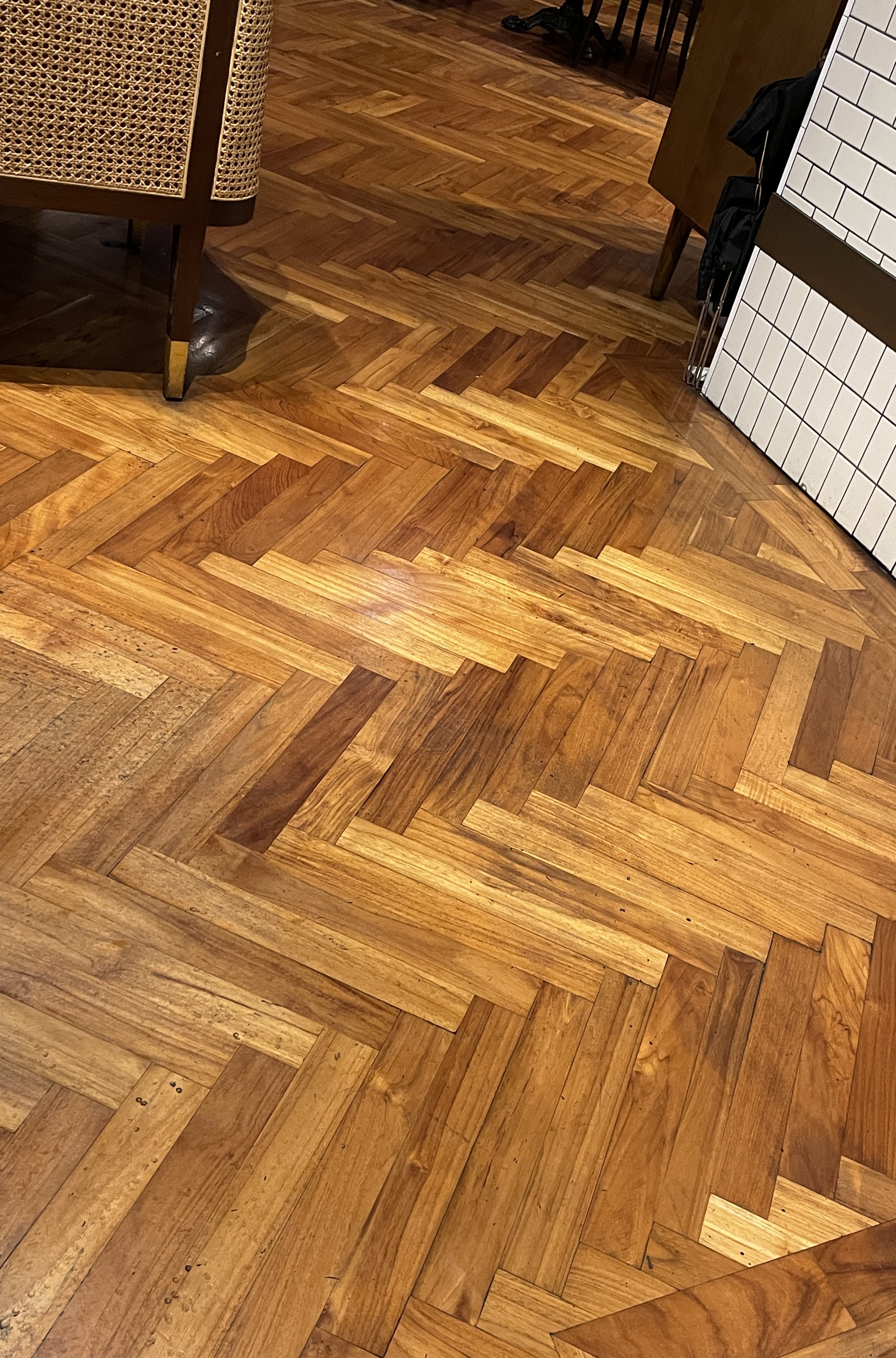
The floor is herringbone solid wood, with porcelain tile accents marking zone transitions. The material decisions are not decorative — they are editorial. You can read the spatial logic through the floor alone.
The bar counter is marble. Above it, globe pendant light fixtures in glass. Solid wood cabinetry, marble surface, round glass light — three materials in one frame, each one holding its weight without competing.
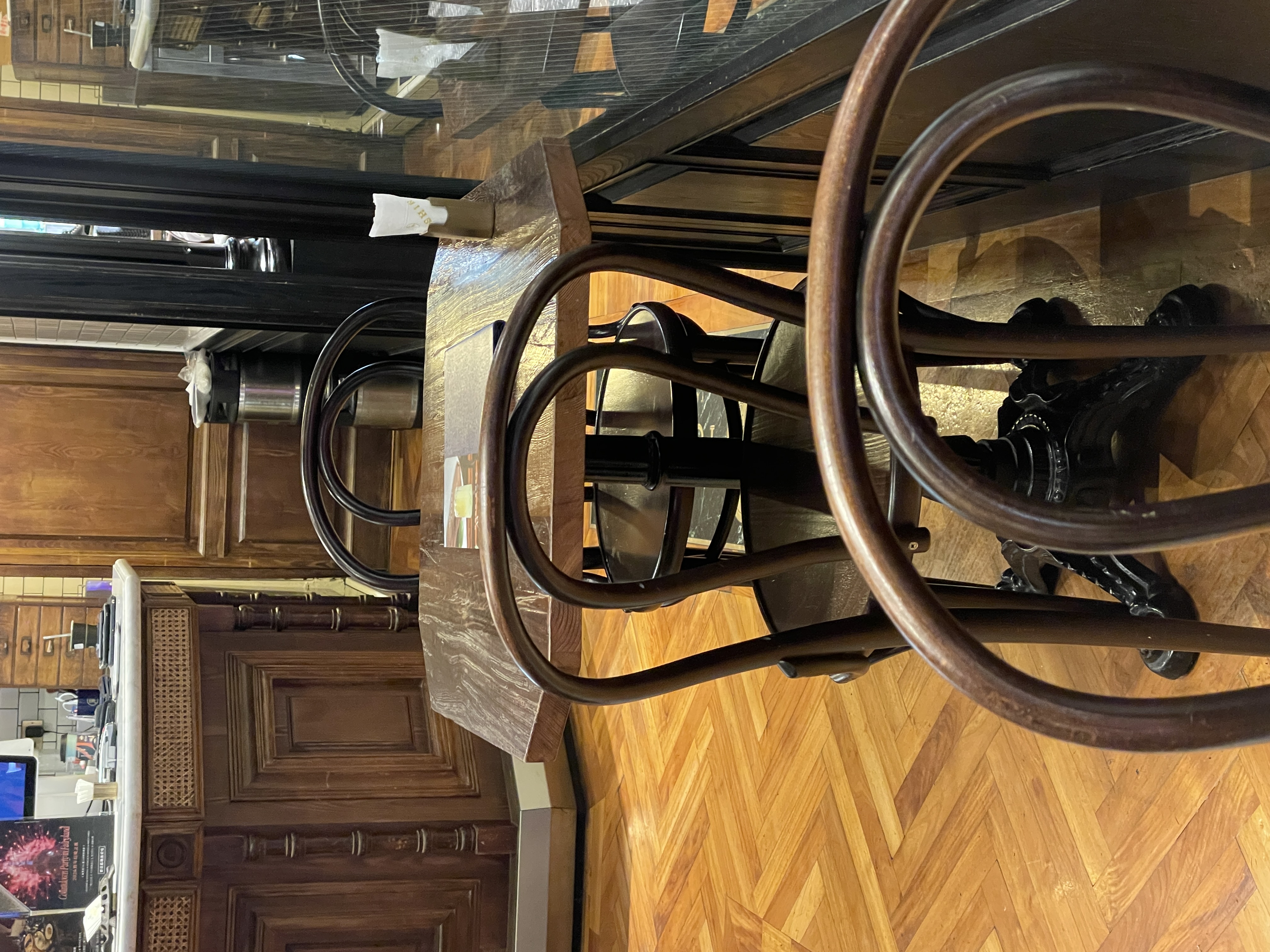
The bentwood chairs — with their classic curved profile — complete the vocabulary. Every piece of furniture speaks the same language as the room it sits in. Nothing arrives from a different conversation.
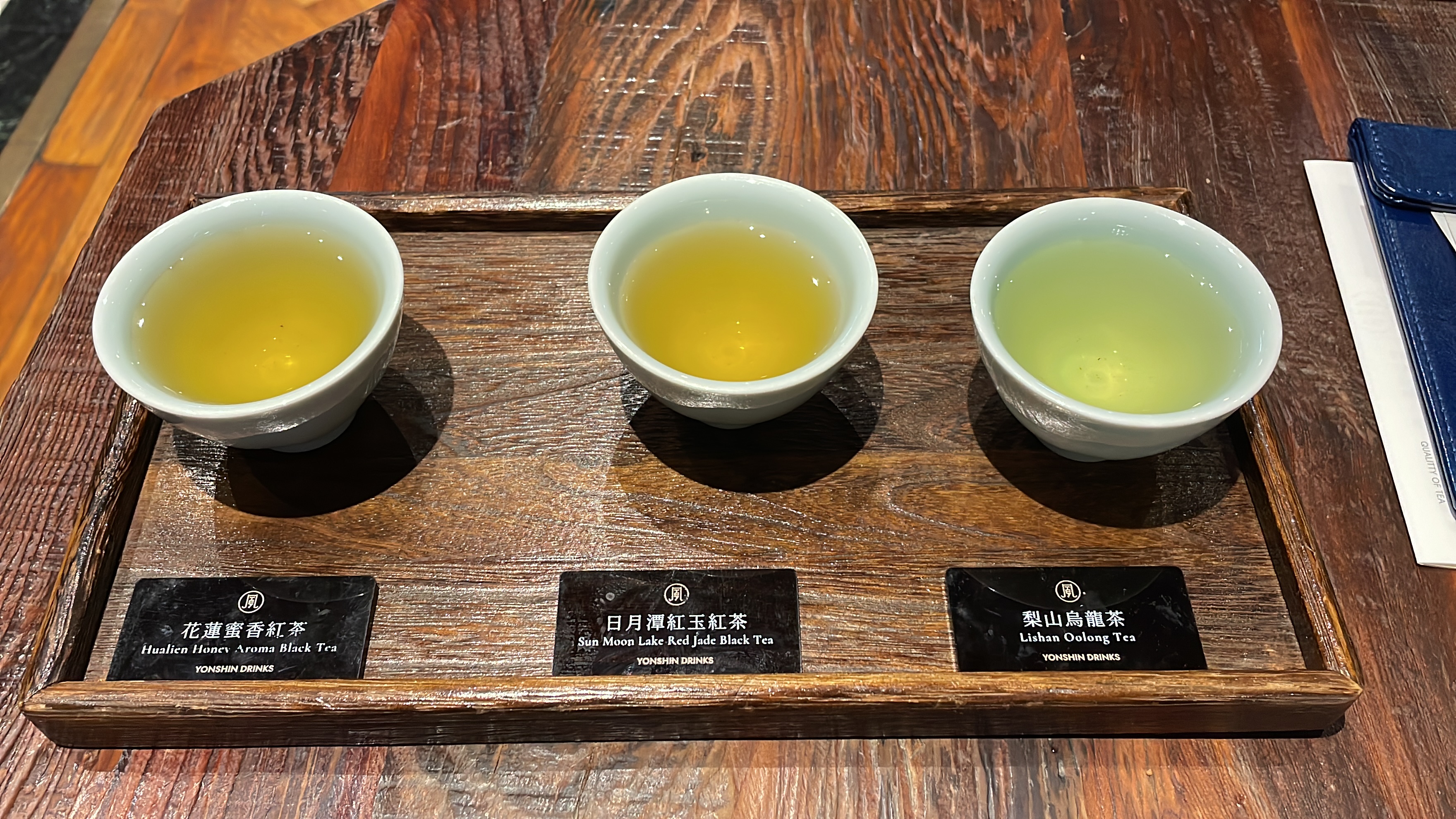
Ask about a tea and the staff explains it — the type, the origin, the character of the flavor. Show further interest and they will bring several varieties to compare. They anticipate without being asked.
Ordering tea at YONSHIN is not a transaction. It is a guided experience — closer to receiving a recommendation from someone who genuinely knows than selecting from a list.
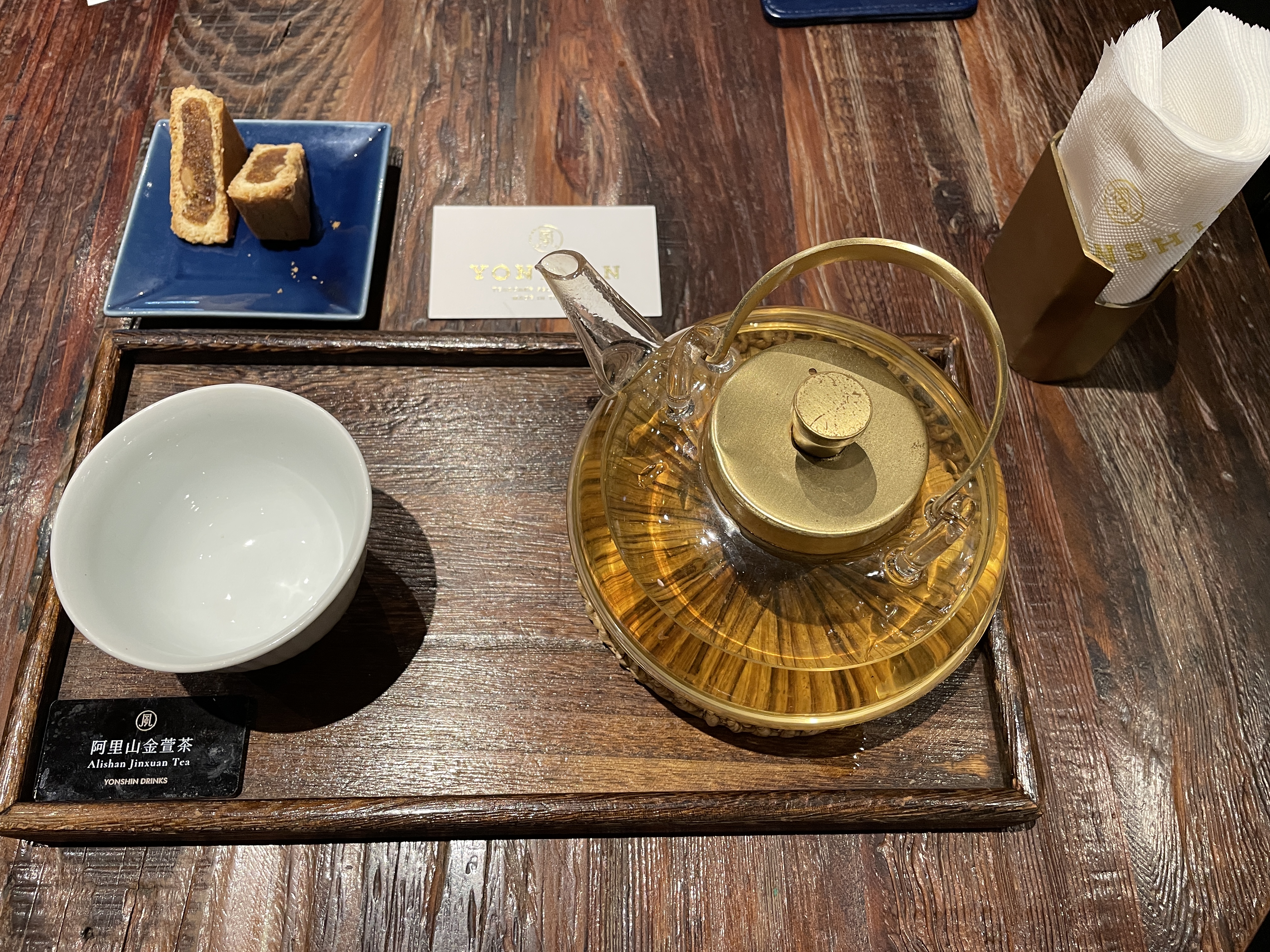
The tea arrives on a solid wood tray — glass teapot, teacup, small accompaniments. Composed. Unhurried. The presentation communicates before you take the first sip.
A tea flight brings three cups: the same tea approach, three variations, served for comparison. You are not choosing a drink. You are following a sensory path.
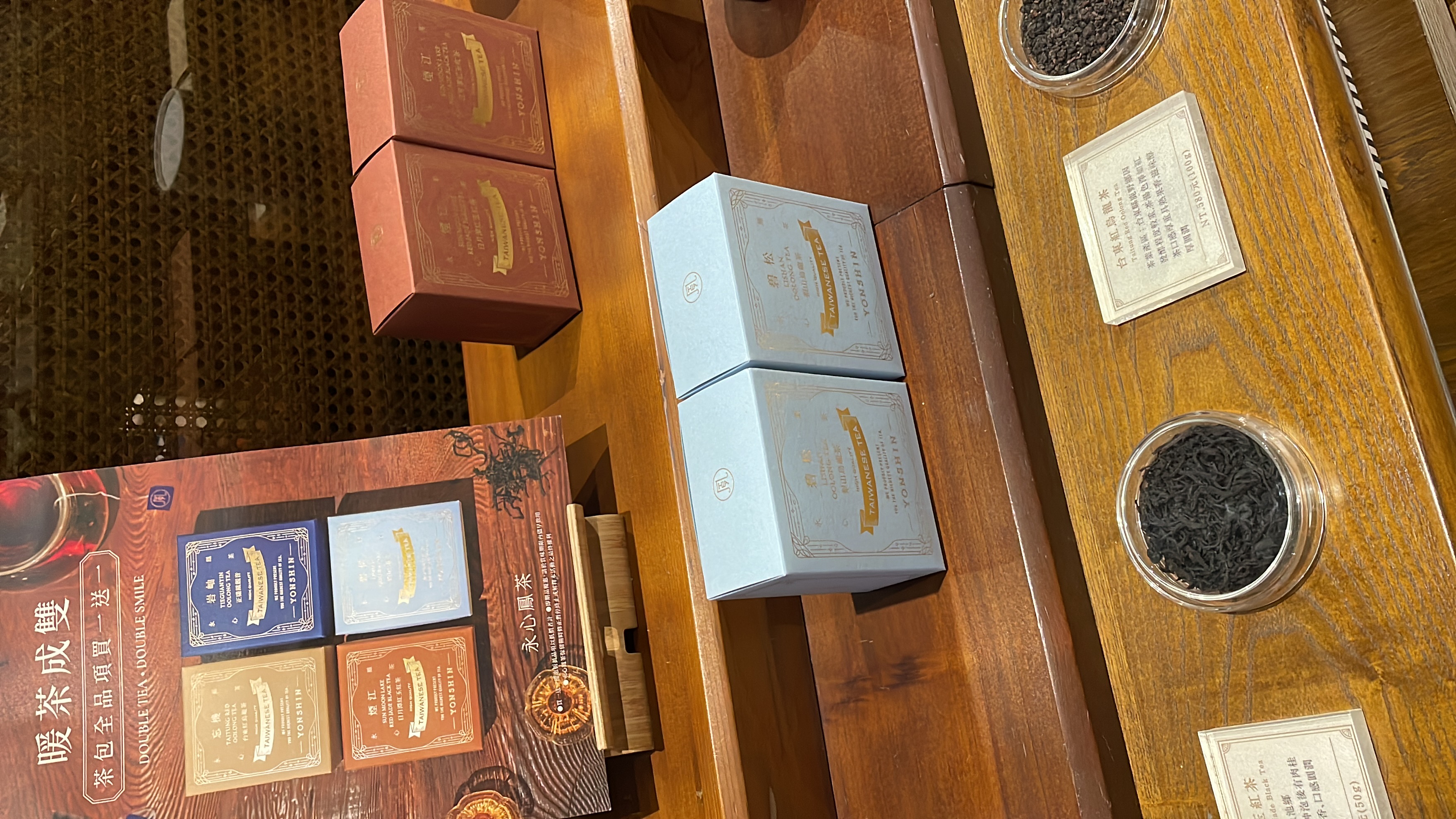
The packaged teas are arranged by color along the shelves — available to purchase, to gift, to carry the brand home with you. The experience does not end when you leave the table.
YONSHIN's spatial branding collapses to one idea.
Tea is not displayed. It is stored, explained, and chosen.
The apothecary drawers, the full-service staffing model, the distinct zones with different moods — every element in this space delivers the same message: tea is not a drink you grab. It is something you are guided toward, in a space that was built to make that guidance feel natural.
Tea is not a beverage. It is a form of care. The space does not say this. It shows it.